
How Is Sheol Different than Hell?

Many, if not most people, have a simplistic view of what the Bible tells us about life after death. Simply put they believe in Heaven and Hell. One of the goals of this blog is to help people realize that two events change this model: the death and resurrection of Jesus and Judgment Day.

Prior to Jesus, the Old Testament people knew of two things regarding their existence after death. The knew that there would eventually be a bodily resurrection of dead followed by either everlasting life in a New Earth or everlasting contempt somewhere. (Dan. 12:2, Isaiah 65) This information can be traced as early as Job, which is likely the oldest book in the Bible.

For I know that my Redeemer lives,
    and at the last he will stand upon the earth.
26 And after my skin has been thus destroyed,
    yet in my flesh I shall see God,
27 whom I shall see for myself,
    and my eyes shall behold, and not another.
    My heart faints within me!

Job 19:25-27 (ESV)

The Old Testament people are aware that Heaven exists, but it is never promised as a destination for them after death. Instead, the Old Testament people had an expectation of going to Sheol (the place of the dead). This is not the same as the grave. Some translations of the Bible botch this and then note that the Hebrew word is “Sheol” in the footnotes. Sheol is a distinct place of conscious existence.

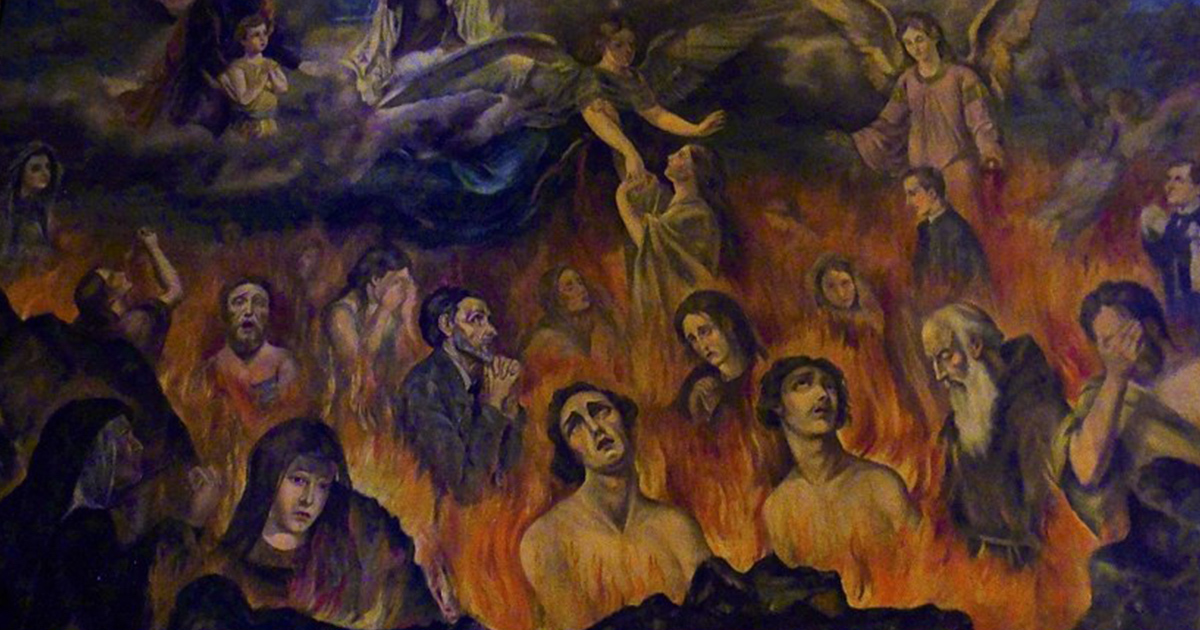
Sheol seems to be a two-part place. One section is comforting, but not necessarily better than life. The other section is a place of suffering. The New Testament and the Greek translation of the Old Testament (the Septuagint) switch from the word “Sheol” to the Greek “Hades”. These are synonyms. Jesus uses another word “Gehenna”, which is not a synonym. Gehenna refers to the final destination of the damned, the post-Judgment Day lake of fire. This would be my candidate for the English word, Hell.

Getting Hades/Sheol and Gehenna confused is pretty easy to do. They do share certain properties. Darkness, suffering, and fire seem to be a part of both. One description of Hades includes “where the worm does not die”. I don’t think this is talking about the decay of our corpse in the grave. This seems to be part of the suffering of Sheol.

Finding differences is harder. I can come up with only three within the scant information we are given.

  1. It appears that it is possible, but not acceptable, to communicate with the dead in Sheol. In the story of the Witch of Endor (1 Samual 28), Saul summons the prophet Samuel from the dead through the forbidden skills of the Witch of Endor. Samuel would have been in the comforting section of Sheol. He doesn’t seem too pleased about it either. This practice must have been a part of pagan Canaanite culture and possible also others. The Jews are strictly forbidden from doing this (Deut. 18:9-13). I would infer from this that those in the suffering section might also have been reachable. Once you are in Gehenna you are unreachable and no one will try. (More on that in a bit.)
  2. A second difference connects to what Jesus did right after his death.

For Christ also suffered once for sins, the righteous for the unrighteous, that he might bring us to God, being put to death in the flesh but made alive in the spirit, 19 in which he went and proclaimed to the spirits in prison, 20 because they formerly did not obey, when God’s patience waited in the days of Noah, while the ark was being prepared,

1 Peter 3:18-20a (ESV)

This is where we get Jesus’ “descent into Hell” from the Apostles’ Creed. Here “Hell” is a misleading term. It should be descent into “Sheol” or something to that effect. Originally it was.

What was Jesus trying to do? 1 Peter 4:6 explains it:

For this is why the gospel was preached even to those who are dead, that though judged in the flesh the way people are, they might live in the spirit the way God does.

1 Peter 4:6 (ESV)

It certainly sounds like these people, long dead, condemned, held in the prison of Sheol are getting a second chance through the preaching of Christ. Did this ever happen again? Don’t know. Is there another reference to this in Scripture? Nope. Outside of Scripture? Yes, a bunch. It was a favorite theme of the ancient Eastern church.

This leads to the final and most critical difference between Gehenna (Hell) and Sheol.

In Revelation 20:14, Hades/Sheol is thrown in “the lake of fire”/Gehenna/Hell. At that point, post-Judgment Day, they become one thing. It appears to me that the worst part of being damned doesn’t happen until then. At that point God forsakes you.

You are utterly separated from God and all of God’s redeemed forget you. Jesus experienced this for us on the cross. He was forsaken, and even though He knew it was coming, it crushes Him.

45 Now from the sixth hour there was darkness over all the land until the ninth hour. 46 And about the ninth hour Jesus cried out with a loud voice, saying, “Eli, Eli, lema sabachthani?” that is, “My God, my God, why have you forsaken me?”

Matthew 27:45-46 (ESV)

This whole topic can remain an academic discussion because Jesus took the suffering for us. If we are baptized in Christ’s name then we are baptized into His death–specifically, this part of His death.

I don’t need to get any closer to Sheol/Hades/Gehenna/the Lake of Fire/ Hell than this.

Judgment Day for the Damned

This is a topic that many would rather not think about. To be honest, I’d rather not write about it; but to be thorough it is a topic that concerns existence after death about which the Bible speaks. Judgment Day for the damned is something that you will observe in part. Hopefully, because of the grace that comes through Jesus, it is not something that you will experience.

Judgment Day as a damned person is something that people will experience. God is loving. He would rather this not be the case. But God is also absolute in His application of the Law. He can and will bring eternal judgment. The real disappointing fact is not that it happens at all, but that it seems that it will happen to most. My least favorite passage in the Bible says:

 “Enter by the narrow gate. For the gate is wide and the way is easy that leads to destruction, and those who enter by it are many. 14 For the gate is narrow and the way is hard that leads to life, and those who find it are few.”

Matthew 7:13-14 (ESV)

What is “destruction” in this sentence? Since it is put in opposition to “life”, I have to conclude that it is the final condition of those who are damned.

Why would anyone be damned? All of the human race demonstrates its rebellion against God through our daily sins. Maybe those sins aren’t particularly destructive or hurtful, but they are contrary to how we were initially created to be as humans, and they are offensive to a holy God. All of mankind’s sin flows from a sinful nature, which means that we inherited a distortion of how God created us. Sin is not just willful. For us, it is part of our being.

All of this would be rendered harmless, if only people would or could put their faith in Jesus. Jesus fixed it on the cross. If a person wouldn’t resist the Holy Spirit and be connected to Jesus, they would be fine. But the majority turn out to be not fine. So effectively, people are damned for rejecting Jesus as Savior.

People ask “where is Jesus” in the following Judgment Day passage:

41 “Then he will say to those on his left, ‘Depart from me, you cursed, into the eternal fire prepared for the devil and his angels. 42 For I was hungry and you gave me no food, I was thirsty and you gave me no drink, 43 I was a stranger and you did not welcome me, naked and you did not clothe me, sick and in prison and you did not visit me.’ 44 Then they also will answer, saying, ‘Lord, when did we see you hungry or thirsty or a stranger or naked or sick or in prison, and did not minister to you?’ 45 Then he will answer them, saying, ‘Truly, I say to you, as you did not do it to one of the least of these, you did not do it to me.’ 46 And these will go away into eternal punishment, but the righteous into eternal life.”

Matthew 25:41-46 (ESV)

God’s grace through Jesus is actually found in where the people are seated. In this account, those on the right have had their sins covered by Jesus’ death, and those on the left have not. Those on the left are judged for their lack of concern for others. These people may have done many charitable things, but their errors overwhelm their good. The people on the other side may have been qualitively worse, but Jesus has covered their many sins and only the good shines out.

This is not grading on a curve or saving based on what percentile of good you achieve. This is perfection versus imperfection, and the only way to be perfect is by connection to Jesus.

So what happens next? Prior to this moment of judgment, everyone has been physically resurrected from the dead. Many of the damned have been in Sheol, possibly for millennia. They have suffered a physical torment, but how? Their bodies were buried or burned or eaten or something. Either you acquire a body for the time-space of Sheol or your soul can suffer the torment of this space.

Now with a resurrected body built for this time-space, they experience the following:

 “For behold, the day is coming, burning like an oven, when all the arrogant and all evildoers will be stubble. The day that is coming shall set them ablaze, says the Lord of hosts, so that it will leave them neither root nor branch. But for you who fear my name, the sun of righteousness shall rise with healing in its wings. You shall go out leaping like calves from the stall. And you shall tread down the wicked, for they will be ashes under the soles of your feet, on the day when I act, says the Lord of hosts.”

Malachi 4:1-3 (ESV)

Their resurrected bodies are destroyed to ash. Is this the destruction mentioned above in Matthew 7? In part it is. I also think this is the moment referred to in Revelation 14 as it applies to a certain subset of the damned.

And another angel, a third, followed them, saying with a loud voice, “If anyone worships the beast and its image and receives a mark on his forehead or on his hand, 10 he also will drink the wine of God’s wrath, poured full strength into the cup of his anger, and he will be tormented with fire and sulfur in the presence of the holy angels and in the presence of the Lamb. 11 And the smoke of their torment goes up forever and ever, and they have no rest, day or night, these worshipers of the beast and its image, and whoever receives the mark of its name.

Revelation 14:9-11 (ESV)

Does destruction mean total destruction to non-existence? A lot of people want to say “yes”. It reconciles the idea of Hell to the idea of a loving God. But we can’t ignore the phrase “eternal judgment” seen above in Matthew 25 and several other places in the Bible, including these passages in Revelation 20:

and the devil who had deceived them was thrown into the lake of fire and sulfur where the beast and the false prophet were, and they will be tormented day and night forever and ever.

 And the sea gave up the dead who were in it, Death and Hades gave up the dead who were in them, and they were judged, each one of them, according to what they had done. 14 Then Death and Hades were thrown into the lake of fire. This is the second death, the lake of fire. 15 And if anyone’s name was not found written in the book of life, he was thrown into the lake of fire.

Revelation 20:10, 13-15 (ESV)

Again, the lake of fire does not imply destruction to non-existence. It speaks of a permanent miserable and hopeless existence alongside of Satan and his demons who will suffer as well. The main difference between this and the description of Sheol, which also includes fire, I would surmise from the suffering of Christ on the cross. This phase includes being forsaken by God. Being forsaken proves to be the worst part. Jesus being forsaken on the cross is Jesus taking the judgment of our sins on himself. He is forsaken, probably from noon until three, so that we would never experience it.

The damned then slip from description as they will slip from our memory. While we undoubtedly know people who will be among the damned, they will not remain a source of grief for those who are saved. As God forgets about them, so will we. What is important is that we remember them now. Perhaps there is hope that someone will respond to the Gospel and be saved.

The Glory I Had with You

In Jesus’ High Priestly Prayer in John 17, Jesus speaks of returning to a “glory I had with you before the world existed”. What would Jesus consider to be glorious? Is it a glory that we will be able to see? Is it something that will be experienced in other ways?

The first thing to note is that “glory” is probably not the same in God’s eyes as in ours. We think in terms of power, praise, pleasure, and authority. I expect that such categories would also be a part of God’s definition. But God would add love to that list.

In His prayer, Jesus asks the Father to glorify Him. This request is focused on what would happen before Jesus ascended back to Heaven. Crucifixion is not glorious. Being forsaken by God is even more inglorious. Being crucified with the purpose of fulfilling God’s Law for others because you love them and honor the Father, that is very glorious. Paying the ultimate price when you didn’t owe it out of love, that is the pinnacle of glorious.

Prior to the crucifixion James and John and their mom went on a glory-seeking mission. Having been enculturated to see glory in terms of praise and power they approached Jesus about sitting on His right and left when He entered into His glory.

20 Then the mother of the sons of Zebedee came up to him with her sons, and kneeling before him she asked him for something. 21 And he said to her, “What do you want?” She said to him, “Say that these two sons of mine are to sit, one at your right hand and one at your left, in your kingdom.” 22 Jesus answered, “You do not know what you are asking. Are you able to drink the cup that I am to drink?” They said to him, “We are able.” 23 He said to them, “You will drink my cup, but to sit at my right hand and at my left is not mine to grant, but it is for those for whom it has been prepared by my Father.”

Matthew 20:20-23 (ESV)

James, John and mom definitely were thinking in terms of some sort of throne arrangement. Jesus indicates that this isn’t what you are thinking. His ultimate glory would be on the cross. The thieves to the right and to the left are the ones “chosen” for roles. These are not necessarily coveted positions. None-the-less, James and John would be chosen for the glory of suffering for the Gospel and, in James’s case, martyrdom.

This brings me back to the idea of heavenly glory. Is it all just bright lights, beautiful music and praise? I expect the glory of love will remain a big part of it. Will there be a necessity for sacrificial love in Heaven or the New Earth? Maybe. It will be nothing like the cross and nothing near forsakeness. The need to care for each other, to give to each other is not just limited to a world with sin and the curse in it. We will experience God’s love for us and a love for each other in many ways.

For me, this emphasizes the importance of our current life. Because sin, the curse, and the work of Satan are such influential forces, the need for genuine, sacrificial love is so important. The need and the opportunities abound. This won’t be so in Heaven or the New Earth. Living in a world that incorporates evil is terrible and I want no more of it than I have to take; but I am willing to stay as long as I can be useful and exercise my “glory” which is the love of God working in me.

This point-of-view can also illustrate why Sheol and Gehenna are so bad. Yes, the description of fire and maggots is mortifying. But the absence of the glory of God is worse. There is a growing absence of love.

In the one story about Sheol that we have, that of the beggar Lazarus, at least the rich man has compassion on his living siblings. He cares whether they arrive in Sheol. This indicates to me that being forsaken by God has not yet set in. In Gehenna, post-Judgment Day, I don’t expect any hope or unselfishness to be found. It is completely inglorious.

The glory of God, in Jesus’ crucifixion, enables the experience of the broader glory of God in eternal life. We will observe His glory in astounding beauty and power. We will live in the midst of the light of His glory in the New Jerusalem. We will experience and express His glory in a great love for each other. We can get a head start on it now.

What Is It Like To Be Forsaken?

One of the things I often force myself to do during Holy Week is to watch The Passion of the Christ. This movie is a very graphic depiction of what happened to Jesus. I suspect that Mel Gibson got it mostly right. It is rough.

There is one aspect of Jesus’ crucifixion that one can never fully capture on film. It is the most important part–Jesus being forsaken by His Father. I don’t think people understand this in general. God’s Law needs to be fulfilled. God is not inclined to compromise or change any part of it. As it stands the wage of sin, (being contrary in any way to the way we were originally meant to be), is death.

Death is the “destruction” of the parts that make us. Our bodies are segregated from our souls and our bodies break down to the elemental level. Our souls, which cannot be similarly destroyed would first go to Sheol and eventually would be forsaken by God in Gehenna (Hell). This required consequence of sin, Jesus absorbs willfully himself, so that humans can have eternal life and Creation can be remade.

Jesus experiences the elements of death in a different order than we would. While still physically alive, He experiences being forsaken. I would guess that this is connected to the three-hour period of supernatural darkness. What does He feel? Hopelessness, horror, physical dysfunction, the absence of love, and I don’t know what else. Jesus knew this had to happen. It scared him. To know about it and to experience it is two different things. The Son of God, fully prepped, determined to do this thing, still is crushed.

46 And about the ninth hour Jesus cried out with a loud voice, saying, “Eli, Eli, lema sabachthani?” that is, “My God, my God, why have you forsaken me?”

Matthew 27:46 (ESV)

These words are our only window into being forsaken. It is the only window I want. Jesus knows why. But in such a state of abandonment, He can’t make sense of His condition.

We may not acknowledge it, but God is with us in multiple ways all the time. God makes our body function. God oversees our minds. We may feel far from God, but we have never been forsaken. Not yet.

Jesus is forsaken so that I will never know what it is like.

What did that mean for the Trinity? I don’t understand the type of unity that makes God one and still three persons. Likewise, I can’t fathom what it means when the Father forsakes the Son. But I know it isn’t easy and I know it is a big deal, and it happened for me.

The classic picture of eternal suffering is being in fire. Those who know Jesus’ words also include a kind of perpetual form of decay (…the worm does not die). These apply to Sheol as well as Gehenna and therefore create confusion between the two. The final, distinguishing factor is forsakeness. Sheol seems to lack this. There is nothing funny about forsakeness.

All good things come from God. Hell is not the party spot for the wicked. There is no party, no friendship, no comfort, no hope. And by the grace of God there doesn’t have to be us either.

Jesus’ forsakeness, His death applies to us and satisfies the legal requirements of God’s law for us when we are connected to Christ. We become part of His body and consequently His death through baptism. Not so much what we do in a baptism, but what God does in the spiritual realms.

It is still good that we should remember, at least once a year, the tremendous cost of saving us. We should look with grateful wonder at Jesus forsaken.

Will Many Be Saved?

Have you gone to many, or any, funerals where you assumed a negative eternal destiny for a person? This is so hard to think about that we simply hope for the best, even in cases where there is little evidence that this could go well.

We are not to judge. We don’t have the ability to know what interactions a person has had with God. But even with the fact that Jesus died for the sins of everyone, and that God desires all people to be saved, one sobering verse stands out for me. I call it my least favorite passage of Scripture:

13 “Enter by the narrow gate. For the gate is wide and the way is easy that leads to destruction, and those who enter by it are many. 14 For the gate is narrow and the way is hard that leads to life, and those who find it are few.

Matthew 7:13-14 (ESV)

The word “few” devastates me. It is a relative term, so against the billions of people who have lived and currently live “few” could still be a vast number. Still, to imagine an even larger number going to eternal damnation is staggering.

How can this be? Isn’t God love? Isn’t God all-powerful? Yes, He is. But He is also a God of justice who abides by what is “written”. So, He will not do a compromising end run around the Law, even for this. If Scripture is to be believed at all, people are damned and they are damned in vast numbers.

I would love to wrong about this. Perhaps, “few” is 49.999%. Or it could be “few” relative to the 100% that could have been saved. Maybe 95%. Or maybe the key is the word “destruction”. If destruction refers only to Sheol and not necessarily Gehenna, then perhaps Jesus would have a mechanism to evangelize the dead and to do so in mass. I’m not saying that any of these could not be, but the most natural way to read this verse is to expect many losses.

Who would make up the many? Good works can’t make up for sins. There would be many “good people” by our standards who would miss out. Many consider Jesus to be irrelevant and hold on to a “let’s see what happens” approach to death. They reason that either they just cease to exist, or it will be O.K. because they are nice.

Many hold on to an alternative worldview with an alternative means of salvation, even if they have heard the Gospel. Muslims hold on to a somewhat vague hope of Allah’s mercy if they follow the Five Pillars of Islam well enough. Hindus cling to gradual ascension through reincarnation if they live well. Cultural Christians cling to being “good enough” if they don’t understand the Bible. Then there are the atheists who expect to disappear. That is a lot of people.

Maybe there are multiple paths to salvation?

Jesus said to him, “I am the way, and the truth, and the life. No one comes to the Father except through me.

John 14:6 (ESV)

It makes sense. If there were other ways, would God have made Jesus do what He did? If you don’t like it, speak to Jesus. I didn’t say it.

Many people have not even heard the Gospel of Jesus. What about them? I personally think that 1 Peter 4:6 alludes to how God deals with the Church’s failure to get the Word out.

For this is why the gospel was preached even to those who are dead, that though judged in the flesh the way people are, they might live in the spirit the way God does.

1 Peter 4:6 (ESV)

It is a somewhat vague, one passage testimony; but it makes more sense to understand this passage as Jesus or somebody preaching to the dead than all of the other weak explanations I have seen. If this were so, what sort of fool would reject the Gospel while toiling in Sheol? The mystery of faith is great. You would be surprised at how dense people can be.

When you add it all up it is sadly easy to imagine how the many end up in destruction. Can we move the needle in any way? Yes. Our witness to people matters. The few will still be a “great multitude that no could count.” (Revelation 7:9) I want to be in that multitude. I want those I love to be in that multitude. I want to have some role that many others will be in that multitude. And I still hope that the obvious way of understanding Matthew 7:13-14 is wrong.

Communicating With the Dead

Jesus was unequivocal, the people who have physically died still exist. They are just not here:

32 ‘I am the God of Abraham, and the God of Isaac, and the God of Jacob’? He is not God of the dead, but of the living.”

Matthew 22:32 (ESV)

When you lose somebody, especially if it was unexpected, there can be a powerful desire to communicate with them again. We can have questions about their wellbeing, how to survive without them, and possibly how and why they died.

There are also less pure motivations for communicating with the dead. People may think the dead have some sort of profitable knowledge or can provide some sort of assistance to the living. For some it is just the attraction of dark arts or having some form of mastery over death.

Of course, communicating with the dead is impossible. Right? I wouldn’t be so sure. The Old Testament has strong statements against such a practice. Communicating with the dead is one of the reasons that the Canaanites were dispossessed from Palestine in favor of the Jews. Deuteronomy lists their sins and warns the Jews not to follow their example.

“When you come into the land that the Lord your God is giving you, you shall not learn to follow the abominable practices of those nations. 10 There shall not be found among you anyone who burns his son or his daughter as an offering, anyone who practices divination or tells fortunes or interprets omens, or a sorcerer 11 or a charmer or a medium or a necromancer or one who inquires of the dead, 12 for whoever does these things is an abomination to the Lord. And because of these abominations the Lord your God is driving them out before you. 13 You shall be blameless before the Lord your God,

Deuteronomy 18:9-13 (ESV)

Abomination is a pretty strong word. Why? The first set of motives listed above are not impure. Part of it is no doubt how this is possible in the first place. This is not using the power of God, nor utilizing something inherent in nature; this is using the power of Satan and his kingdom. As such it is dangerous. It can also be the source of twisted truth. It may also leave a person open to other manifestations of evil, like possession. It would seem that such practices were common in the ancient world and possibly the source of some modestly twisted information about life after death.

Keep in mind that at this time, everybody went to Sheol (for more information) https://afterdeathsite.com/2021/05/11/an-expectation-of-sheol/. This may matter. The righteous were segregated from the unrighteous. The one biblical story about communicating with the dead was communication with the righteous as King Saul summoned the prophet Samuel using the “Witch of Endor” in 1 Samuel 28.

13 The king said to her, “Do not be afraid. What do you see?” And the woman said to Saul, “I see a god coming up out of the earth.” 14 He said to her, “What is his appearance?” And she said, “An old man is coming up, and he is wrapped in a robe.” And Saul knew that it was Samuel, and he bowed with his face to the ground and paid homage.

15 Then Samuel said to Saul, “Why have you disturbed me by bringing me up?” Saul answered, “I am in great distress, for the Philistines are warring against me, and God has turned away from me and answers me no more, either by prophets or by dreams. Therefore I have summoned you to tell me what I shall do.” 16 And Samuel said, “Why then do you ask me, since the Lord has turned from you and become your enemy?

1 Samuel 28:13-16 (ESV)

Samuel was not pleased, and the desperate attempt of Saul did not help him.

Some would dismiss this as simply a mythical story and consulting the dead as a form of fraud. Certainly, charlatans exist in this area who are willing to take advantage of peoples’ grief. Another theory is that demons masquerade as the dead. This is not how it is presented in 1 Samuel however.

What about modern-day mediums? Are they just frauds? I expect that most, if not all, are frauds. It may also be possible that a person can have an equivalent to a “spiritual gift” (1 Corinthians 12), but one that is not from God. Using such a service remains forbidden by God.

How should we handle devastating grief? https://wordpress.com/post/afterdeathsite.com/734

First, we need to trust the promises of God about forgiveness through Jesus and eternal life. https://wordpress.com/post/afterdeathsite.com/884 If we are not confident about our loved one being saved, then it is not forbidden to continue to pray for them. In the case of suicide, we need to understand how God’s grace actually works. We do not need to confess our sins as the last thing we do. https://wordpress.com/post/afterdeathsite.com/778

Trusting the matters of life after death to God is the right thing to do and leads to healing. Losing purpose from the loss of relationship is something we can actively pursue. We fill the void in our lives by helping others.

Does Purgatory Exist?

The idea of Purgatory is something that most people associate with the Roman Catholic Church. It might surprise you that there are people outside of Catholicism that support the idea. The concept of Purgatory comes in two flavors: a purgatory where you work off your sins and a purgatory where you are purified to reach your final perfected state. From where do these ideas come? Let’s start with the first one.

The idea that you have to do something additional to what Jesus did for you on the cross is a particularly dangerous idea. It changes the way we are saved from being grace (a gift) to being something you at least partially do yourself. In the book of Galatians, the people of the Galatian church became convinced that they had to obey the law of circumcision in addition to their connection to Jesus’ death. This seemingly small error modifies grace and elevates human action to what Jesus did for us. Paul reacts strongly:

 Look: I, Paul, say to you that if you accept circumcision, Christ will be of no advantage to you. I testify again to every man who accepts circumcision that he is obligated to keep the whole law. You are severed from Christ, you who would be justified by the law; you have fallen away from grace.

Galatians 5:2-4

There is no such thing as hybrid grace. Believing that you add to Jesus in any way nullifies the promise of forgiveness through Christ. This would be likely true for anything–including Purgatory.

Such a doctrine is easily believed because people doubt the Gospel. It seems too good to be true. It also puts all sinners on the same level, which surprises and offends some people. Belief in a purgatory that earns you salvation is clearly the product of someone who is not connected to Christ and could be the cause of someone falling away from grace.

How about the other type? The doctrine of purgatory does not get formulated within the Catholic Church until the 11th century. That seems like a long time ago, but it was already a millennium into the history of the Church. The idea of being purged of sin by some process or place existed long before this in Greek religion. An attraction to Greek thinking and a misunderstanding of a couple passages in Scripture could easily produce this thinking.

One passage that could be misconstrued is what I call the “Three Little Pigs” passage after the children’s story:

 According to the grace of God given to me, like a skilled master builder I laid a foundation, and someone else is building upon it. Let each one take care how he builds upon it. 11 For no one can lay a foundation other than that which is laid, which is Jesus Christ. 12 Now if anyone builds on the foundation with gold, silver, precious stones, wood, hay, straw— 13 each one’s work will become manifest, for the Day will disclose it, because it will be revealed by fire, and the fire will test what sort of work each one has done. 14 If the work that anyone has built on the foundation survives, he will receive a reward. 15 If anyone’s work is burned up, he will suffer loss, though he himself will be saved, but only as through fire.

1 Corinthians 3:10-15 (ESV)

The purifying Purgatory is seen as a place where fire purifies you of your evil over time. This passage has fire but it is evaluating your deeds in life for the purpose of reward. This happens rapidly at Judgment Day. Verses 10 and 15 show that a person is still saved by grace. This is not a reference to a purgatory.

Another passage that could be misconstrued is Mark 9:47-49:

And if your eye causes you to sin, tear it out. It is better for you to enter the kingdom of God with one eye than with two eyes to be thrown into hell, 48 ‘where their worm does not die and the fire is not quenched.’ 49 For everyone will be salted with fire.

Mark 9:47-49 (ESV)

The word translated properly as “Hell” (though it should be capitalized as a proper noun) is the word “Gehenna” which Jesus uses to describe the final post-Judgment Day place of punishment. It is a place of fire. Verse 49 is referring to the passage and process we just read about in 1 Corinthians 3. Again, it is a Judgment Day experience and not a purgatory. This is also what John the Baptist is referring to in Matthew 3:11, “(Jesus) will baptize you with fire.”

The final place of confusion is the nature of Sheol (Hebrew)/Hades (Greek). In the story of the Rich Man and Lazarus, we get a peek inside Sheol:

2The poor man died and was carried by the angels to Abraham’s side. The rich man also died and was buried, 23 and in Hades, being in torment, he lifted up his eyes and saw Abraham far off and Lazarus at his side. 24 And he called out, ‘Father Abraham, have mercy on me, and send Lazarus to dip the end of his finger in water and cool my tongue, for I am in anguish in this flame.’ 

Luke 16:22-24 (ESV)

Hades/Sheol is also a place of fire. No one is being purified or saved by it. In fact, the rich man is being punished. It is a place of waiting. Lazarus (not to be confused with the Lazarus Jesus raised from the dead) and all of the Old Testament period righteous are waiting for Jesus to accomplish the atonement for their sins. The rich man and all who are damned are awaiting Judgment Day.

The Bible may hold out some vague hope that the Gospel can reach and save those who are damned and in Sheol.

For this is why the gospel was preached even to those who are dead, that though judged in the flesh the way people are, they might live in the spirit the way God does.

1 Peter 4:6 (ESV)

This passage stands alone in Scripture. It is in the context of Jesus’ “descent into hell” (For more on this topic, Sheol, or other after death topics; use the search box in the right column to find other articles.) Do the fires of Sheol somehow purge a person so that they can receive the Gospel posthumously? There is not enough information to conclusively know this. The one passage often cited against this, Hebrews 9:27, really is misapplied in this case. These passages do not support Purgatory as a place.

While there is plenty of fire fulfilling various purposes in Bible, there is no Purgatory.

The Fate of Angels

If you don’t know the Bible hardly at all, you might think that people become angels when they die. This errant idea is told to children when somebody dies. It is propagated by movies (i.e. It’s a Wonderful Life), songs, and even art (like the George Floyd mural seen on the news). It cuts against popular culture to say this but angels seem to be a species of their own, you can’t become an angel, angels are not described as having wings, angels and cherubim are not the same thing, and evil angels don’t share the same fate as evil people until Judgment Day.

We can say that some angels sinned:

For if God did not spare angels when they sinned, but cast them into (hell) and committed them to chains of gloomy darkness to be kept until the judgment…

2 Peter 2:4 (ESV)

I put parentheses around the word “hell”, because it is used too liberally as an English translation for many words in Hebrew and Greek in my opinion. At least ESV footnotes this translation. One would expect Hades was the translated word, but it is not. A new word shows up: Tartarus.

There are a number of words or phrases that are place names associated with existence after death or at least existence outside of life on Earth: Sheol, Hades, Heaven (ouranos), Gehenna, lake of fire, Tartarus, and the Abyss . It is confusing as to what are synonyms and what describes distinct places. Context and comparing translations are the only way to figure it out. We know the Hades and Sheol are the same from a Hebrew to Greek translation of the Old Testament called the Septuagint. Also you can tell that Hades and the “lake of fire” are distinct things from Revelation 20:14 where Hades is thrown into the lake of fire. Then they are not distinct anymore. What does Gehenna describe? I think context suggests that Gehenna is Jesus’ word for the lake of fire.

What do we mean by “Hell”. I mean that place of final judgment. That would then be English for Gehenna or lake of fire. If you mean the place of immediate judgment. Then use it for Sheol or Hades, but using it for all of the above covers up the fact that there are distinct places. Is Tartarus another synonym? It is only used once. Like Hades it is word borrowed from Greek mythology. Tartarus was an abyss used for suffering of the wicked and the prison for the Titans. Using the world “Tartarus” sounds like borrowing from another religion, just as the use of “Hades” does. I have another theory. That other cultures have similar ideas of what exists beyond our universe by the use of forbidden cultic practices that permitted communication with the dead.

Peter’s choice of the word “Tartarus” wasn’t adopting Greek mythology, but was using a commonly understood word to describe some place that was actually there. Further, using the context of the Bible, I think we can equate “Tartarus” here in 2 Peter with (abyssou) the abyss used in Revelation 9:2, 9:11, 11:7, 20:1, 20:2. This is different than how Job and Jonah used what could be translated as abyss. In those cases, it is more a concept of being in the “deep”.

So if we work with that theory, what is Tartarus? It would seem to be another realm of reality that is segregated from our universe, Heaven, and Hades/Sheol at the present time. It seems to be used as a prison for evil angels. Peter says that they are being kept there until the judgment (Judgment Day), for a final destination of Hell, with Satan and with people (Matt25:41). A further description of the angels in prison is given in Jude:

And the angels who did not stay within their authority, but left their proper dwelling, he has kept in eternal chains under gloomy darkness until the judgment of the great day…

Jude 1:6

If there are disobedient angels in Tartarus, then what are demons? Revelations 12:9 does the most to equate demons with some segment of disobedient angels.

And the great dragon was thrown down, that ancient serpent, who is call the devil and Satan, the deceiver of the whole world–he was thrown down to the Earth, and his angels were thrown down with him.

Revelation 12:9

So some disobedient angels end up in Tartarus and some here. Incidentally, a common understanding of the sin referred to in 2 Peter is what is described in Genesis 6:2–sexually crossing over to humans.

Revelation gives the idea that there is some sort of breakout or that there could be (depending on how Revelation is to be understood.) Since Tartarus is a place, could not the whole contingent of Satan and his angels have been placed there?

Either this all seems too complex or mythological for you or it makes you wonder how we fit in a broader struggle between God and part of His creation, and what is possible in that struggle.

The ugliness of this world can and should be accepted as a human product, but I wonder how much is initiated and antagonized by forces beyond our recognition. Jesus and the New Testament writers speak of this broader scale war. Our information about it is very limited. Clearly the methods of conventional warfare cannot remove the spiritual enemy only the people who are co-opted by it. Spiritual warfare as described by Paul in Ephesians 6 and the extension of the Gospel to new people, seems to be our role.

Confusing Heaven and the New Earth

One thing that seems to escape many Christians, even clergy and theologians, is that Heaven and the New Earth are two separate places. The idea that there is just Heaven and Hell has been broadly taught for generations. We have even gone soft on these. “Heaven” is almost never capitalized. Does this mean that the editors of various hymnals and Bible translations consider “Heaven” to be a concept rather than a place with a name? And many Christians don’t believe in Hell.

If you are of the impression that there is only Heaven and Hell, where did you learn that? What Bible passages were used? Or was this just the general description given you as a child by adults who never studied the Scripture for this topic? Such an idea can become entrenched in our mind. We are certain that it must be in the Bible, but it is not.

A couple of linguistic things add to our confusion. First, the Greek word for “Heaven” is used to describe “the atmosphere” (first heaven), “the universe” (second heaven), and the dwelling place of God or what I would describe as “Heaven” (third heaven).

“Hell” an English word with a long history of where it came from, is often sloppily assigned to two Aramaic words, “Gehenna”, which was just transliterated into Greek (so it is a Greek word too), and “Sheol” which is translated into Greek as “Hades”. I think it is interesting that one word is just borrowed by Greek (like the word “hard drive” is rarely changed in other languages) and the other is assigned a word with a lot of meaning. “Hades” is also a place of the dead for the Greek people. From this I would conclude that “Gehenna” and “Sheol” are not synonyms. They are two place names, and the latter conceptually fits with the Greek idea of Hades. The result is the tendency to merge places that exist before Judgment Day with those that only exist after Judgment Day.

Heaven, as most of us would think of it, clearly exists now. It is the visible dwelling place of God, the Cherubim (also called Seraphim) and the angels. It will continue to exist after Judgment Day but will not be the visible dwelling place of God. The New Earth is something spoken of in both Old and New Testaments. It is not Heaven and only will exist after Judgment Day. It becomes the formal dwelling place of God with the arrival of the New Jerusalem in Revelation 21.

Sheol/Hades is a place for the damned (and until Jesus made atonement for sin, the Old Testament righteous) that exists today. What I would call “Hell”, Jesus calls “Gehenna”, and John calls the “Lake of Fire”; does exist until after Judgment Day. That it is something distinct from Sheol/Hades is established in Revelation 20:14 where Hades is thrown into the Lake of Fire. I guess at that point they become the same thing.

So will we be in Heaven forever? With the resurrection of our bodies on Judgment Day, the New Earth will become both our permanent dwelling and the dwelling place of God (Rev. 21:1-4); but there are some clues that Heaven remains in the mix somehow. First there is this:

For we know that if the tent that is our earthly home is destroyed, we have a building from God, a house not made with hands, eternal in the heavens.

2 Corinthians 5:1

Does Paul mean “heavens” as the universe or as the current dwelling place of God? Is “heaven” wherever God dwells or a place of its own? I believe Paul is not speaking of the universe and that Heaven is a place, even after God dwells with man on the Earth. Another passage:

According to his (God’s) great mercy he has caused us to be born again to a living hope through the resurrection of the dead, to an inheritance that is imperishable, undefiled, and unfading, kept in heaven for you.

1 Peter 1:3-4 (NIV 1984)

We do go to Heaven when we die. God and probably the New Jerusalem are a part of Heaven that is eternal, but will move to the New Earth. Still, I think this is saying that part of our eternal inheritance is Heaven, the place. The New Earth and Heaven could be our home eternally. There is the movement of the New Jerusalem, which could be the sum total of Heaven, to the New Earth. This would create a parallel to the merging of Sheol and Gehenna described above, but symmetry is all that interpretation has going for it.

While I can see that some of the questions that can be raised about our eternity are unanswered, merging Heaven and the New Earth doesn’t honor the Scriptures, which clearly describes them as distinct. Either way, these things are ours by grace. God prepares for us a body or bodies and a sin and curse free place of existence where we are with Him.

An Expectation of Sheol

All his sons and all his daughters rose up to comfort him, but he refused to be comforted and said, “No, I shall go down to Sheol to my son, mourning.” Thus his father wept for him.

Genesis 37:35 (ESV)

The above quote comes from the story of Joseph. His brothers, in spite, had just sold Joseph into slavery and then reported him as dead to their father Jacob. Joseph was the favorite son of Jacob, and he is crushed by the news. He basically says that he will mourn until he dies, and then he will go where Joseph is–Sheol.

Sheol, the place of the dead, is where every Old Testament person expected to go. They are divided as to whether the experience will be a conscious or unconscious experience. None of them really look forward to it.

There is an expectation of bodily resurrection someday. This can be found in the oldest book in the Old Testament, Job, and it is briefly taught at the end of Daniel. Time will elapse between their death and the resurrection, however.

As mentioned in previous blog entries, translators have struggled with what to do with word, “Sheol”, and its Greek counterpart, “Hades”. Some translations have decided to make it “the pit”, “the grave” or even “Hell”. Usually it is marked with a footnote acknowledging that the word is “Sheol”. Basically, an admission that the translators were not sold themselves on the translation. For this reason Sheol is unknown to most Christians.

Is Sheol Hell? I capitalize both, because both are place names. And no, Sheol is not what I mean when I use the word “Hell” as a place name. “Hell”, for me, corresponds to the final place of forsakeness and suffering reserved for the damned. This corresponds with the word “Gehenna” or the description, “Lake of Fire” found in Revelation 20. Sheol/Hades is dumped into the Lake of Fire in Revelation 20:14. Clearly, it is a distinct place.

Does Jacob expect to suffer after death then? Not necessarily. Sheol is spoken of 63 times in the Old Testament. I am not certain how the people of the Old Testament acquired their knowledge of Sheol. It may have been from revelation from God, but not necessarily. Near Death Experiences and even the forbidden occultic arts could have given to society scraps of information about Sheol. It is allowed to remain in inspired works because it serves God’s purpose in telling the stories. At no place, is there a theological treatise on the nature of Sheol.

In general, Sheol is described as either unconsciousness or unawareness. It is always pictured as the wages of sin and bad. That makes it surprising that all, even the righteous, express an expectation to go there. Sheol is spoken of in poetic terms in Isaiah. It becomes a synonym for death, even though it retains the nature of a place name.

The Old Testament holds only a very modest hope for eternal life. The most detailed description of life after death applies to the New Earth described in Isaiah 65. This description itself is problematic as it describes existence more in terms of long, pleasant life rather than eternal life.

The lack of information about eternal life and the complete absence of an expectation to go to Heaven raises some interesting questions about the nature of revelation. If one sees the religion surrounding Yahweh (whether Jewish or Christian) as the product of humans, then you would explain the doctrine of eternal life as a development–something added later either because it was borrowed from somewhere else or imagined by somebody later. If, rather, you understand both Old and New Testaments as an ongoing dialogue between God and humanity, you understand that God can reveal information when He chooses to reveal information. Theological development is people having more information then they had before.

Sheol is “developed” by Jesus in the story of Lazarus and the Rich Man. No one would have better and more information about such a place than Jesus. In the story, Lazarus, a poor beggar, dies and is carried to Abraham’s side. The story does not immediately identify where Abraham is. From the Old Testament we should expect that this is Sheol. The rich man also dies and is take to Hades. Here the place is named. He is conscious. He is tormented by flames. Still, he is able to converse with Abraham. Lazarus, however, is being comforted. His place in Sheol is not a place of suffering.

Many jump to the conclusion that Abraham and Lazarus must be in Heaven. That is where the righteous go. But Jesus blocks that conclusion in John 3:13 by telling us that no one has gone into Heaven, at least not yet. Abraham and Lazarus are in a separate parts of Sheol divided by a chasm from the rest, but not prohibiting some communication between the two parts.

Some church bodies have given names to the pleasant part of Sheol. The Catholic Church refers to it as the “Limbo of the Fathers.” Others just refer to it as Abraham’s Bosom. Most just ignore it.

Sheol as a destiny for the righteous awaited the atonement for sins that Jesus would complete. I expect “Abraham’s Bosom” to still exist as a place. But it is now an empty place. Our expectations are now happily turned to Heaven. That humans should occupy Heaven awaited not only atonement but the expulsion of Satan and his minions as described in Revelation 12.

While I don’t need independent confirmation of God’s revelation, it does exist. Near Death Experiences include both seeing Heaven and Sheol as briefly described by Jesus. The expectation of the resurrection of our bodies still stands as a future promise awaiting Judgment Day.