
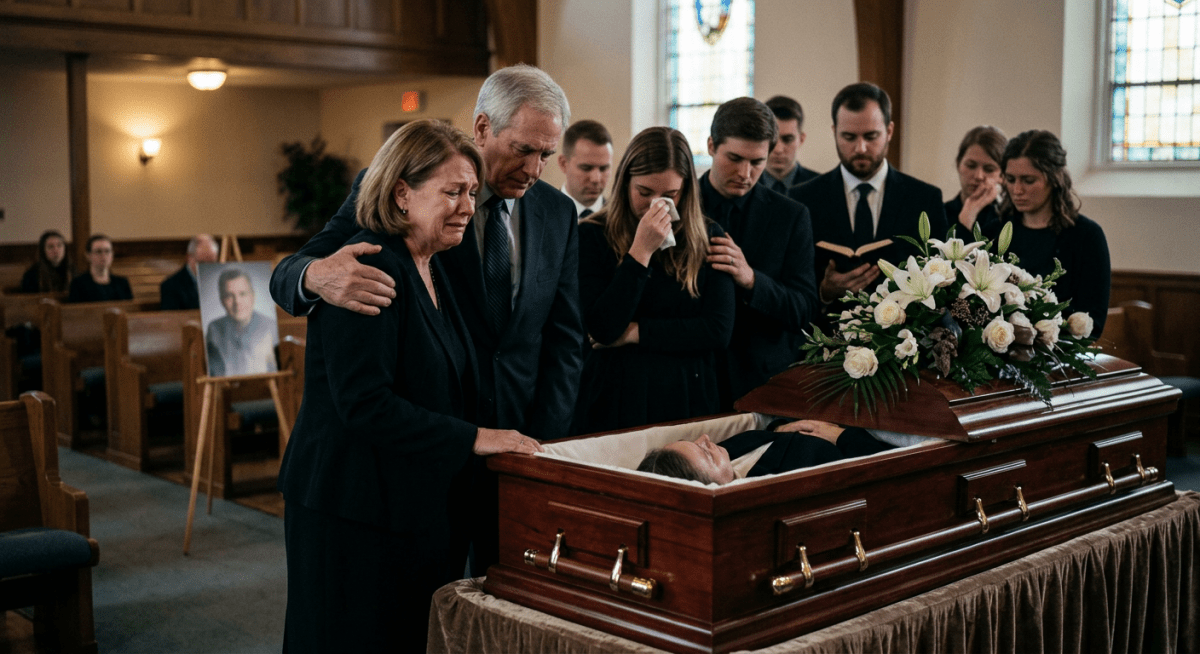
There is one thing that I can guarantee to you, and that is that you and the ones you love will die someday. That is how this life works. It ends. Because this happens 100% of the time, one would think that we would be better prepared. We can end up emotionally unprepared for death because we have used denial as a coping mechanism (it is bad choice), we have been isolated from seeing death until there is no way to deny it, or the death or somebody happens in a tragic and pre-mature fashion. I would like to give you some ideas that can make you a lot sturdier when it comes to loss through death or receiving the shocking news that you are dying.
First, develop an eternal mindset. Our experience is limited to this life. That makes this step a little difficult. But there is plenty of evidence to say that we go on. Every world religion includes some form of eternal existence. Christianity not only has the revelation of what I share in this blog, it has proofs in the form of Jesus’ miracles including the raising of the dead and more. These miracles had many eye witnesses. If that is not enough, then consider the multitude of Near Death Experiences. This isn’t wishful thinking. This is something that needs to be throughly investigated and prepared for.
How am I prepared? I am now 64. When I think about my near future I project living to 90ish. The 26 years I have until 90 are not prime real estate. They likely will not be my best years physically or mentally. For this reason, I acknowledge that it could be far less. This would fill me with sorrow if not fear if it would not be for the certain faith that I have that I will move through death into Heaven, and that the best part of my existence is ahead of me. This certainty is not based on my behavior or the depth of my faith. It is based on the life, death, and resurrection of Jesus; along with God’s promise, His character, and the experience I have had interacting with God.
As I think of the rest of my life, I can see great purpose. I will do what God gives me to do until my final hour. That is what this life is for. Part of that purpose is to ride this body down to the point where I can leave it. I can handle whatever that may look like. That is my mindset and determination. No living in denial here.
I also expect my loved ones to die someday. It could be before me or after me. I would prefer after me, but should it be before me, I have solace that they are also under the same promise of eternal life and we will pick things up again after we are all out of here. This may mean that I might have to spend some time here without them. I have thought about what I will do and how I will cope. I don’t need to figure this out in an urgent fashion.
What if your loved ones are not clearly connected to Christ? Another thing that I would suggest is be satisfied that you are doing all that you can.
I would be pleasantly surprised if my father’s father is in Heaven. In life, he seemed to have one god and that was himself. I loved/love my grandfather. I take solace in that while he was alive I tried to be a witness to him via letter, book, and speaking to him about Jesus. I don’t know if it took. The result has been a degree of emotional separation. In the end, I cannot force anyone to believe. So there is no grief in that regard. Still, I am not convinced that Jesus is done with him.
Most of the Western Christian Church either believes that death is the end of our opportunity to be saved or has even enshrined this belief in stated doctrine. The Eastern Church is not this way. The information God has given us on this topic is pretty scant either way. The belief that death is the line in the sand is pretty much one passage and that out of context. It is Hebrews 9:27:
27 And just as it is appointed for man to die once, and after that comes judgment,
Hebrews 9:27 (ESV)
This is a proof text that Jesus only had to die once. He is not sacrificed over and over. That is the context. It is also biblical proof against reincarnation. It says nothing about our physical death being like Judgment Day. Judgment Day is the end of hope for an individual. The opposite is not well supported either, but at least the passage is in context.
6 For this is why the gospel was preached even to those who are dead, that though judged in the flesh the way people are, they might live in the spirit the way God does.
1 Peter 4:6 (ESV)
The context is Jesus’s decent into Sheol. https://afterdeathsite.com/2017/03/14/christs-descent-into-hell-part-1/. It is not clear what can happen if a person dies without Jesus, but there is at least reason to feel that there is some hope.
The final preparatory thing I would suggest is to hold on to this life lightly. We all have things that we like to do and places we like to go. Realize that these are all temporary, that you can live without them, and that there are better things coming. I like to golf, but I could quit right now. I like to travel, but I don’t need to see everything. This life is for fulfilling God’s plans for me, not entertainment.
If we can internalize these things then what is left to grieve is the temporary loss of enjoying things together. That is something. We can also grieve that death is a thing at all. It is wages of death and that is regrettable. So sorrow isn’t a bad thing or a lack of faith. It doesn’t have to be crippling either. Crippling sorrow is dangerous. Not only does it rock the faith of an individual, it can diminish their usefulness in life, and create a negative family dynamic and could have impact for generations.
So prepare yourself. God’s love and promises are resources to grieve well. Ponder them.

