What Is Hell Fire?

The post contemplates the concept of Hell, defining it as a place of eternal suffering for those without Jesus’ atonement. It explores metaphors used in scripture, such as fire and Hades, to convey the nature of divine judgment. Ultimately, it emphasizes the profound severity of separation from God’s presence in Hell.

It’s a name of a missile, right? It is, but I want to contemplate something else. First, let’s establish a meaning for the word, “Hell”. When I speak of Hell, I am talking about the final place of eternal judgment. It is a post-Judgment Day actual place. It is a place of suffering that includes all who have rebelled against God and have an eternal nature (they don’t just cease to exist) and do not have Jesus’ atonement for their sins. It includes people, Satan, and demons. Jesus uses the word “Gehenna” to refer to it. Revelation calls it the “Lake of Fire”.

Fire, as we have experienced it, is a rapid oxidation resulting in an exothermic reaction. Light a match, that is what is happening. Is that what is happening in Hell, or on Judgment Day (1 Corinthians 3:10f, 2 Peter 3), or even in Sheol? Just a lot of combustion? I doubt it.

When the Bible needs to introduce a concept to us for which we have no frame of reference, it has to use something we know as a metaphor. Fire, as we have experienced it, is similar to the things mentioned above in some way, but it is not necessarily oxidation. I could do this with something in our physical world to help someone with no knowledge of it. I could call nuclear fission a fire. They are both hot.

Let’s start with Sheol/Hades. If you are not familiar with these terms, type them in the search box in the top right of this page. In Luke 16:19-31, Jesus tells the account of the Rich Man and Lazarus. Both are in Hades but one on the “good” side of the chasm and one on the bad side. The Rich Man describes the bad side this way:

24 And he called out, ‘Father Abraham, have mercy on me, and send Lazarus to dip the end of his finger in water and cool my tongue, for I am in anguish in this flame.’

Luke 16:24 (ESV)

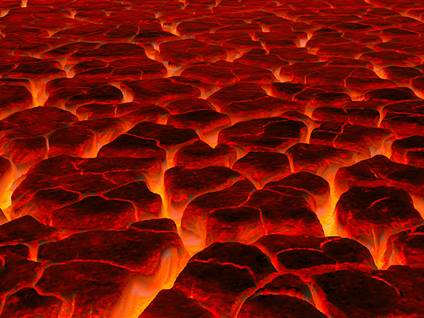
Maybe it’s combustion, does it matter? It helps to understand that while all of these use “fire” or “flames”, they are not the same thing and this adds to our understanding of what will happen. Hopefully, we never experience what the Rich Man is experiencing. Jesus is the way to not experience it. For me, it raises the questions of where Sheol is and what is a person’s nature within it. I think it is obvious that Sheol/Hades is not in the center of the Earth as the ancients imagined it. Volcanic activity was just an available metaphor. If it is other dimensional, then do we have a body for Sheol that experiences heat. If this is just their spirit. What can a spirit experience? It suffers to the intensity of being in the scorching heat of a volcanic chamber.

How about the destruction of the universe in 2 Peter 3?

But by the same word the heavens and earth that now exist are stored up for fire, being kept until the day of judgment and destruction of the ungodly.

But the day of the Lord will come like a thief, and then the heavens will pass away with a roar, and the heavenly bodies will be burned up and dissolved, and the earth and the works that are done on it will be exposed.

2 Peter 3:7,10 (ESV)

The destruction of the universe does sound like a nuclear-type reaction. If fact, during the Cold War, people read this as a nuclear destruction of our own doing. Even nuclear reactions leave molecular remains of slightly less mass. If this verse is being that technical, then this “fire” may go further than even a nuclear fission process.

How about this fire?

13 each one’s work will become manifest, for the Day will disclose it, because it will be revealed by fire, and the fire will test what sort of work each one has done.

1 Corinthians 3:13 (ESV)

This fire doesn’t consume anything. It tests and reveals the historical actions of one’s life. More like the Goblet of Fire in Harry Potter. Here the point of comparison may be appearance, just like “tongues of fire” resting the disciples heads on the day of Pentecost. There is some discomfort with this. This is the judgment of our deeds. While not the determining factor in our salvation, it is a probing evaluation of life which will be less than perfect and somewhat embarrassing.

Finally, we get to Hell:

14 Then Death and Hades were thrown into the lake of fire. This is the second death, the lake of fire. 15 And if anyone’s name was not found written in the book of life, he was thrown into the lake of fire.

Revelation 20:14-15 (ESV)

This is the fire most to be feared. Yet, it is a fire that doesn’t seem to consume anything. Neither combustion nor fission, it deals out eternal suffering. The same questions I applied above to Sheol/Hades apply here. Where is it? Most likely some other dimensional plane that is not connected to the New Universe nor Heaven. Is it just the same as Hades? Here I would refer to what Jesus experienced on the cross to spare us from this fate. He is forsaken by the Father.

The presence of God is a very complicated thing. There is the full blown presence of Heaven at present, but even in Sheol/Hades there is some element of His presence (see Psalm 139). Now Hades is dumped into Hell. Is this somehow completely forsaken and removed entirely from the presence of God? What happens to any part of reality in that situation? Do even spirits burn? The point of contact is clearly the suffering connected with a burn. Is that just the best one can do to describe what happens in a relatable way? The resurrected body, which all receive if briefly (Daniel 12) and is referred to as indestructible (1 Corinthians 13) does prove to be destructible for the damned (Malachi 4). In Hell as person does not have this body. Stripped down in their nature to probably just the spirit, Satan, rebellious angels, and the damned among mankind experience what it is like to be forever out of the presence of God. I don’t care to have a fully relatable experience to this.


Sheol As a Waiting Room

Sheol is a Hebrew term for the waiting place of the dead, distinct from Hell, and appears in the Old Testament. Both the righteous and unrighteous go there. The understanding of Sheol is often obscured by translations. Some believe it offers a second chance for salvation post-Judgment Day, but interpretations vary widely.

Many people are not aware of what Sheol is, so first let me give you a quick primer. Sheol is a Hebrew term used 65 times in the Old Testament. Its Greek equivalent “Hades” shows up another 10. It is not a reference to “Hell” as most people think of Hell. It is more the waiting room for Hell. It is not “purgatory” either. Though I would bet that an ancient misunderstanding of Sheol led to the development of the idea of purgatory.

Sheol has escaped many people’s understanding thanks to some lousy translating. Many versions of the English Bible cover over the word by translating it as “the grave” or “the pit”. This is garbage. Sheol is a place and a proper noun. Leave it as is.

In the Old Testament everyone expected to go to Sheol whether they were considered righteous or unrighteous. It was the place of the dead. Jesus’ account of the rich man and Lazarus (Luke 16:19f) gives us the best glimpse into Sheol as it was.

22 “The time came when the beggar died and the angels carried him to Abraham’s side. The rich man also died and was buried.23 In Hades, where he was in torment, he looked up and saw Abraham far away, with Lazarus by his side.

Luke 16:22-23 (ESV)

Notice that both the rich man and Lazarus are in Hades (Sheol) but in significantly different conditions. Lazarus is in “the bosom” of Abraham, and the rich man is in torment. He explains the torment as being because of fire. Thus the confusion with the post-Judgement Day “lake of fire”, which we think of as Hell.

Lazarus, Abraham, and the rest of the Old Testament righteous are waiting. For what? For Jesus to complete atonement for their sins on the cross and for Jesus to complete the Law in a way that they did not with His life. Timing actually matters. You didn’t suffer in this part of Sheol. The Roman Catholic Church refers to this place as “The Limbo of the Fathers”. Others prefer “Abraham’s bosom”. I like “the good neighborhood of Sheol. It reminds you where it is. What did they do there (some for millennia)? Don’t know.

When Jesus had completed His work, He set them free.

As for you, because of the blood of my covenant with you,
    I will free your prisoners from the waterless pit.
12 Return to your fortress, you prisoners of hope;
    even now I announce that I will restore twice as much to you.

Zechariah 9:11-12 (ESV)

You can see that they were rewarded for their patience and faith. Want to read more about Jesus’ descent into Sheol read here: https://afterdeathsite.com/2017/04/04/christs-descent-into-hell-part-4/

People like the rich man were/are waiting too. Without the forgiveness of Christ you are stuck in the bad neighborhood of Sheol until Judgment Day. Could actual Hell be any worse? Read this: https://afterdeathsite.com/2023/11/14/how-is-sheol-different-than-hell/

Those who now die connected to Jesus will never go to the “waiting room”. Eternal life in Heaven begins immediately.

Is there any hope once you find yourself in the bad neighborhood of Sheol. Many people and denominations say “no”. To be honest there is not a lot of Scriptural information on the topic. Those who say no are depending on one verse, which I think they misapply. It is Hebrews 9:27:

27 Just as people are destined to die once, and after that to face judgment, 28 so Christ was sacrificed once to take away the sins of many; and he will appear a second time, not to bear sin, but to bring salvation to those who are waiting for him.

Hebrews 9:27-28 (ESV)

You can see that the context is about how many times Christ is sacrificed. The answer is one. Similarly, how many lives do we live before judgment–one. It does not say the final judgment is immediate. There is the waiting room. The one Bible passage that suggests some measure of hope is 1 Peter 4:6:

For this is the reason the gospel was preached even to those who are now dead, so that they might be judged according to human standards in regard to the body, but live according to God in regard to the spirit.

1 Peter 4:6 (ESV)

“The gospel was preached to those now dead” is not a great translation. It is more like “for indeed the dead ones were evangelized (declared the good message)”. The context of “the dead ones” is found in 1 Peter 3:20. They are the disobedient people killed by Noah’s flood. They waited in the bad neighborhood of Sheol until Jesus declared the promise of salvation to them. Then some, if not all, were made alive to God.

How far does this second chance go? I don’t know. I hope far. It is clear that many make it through the waiting room all the way to their appointment at Judgment Day. Hell won’t be empty, and that is regrettable since what Christ did was big enough for all.

Do Humans Have a Body in Hell and Sheol?

I bet you were lying in bed wondering about this very question. I grant you that it is an obscure issue for which we have little information but it is a parallel to the important issue of whether we have a body in Heaven (to which I say yes), and it connects to same verse in Scripture, which is 2 Corinthians 5:1f.

For we know that if the tent that is our earthly home is destroyed, we have a building from God, a house not made with hands, eternal in the heavens. For in this tent we groan, longing to put on our heavenly dwelling, if indeed by putting it on we may not be found naked. For while we are still in this tent, we groan, being burdened—not that we would be unclothed, but that we would be further clothed, so that what is mortal may be swallowed up by life.

2 Corinthians 5:1-4(ESV)

Our body that we have during this life is a “tent”. It houses our spirit, but it is a legitimate part of what we are. That is why there is a resurrection of the body. Paul says that we do not wish to be “unclothed”, which means without a body. Can such a situation even exist?

The Bible does not say where Heaven, Sheol, or the final Lake of Fire actually are. The ancients conceived of Sheol as the center of the Earth, and Heaven as being outside the furthest reach of the universe; but that does not make it so. Recent work in theoretical physics uses the concept of other dimensions. Albeit these dimensions are not observable because they are very small. There is no constraining reason why they must be small. What if they are unobservable just because we are constrained to live and observe in only three spatial dimensions. What if other dimensions do exist, explaining some of the odd behavior of gravity and quantum physics, but actually define the space of parallel universes. These universes would not have to be in lock-step with ours because they are only connected at the quantum level. This could define the space of Heaven, Sheol, the Abyss, and possibly Hell.

Going with this very unprovable theory, that would be why an “earthly” body is Earthly. It only can move in the dimensions of this space-time. And why a “heavenly” is Heavenly. It moves in Heaven’s dimensions. Could Sheol be its own space-time with a Sheol appropriate body. Not sure of the adjective for that one.

Descriptions of Sheol (please use the Search box if you are not familiar with this term to find posts about it) seem very physical. For example the rich man in Luke 16:

23 and in Hades (same as Sheol), being in torment, he lifted up his eyes and saw Abraham far off and Lazarus at his side. 24 And he called out, ‘Father Abraham, have mercy on me, and send Lazarus to dip the end of his finger in water and cool my tongue, for I am in anguish in this flame.’

Luke 16:23-24 (ESV)

Flame, water, cool, tongue all seem very physical. This would also connect to the general resurrection of the dead. The damned would need an earthly body to stand before God at Judgment Day on Earth. It would also connect to the destruction of those Earthly bodies:

“For behold, the day is coming, burning like an oven, when all the arrogant and all evildoers will be stubble. The day that is coming shall set them ablaze, says the Lord of hosts, so that it will leave them neither root nor branch. But for you who fear my name, the sun of righteousness shall rise with healing in its wings. You shall go out leaping like calves from the stall. And you shall tread down the wicked, for they will be ashes under the soles of your feet, on the day when I act, says the Lord of hosts.

Malachi 4:1-3 (ESV)

They won’t be needing those bodies where they are going next. Is the final Lake of Fire (i.e. Gehenna or Hell) also a “bodily experience”? Maybe it is not even connected to our multi-dimensional reality. Maybe “forsakeness” means total disconnection from creation? I think that is an interesting and disturbing thought.

One final thought. Paul speaks about being “unclothed”. The spirit of Samuel is “raised up” from the good neighborhood of Sheol by the Witch of Endor (1 Samuel 28:13-15). He seems “unclothed” in the bodily sense. He appears “wrapped in a robe”. What about ghosts? I don’t know how they would fit in the model given us by Scripture. Are they figments of a person’s imagination? Are they demonic? Are they people “brought up” from Sheol and left here? Are they just part of a tired sit-com (I prefer the British version)? The disciples thought they were seeing a ghost when Jesus came to them walking on the water. From where did such an idea come? I don’t know.

Again, most of this post is unproveable and unstated by Scripture verbatim. But it does make sense to me. I hope you find it thought provoking and may be only find through experience about the Heavenly body and your Resurrected body.

The Fate of the Old Testament Faithful

This topic does not directly impact any of us today, it is more of a curious bit of information. Still, the fate of the people of the Old Testament time does speak to the nature of God, the necessity of salvation through Jesus, and what God can and will do, besides being interesting.

It is clear that some people, not all people, from the ranks of Israel in the Old Testament received eternal life. God speaks of a “remnant” being saved. The word doesn’t inspire confidence that this is even a large minority of those in Israel. Did this remnant go to Heaven?

It may surprise people to know that there is no promise of humans residing in Heaven after death in the Old Testament. A few Old Testament prophets had out-of-body experiences of Heaven. The seventy elders of Israel at the time of Moses saw some shielded vision of God in Heaven. It says that Elijah was taken up into heaven.

 And as they still went on and talked, behold, chariots of fire and horses of fire separated the two of them. And Elijah went up by a whirlwind into heaven.

2 Kings 2:11 (ESV)

Being that this is an observation in the midst of a narrative, one can only conclude that Elijah went upward until he was out of sight. The passage doesn’t say anything about where he went. I would assume that even Elijah is not an exception. The Old Testament faithful all spoke of going to Sheol.

Serious theologians have been perplexed as to what to do with this word. Some translations rendered the word as “the pit” or “the grave”, and then would put a footnote saying : in Hebrew Sheol. Every word on the page was in Hebrew originally, so what was the footnote confessing? Sheol is not a hole in which we put a dead body. Sheol is a proper noun for a place. The place where the dead go pending some future event.

When the Old Testament was eventually translated into Greek, the word Sheol was translated as Hades. We could accuse the translators of coopting Greek religious ideas, since Hades is a place and a person in Greek mythology. It is Jesus who saves them from this fate. I would consider Jesus to be authoritative on this topic (actually any topic). In the story of The Rich Man and Lazarus, (Luke 16:19-31), Jesus gives us our most detailed look at Hades/Sheol. You might be fooled into thinking that this is a parable about Heaven and Hell, but the location of the rich man is identified as Hades.

In Hades the rich man is suffering. He states that he is in a fire. Hence the confusion with Hell. He has ability to speak with Abraham, one of the Old Testament faithful. Is this possible, or is this just a fiction? The use of names (Abraham and Lazarus) and the fact that this is not written as a parable with a symbolic lesson, suggests that this is an actual event. Add to it, that the Old Testament people spoke of going to Sheol and you learn that Sheol/Hades is a place divided by a “great chasm” where all the dead were to that point. Greek mythology states something similar. If this isn’t all myth, how would they know that? The forbidden practice of communicating with the dead could be a source.

The Old Testament faithful are not suffering in flames. Lazarus is being comforted. He is receiving good things. But he is not in Heaven.

Abraham and Lazarus may be among God’s chosen, but they are definitely still sinners. Why should they not be roasting with the rich man? A fairly well-known passage may have the answer:

25  [Jesus] whom God put forward as a propitiation by his blood, to be received by faith. This was to show God’s righteousness, because in his divine forbearance he had passed over former sins. 26 It was to show his righteousness at the present time, so that he might be just and the justifier of the one who has faith in Jesus.

Romans 3:25-26 (ESV)

This passage is a little hard to follow. It says the God offered Jesus as a sacrifice for sin to show that He didn’t compromise the Law with regard to the Old Testament faithful, even though He had left their sin unpunished up to the time of Jesus. He also offered Jesus to atone for those who have faith in Jesus presently and in the future.

The Old Testament faithful went to the comforting part of Sheol because Jesus would eventually pay for their sins. Are they still there?

They now dwell in Heaven because atonement is complete and Satan and his cronies have been booted. This movement is connected with “Jesus’ descent into hell”. More about that here:

https://afterdeathsite.com/2017/03/14/christs-descent-into-hell-part-1/

The Old Testament faithful are saved by being chosen by God, which manifested itself in trusting God for their salvation. They did not have details. Could such a path of salvation exist outside of Israel? I don’t see why not. There were faithful people before there was an Israel. Why not some outside of Israel and based on God’s mercy and foreknowledge?

So might you meet Abraham or Elijah or Lazarus in Heaven? I’m sure that is possible. They are alive and they are there. How about Adam and Eve so that you can thank them for messing up the world and your DNA for you? It would appear that they were repentant, so “yes”.

God reveals that He is unmoving with regard to keeping what is laid down as Law. Even though He spared the Old Testament faithful suffering, He did not just bounce them to Heaven until everything was actually completed. Foreknowledge was not enough. As people who live after Jesus, we can be thankful that God is faithful to His promises over millennia. We have the additional benefit of skipping Sheol all together in we are in Christ.

Confusing Heaven and the New Earth

One thing that seems to escape many Christians, even clergy and theologians, is that Heaven and the New Earth are two separate places. The idea that there is just Heaven and Hell has been broadly taught for generations. We have even gone soft on these. “Heaven” is almost never capitalized. Does this mean that the editors of various hymnals and Bible translations consider “Heaven” to be a concept rather than a place with a name? And many Christians don’t believe in Hell.

If you are of the impression that there is only Heaven and Hell, where did you learn that? What Bible passages were used? Or was this just the general description given you as a child by adults who never studied the Scripture for this topic? Such an idea can become entrenched in our mind. We are certain that it must be in the Bible, but it is not.

A couple of linguistic things add to our confusion. First, the Greek word for “Heaven” is used to describe “the atmosphere” (first heaven), “the universe” (second heaven), and the dwelling place of God or what I would describe as “Heaven” (third heaven).

“Hell” an English word with a long history of where it came from, is often sloppily assigned to two Aramaic words, “Gehenna”, which was just transliterated into Greek (so it is a Greek word too), and “Sheol” which is translated into Greek as “Hades”. I think it is interesting that one word is just borrowed by Greek (like the word “hard drive” is rarely changed in other languages) and the other is assigned a word with a lot of meaning. “Hades” is also a place of the dead for the Greek people. From this I would conclude that “Gehenna” and “Sheol” are not synonyms. They are two place names, and the latter conceptually fits with the Greek idea of Hades. The result is the tendency to merge places that exist before Judgment Day with those that only exist after Judgment Day.

Heaven, as most of us would think of it, clearly exists now. It is the visible dwelling place of God, the Cherubim (also called Seraphim) and the angels. It will continue to exist after Judgment Day but will not be the visible dwelling place of God. The New Earth is something spoken of in both Old and New Testaments. It is not Heaven and only will exist after Judgment Day. It becomes the formal dwelling place of God with the arrival of the New Jerusalem in Revelation 21.

Sheol/Hades is a place for the damned (and until Jesus made atonement for sin, the Old Testament righteous) that exists today. What I would call “Hell”, Jesus calls “Gehenna”, and John calls the “Lake of Fire”; does exist until after Judgment Day. That it is something distinct from Sheol/Hades is established in Revelation 20:14 where Hades is thrown into the Lake of Fire. I guess at that point they become the same thing.

So will we be in Heaven forever? With the resurrection of our bodies on Judgment Day, the New Earth will become both our permanent dwelling and the dwelling place of God (Rev. 21:1-4); but there are some clues that Heaven remains in the mix somehow. First there is this:

For we know that if the tent that is our earthly home is destroyed, we have a building from God, a house not made with hands, eternal in the heavens.

2 Corinthians 5:1

Does Paul mean “heavens” as the universe or as the current dwelling place of God? Is “heaven” wherever God dwells or a place of its own? I believe Paul is not speaking of the universe and that Heaven is a place, even after God dwells with man on the Earth. Another passage:

According to his (God’s) great mercy he has caused us to be born again to a living hope through the resurrection of the dead, to an inheritance that is imperishable, undefiled, and unfading, kept in heaven for you.

1 Peter 1:3-4 (NIV 1984)

We do go to Heaven when we die. God and probably the New Jerusalem are a part of Heaven that is eternal, but will move to the New Earth. Still, I think this is saying that part of our eternal inheritance is Heaven, the place. The New Earth and Heaven could be our home eternally. There is the movement of the New Jerusalem, which could be the sum total of Heaven, to the New Earth. This would create a parallel to the merging of Sheol and Gehenna described above, but symmetry is all that interpretation has going for it.

While I can see that some of the questions that can be raised about our eternity are unanswered, merging Heaven and the New Earth doesn’t honor the Scriptures, which clearly describes them as distinct. Either way, these things are ours by grace. God prepares for us a body or bodies and a sin and curse free place of existence where we are with Him.

An Expectation of Sheol

All his sons and all his daughters rose up to comfort him, but he refused to be comforted and said, “No, I shall go down to Sheol to my son, mourning.” Thus his father wept for him.

Genesis 37:35 (ESV)

The above quote comes from the story of Joseph. His brothers, in spite, had just sold Joseph into slavery and then reported him as dead to their father Jacob. Joseph was the favorite son of Jacob, and he is crushed by the news. He basically says that he will mourn until he dies, and then he will go where Joseph is–Sheol.

Sheol, the place of the dead, is where every Old Testament person expected to go. They are divided as to whether the experience will be a conscious or unconscious experience. None of them really look forward to it.

There is an expectation of bodily resurrection someday. This can be found in the oldest book in the Old Testament, Job, and it is briefly taught at the end of Daniel. Time will elapse between their death and the resurrection, however.

As mentioned in previous blog entries, translators have struggled with what to do with word, “Sheol”, and its Greek counterpart, “Hades”. Some translations have decided to make it “the pit”, “the grave” or even “Hell”. Usually it is marked with a footnote acknowledging that the word is “Sheol”. Basically, an admission that the translators were not sold themselves on the translation. For this reason Sheol is unknown to most Christians.

Is Sheol Hell? I capitalize both, because both are place names. And no, Sheol is not what I mean when I use the word “Hell” as a place name. “Hell”, for me, corresponds to the final place of forsakeness and suffering reserved for the damned. This corresponds with the word “Gehenna” or the description, “Lake of Fire” found in Revelation 20. Sheol/Hades is dumped into the Lake of Fire in Revelation 20:14. Clearly, it is a distinct place.

Does Jacob expect to suffer after death then? Not necessarily. Sheol is spoken of 63 times in the Old Testament. I am not certain how the people of the Old Testament acquired their knowledge of Sheol. It may have been from revelation from God, but not necessarily. Near Death Experiences and even the forbidden occultic arts could have given to society scraps of information about Sheol. It is allowed to remain in inspired works because it serves God’s purpose in telling the stories. At no place, is there a theological treatise on the nature of Sheol.

In general, Sheol is described as either unconsciousness or unawareness. It is always pictured as the wages of sin and bad. That makes it surprising that all, even the righteous, express an expectation to go there. Sheol is spoken of in poetic terms in Isaiah. It becomes a synonym for death, even though it retains the nature of a place name.

The Old Testament holds only a very modest hope for eternal life. The most detailed description of life after death applies to the New Earth described in Isaiah 65. This description itself is problematic as it describes existence more in terms of long, pleasant life rather than eternal life.

The lack of information about eternal life and the complete absence of an expectation to go to Heaven raises some interesting questions about the nature of revelation. If one sees the religion surrounding Yahweh (whether Jewish or Christian) as the product of humans, then you would explain the doctrine of eternal life as a development–something added later either because it was borrowed from somewhere else or imagined by somebody later. If, rather, you understand both Old and New Testaments as an ongoing dialogue between God and humanity, you understand that God can reveal information when He chooses to reveal information. Theological development is people having more information then they had before.

Sheol is “developed” by Jesus in the story of Lazarus and the Rich Man. No one would have better and more information about such a place than Jesus. In the story, Lazarus, a poor beggar, dies and is carried to Abraham’s side. The story does not immediately identify where Abraham is. From the Old Testament we should expect that this is Sheol. The rich man also dies and is take to Hades. Here the place is named. He is conscious. He is tormented by flames. Still, he is able to converse with Abraham. Lazarus, however, is being comforted. His place in Sheol is not a place of suffering.

Many jump to the conclusion that Abraham and Lazarus must be in Heaven. That is where the righteous go. But Jesus blocks that conclusion in John 3:13 by telling us that no one has gone into Heaven, at least not yet. Abraham and Lazarus are in a separate parts of Sheol divided by a chasm from the rest, but not prohibiting some communication between the two parts.

Some church bodies have given names to the pleasant part of Sheol. The Catholic Church refers to it as the “Limbo of the Fathers.” Others just refer to it as Abraham’s Bosom. Most just ignore it.

Sheol as a destiny for the righteous awaited the atonement for sins that Jesus would complete. I expect “Abraham’s Bosom” to still exist as a place. But it is now an empty place. Our expectations are now happily turned to Heaven. That humans should occupy Heaven awaited not only atonement but the expulsion of Satan and his minions as described in Revelation 12.

While I don’t need independent confirmation of God’s revelation, it does exist. Near Death Experiences include both seeing Heaven and Sheol as briefly described by Jesus. The expectation of the resurrection of our bodies still stands as a future promise awaiting Judgment Day.

What To Do With “Sheol”

Unless you are quite the Bible expert, you probably don’t even know what “Sheol” is.  You might be shocked to find out that this Hebrew word is actually quite common in the Old Testament, yet in many English Bible translations the editors struggled to know what to do with it.  It is a place name.  So it should capitalized and left as is, still many times it is translated as “grave”, “pit” or “Hell” with a little footnote that says:  Hebrew:  Sheol.  The footnote almost seems like an apology.

The main reason why Sheol is not something you heard about or that it gets translated away is that it doesn’t fit in the most common understanding of places in the afterlife.  Most people just know Heaven and Hell.  It is poorly recognized that Judgment Day makes a big difference in what will exist.  Before Judgment Day the best fitting understanding of what exists after death is Sheol and Heaven.  After Judgment Day, Sheol (or in Greek Hades) is thrown into a “lake of fire” along with Satan and his angels, as well as, all the damned of humanity.  This lake of fire is what I think of when I use the word “Hell”.

Sheol/Hades does have some Hell-like properties, which adds to the confusion.  There is suffering, fire, worms.  It is a prison.  But I can’t connect the presence of Satan and demons nor can I connect being completely forsaken by God with Sheol.  It is different than the final destination.

The classic picture of demons tormenting people, whether it be from Michelangelo or “The Far Side”, is biblically incorrect.  In Sheol, they don’t seem to exist.  In Hell, they suffer with everybody else.

I’m sure most people dismiss both Sheol and Hell as a myth.  Who wouldn’t want to?  I don’t like the idea that these places are the destination of most people at their death.  I hate it, but I can’t dismiss it. Jesus speaks of both Hell (Gehenna) and Hades.  Jesus also descended to Sheol.  It is forbidden, but apparently possible to communicate with people in Sheol.  And modern people have had out-of-body experiences of Sheol.

My dog hates going to the Vet.  When they are about to do a procedure on him, he hides his face under my arm.  It is like he is thinking, “If I can’t see you, you don’t exist.”  That is how those who dismiss Hell or Sheol are coping with a frightening reality.  Unfortunately, the Vet still exists, so does Hell and Sheol.

Would God really do this?  Where is the love?  God is very “literal” in the sense that once a law is written in Heaven, it is enacted.  The Law requires sinners to be sent to Sheol and Hell.  The love is found in that God created a personally costly way for both the Law to be fulfilled and people to be spared Hell and Sheol.  That way is Jesus being forsaken on the cross.

That is serious stuff.  You don’t go to the extremes that Jesus went to if you don’t really love who you are trying to save and what you are trying to save them from is something aweful.

Rationalizing about Hell, living in denial, ignoring it until later are all dangerous coping mechanisms that push one close to finding out about Sheol and Hell from personal experience.  I would rather just read about it.

Go to Hell

We have probably all said this to someone or something in anger.  Or we have said its more profane equivalent.  These words flow easily without understanding their literal meaning.  Hell is not a place I would wish on my worst enemy or on the worst of people.

Is Hell real or was it just a fable to control people with fear?  Without a doubt the fear of Hell has been abused by some, but Jesus clearly speaks of its reality.  If you take Heaven seriously, you have no ground for not taking Hell seriously since Jesus spoke of it often, maybe even more than Heaven as a destination for mankind.

To be specific, I make a contrast between two words that are often rendered as “Hell”.  Jesus speaks of Gehenna and Hades.  These are not synonyms, so they should not be translated as the same word.  Hades is the Greek equivalent of the Hebrew Sheol.  It is the destiny of those without the forgiveness of sins prior to Judgment Day.  The characteristics of Hades do resemble that of Gehenna, so people have tended to conflate them.  Hades and Sheol constitute the majority of references to Hell in the Bible.

When I, and most people, think about Hell, they are thinking about the final place of judgement, not a temporary one.  Because of this, I prefer to reserve the word Hell for the post-Judgment Day destination of the damned.  That convention would limit the references to Hell to the following passages that I would like to handle a couple at a time over the next few entries.

Then they will go away to eternal punishment, but the righteous to eternal life. (Matthew 25:46)

This passage comes at the end of the Sheep and the Goats story which definitely describes Judgment Day.  Just two words describe Hell here: eternal and punishment.  We will have to look elsewhere to find the nature of the punishment.  The disturbing thing here is “eternal”.  There is no end to it.  I would be more comfortable with “permanent destruction” suggesting that the evil people come to an end, or even “long” punishment.  Eternal is tough.  What could be bad enough to deserve eternal punishment?  The gravity of this has caused some to postulate that Hell doesn’t exist, or it doesn’t exist for any human, or it actually is temporary.  I think this passage is pretty clear.  People are going to eternal punishment.

In the same chapter are these words:

And throw that servant outside, into the darkness, where there will be weeping and gnashing of teeth. (Matthew 25:30)

Does this refer to the eternal Hell, too?  It doesn’t expressly say, but a couple of things would make me conclude so.  First, Matthew 25 is all about preparation for Judgment Day, so this seems like an outcome of that.  Then the words “outside” and “darkness” imply a separation from God, which is the ultimate judgment.  When Jesus was forsaken by His Father on the cross, it seemed that was far worse than the nails or other torments.  Jesus being forsaken results in our not needing to be forsaken, if we are connected to Jesus.

The other descriptors are “weeping” and “gnashing of teeth”.  Both sound horrible.  They also sound physical.  The final judgment is a punishment of both body and soul.  More about this later.

I would love for Hell to be either fictional or empty, but I would rather know the truth rather than be surprised by it.  I would also prefer to learn about Hell from afar rather than from experience.  Though unpleasant, please follow me as I look at the other references in the Bible.