
Judgment Day for the Damned

This is a topic that many would rather not think about. To be honest, I’d rather not write about it; but to be thorough it is a topic that concerns existence after death about which the Bible speaks. Judgment Day for the damned is something that you will observe in part. Hopefully, because of the grace that comes through Jesus, it is not something that you will experience.

Judgment Day as a damned person is something that people will experience. God is loving. He would rather this not be the case. But God is also absolute in His application of the Law. He can and will bring eternal judgment. The real disappointing fact is not that it happens at all, but that it seems that it will happen to most. My least favorite passage in the Bible says:

 “Enter by the narrow gate. For the gate is wide and the way is easy that leads to destruction, and those who enter by it are many. 14 For the gate is narrow and the way is hard that leads to life, and those who find it are few.”

Matthew 7:13-14 (ESV)

What is “destruction” in this sentence? Since it is put in opposition to “life”, I have to conclude that it is the final condition of those who are damned.

Why would anyone be damned? All of the human race demonstrates its rebellion against God through our daily sins. Maybe those sins aren’t particularly destructive or hurtful, but they are contrary to how we were initially created to be as humans, and they are offensive to a holy God. All of mankind’s sin flows from a sinful nature, which means that we inherited a distortion of how God created us. Sin is not just willful. For us, it is part of our being.

All of this would be rendered harmless, if only people would or could put their faith in Jesus. Jesus fixed it on the cross. If a person wouldn’t resist the Holy Spirit and be connected to Jesus, they would be fine. But the majority turn out to be not fine. So effectively, people are damned for rejecting Jesus as Savior.

People ask “where is Jesus” in the following Judgment Day passage:

41 “Then he will say to those on his left, ‘Depart from me, you cursed, into the eternal fire prepared for the devil and his angels. 42 For I was hungry and you gave me no food, I was thirsty and you gave me no drink, 43 I was a stranger and you did not welcome me, naked and you did not clothe me, sick and in prison and you did not visit me.’ 44 Then they also will answer, saying, ‘Lord, when did we see you hungry or thirsty or a stranger or naked or sick or in prison, and did not minister to you?’ 45 Then he will answer them, saying, ‘Truly, I say to you, as you did not do it to one of the least of these, you did not do it to me.’ 46 And these will go away into eternal punishment, but the righteous into eternal life.”

Matthew 25:41-46 (ESV)

God’s grace through Jesus is actually found in where the people are seated. In this account, those on the right have had their sins covered by Jesus’ death, and those on the left have not. Those on the left are judged for their lack of concern for others. These people may have done many charitable things, but their errors overwhelm their good. The people on the other side may have been qualitively worse, but Jesus has covered their many sins and only the good shines out.

This is not grading on a curve or saving based on what percentile of good you achieve. This is perfection versus imperfection, and the only way to be perfect is by connection to Jesus.

So what happens next? Prior to this moment of judgment, everyone has been physically resurrected from the dead. Many of the damned have been in Sheol, possibly for millennia. They have suffered a physical torment, but how? Their bodies were buried or burned or eaten or something. Either you acquire a body for the time-space of Sheol or your soul can suffer the torment of this space.

Now with a resurrected body built for this time-space, they experience the following:

 “For behold, the day is coming, burning like an oven, when all the arrogant and all evildoers will be stubble. The day that is coming shall set them ablaze, says the Lord of hosts, so that it will leave them neither root nor branch. But for you who fear my name, the sun of righteousness shall rise with healing in its wings. You shall go out leaping like calves from the stall. And you shall tread down the wicked, for they will be ashes under the soles of your feet, on the day when I act, says the Lord of hosts.”

Malachi 4:1-3 (ESV)

Their resurrected bodies are destroyed to ash. Is this the destruction mentioned above in Matthew 7? In part it is. I also think this is the moment referred to in Revelation 14 as it applies to a certain subset of the damned.

And another angel, a third, followed them, saying with a loud voice, “If anyone worships the beast and its image and receives a mark on his forehead or on his hand, 10 he also will drink the wine of God’s wrath, poured full strength into the cup of his anger, and he will be tormented with fire and sulfur in the presence of the holy angels and in the presence of the Lamb. 11 And the smoke of their torment goes up forever and ever, and they have no rest, day or night, these worshipers of the beast and its image, and whoever receives the mark of its name.

Revelation 14:9-11 (ESV)

Does destruction mean total destruction to non-existence? A lot of people want to say “yes”. It reconciles the idea of Hell to the idea of a loving God. But we can’t ignore the phrase “eternal judgment” seen above in Matthew 25 and several other places in the Bible, including these passages in Revelation 20:

and the devil who had deceived them was thrown into the lake of fire and sulfur where the beast and the false prophet were, and they will be tormented day and night forever and ever.

 And the sea gave up the dead who were in it, Death and Hades gave up the dead who were in them, and they were judged, each one of them, according to what they had done. 14 Then Death and Hades were thrown into the lake of fire. This is the second death, the lake of fire. 15 And if anyone’s name was not found written in the book of life, he was thrown into the lake of fire.

Revelation 20:10, 13-15 (ESV)

Again, the lake of fire does not imply destruction to non-existence. It speaks of a permanent miserable and hopeless existence alongside of Satan and his demons who will suffer as well. The main difference between this and the description of Sheol, which also includes fire, I would surmise from the suffering of Christ on the cross. This phase includes being forsaken by God. Being forsaken proves to be the worst part. Jesus being forsaken on the cross is Jesus taking the judgment of our sins on himself. He is forsaken, probably from noon until three, so that we would never experience it.

The damned then slip from description as they will slip from our memory. While we undoubtedly know people who will be among the damned, they will not remain a source of grief for those who are saved. As God forgets about them, so will we. What is important is that we remember them now. Perhaps there is hope that someone will respond to the Gospel and be saved.

The Cup of God’s Wrath

In studying the topic of existence after death in the Bible, we would all much rather focus on Heaven and the New Earth. It is easy to go into complete denial about God’s judgment. But information about God’s judgment is there for a reason. We should know it. In this article, I will focus on just three verses and they are frightening.

Revelation 14:9-11 reads like this:

 And another angel, a third, followed them, saying with a loud voice, “If anyone worships the beast and its image and receives a mark on his forehead or on his hand, 10 he also will drink the wine of God’s wrath, poured full strength into the cup of his anger, and he will be tormented with fire and sulfur in the presence of the holy angels and in the presence of the Lamb. 11 And the smoke of their torment goes up forever and ever, and they have no rest, day or night, these worshipers of the beast and its image, and whoever receives the mark of its name.”

Revelation 14:9-11 (ESV)

The context of this passage is the confrontation of the Church with the two beasts of Revelation 13. These “beasts” likely represent a strong demonic presence in a political form and a religious form. When will or did this happen? I think the most reasonable answer is that these beasts exercised their power during the Roman Empire. This doesn’t leave out the possibility that they are something still to be seen in the future. For our purposes, when they exist is irrelevant. The warning is not to receive their “mark”, which is something willingly and knowingly received, shows loyalty to the beast and rejects loyalty to Christ.

God is not soft on those who make such a choice. God’s wrath against such people is poured “full strength” into the cup of His anger. How does this fit into “God is love” and John 3:16? Jesus is given to us out of love and a desire to save people. His death is sufficient to save everyone. Outright rejection of such a heroic and costly act brings God’s wrath in full form. You experience what is known as the “alien” nature of God. God is not normally a wrathful being, but He can be.

When is this wrath revealed? It could be during the lives of the people in question, but it is definitely also a part of Judgment Day for them. While this group may find Judgment Day less tolerable than Judgment Day for others who are not saved, others will definitely also experience an eternal form of God’s wrath for basically the same reason–rejecting Christ.

Do the words of this passage suggest that God sits over these people and takes satisfaction in making them suffer eternally? While it does say that the “smoke of their torment goes up forever and ever”, I reject the idea that God and the angels are observing it or making it happen eternally. In fact, the worst part of being in the final form of Hell (The Lake of Fire) is not the fire but the abandonment by God. It is better to have God actively punishing you than to have Him forsake you. The forsakeness (God completely abandoning you) that Jesus experienced on the cross was Jesus taking the worst punishment of Hell for us.

One last thing to note about this situation is to ponder why “fire and Sulphur” doesn’t consume these people. Some “theologians” have tried to soften the idea of Hell by assuming than you burn up and are gone. That would be nice. The emphasis on the eternal nature of Hell, seems to refute that idea.

The resurrection of the dead is something that happens to all people, including the damned. The nature of the resurrected body may be why they don’t burn up. The resurrected body suffers but remains even in such a harsh environment.

By this passage we are duly warned about God’s alien nature. It is not to be trifled with. Praise God that we can experience only His love. Jesus specifically took on our forsakeness so that we never have to experience it. Thinking about God’s wrath can remain an academic topic for us.

Time and Eternity

I recently stumbled across an article with this title, “Scientists Create a State of Matter that Has Time in Two Dimensions.” In the common experience of our universe everything can be described by three spatial dimensions and the fourth is time. What would be described in that article would certainly bend the mind as most quantum mechanics does. I read only a short distance into the article before giving up. Their observation was that a second dimension of time was “borrowed” from another spatial set of dimensions “that did not exist”. I’m not sure how you arrive at that conclusion.

I share this brief synopsis to introduce the idea that time is not as straight forward as we might think. It seems to be something definitely tied to creation. It does not transcend creation. One fallacy that I have seen in some theological thinking is that we will transcend creation and time at our death. For instance, one common view is that when we die, we move forward directly to Judgment Day because we transcend time. Revelation 6:9-11 puts a hole in that theory:

When he opened the fifth seal, I saw under the altar the souls of those who had been slain for the word of God and for the witness they had borne. 10 They cried out with a loud voice, “O Sovereign Lord, holy and true, how long before you will judge and avenge our blood on those who dwell on the earth?” 11 Then they were each given a white robe and told to rest a little longer, until the number of their fellow servants and their brothers should be complete, who were to be killed as they themselves had been.

Revelation 6:9-11 (ESV)

Here people who have been martyred, so they are definitely dead, are asking how long it will take to get to Judgment Day. They are asking a time question. They are told to wait (a time answer). Nobody is transcending anything.

I do believe in the possibility of transcending all time, space, and physical laws. That is what God does. He is the Creator of all of these things and is “outside” of the constrains of time-space. People do not become like God in this regard. This may explain why to God a “day is like a thousand years and a thousand years is like a day.”

In the study of our universe, it was theorized and later proved that time changes as you approach the speed of light. From our experience it would seem like time is a constant. Would time remain the same if you moved into a different time-space continuum? This is what I theorize happens when we die. Heaven isn’t a distant part of our universe. It is a parallel universe that does exist. The passage of time there and the passage of time here may not be in lockstep. What would this mean for our experience? I’m not sure. I believe that post-Judgment Day we will have a resurrected body that will be movable from this renewed universe to a renewed Heaven. The Bible hints that we have an eternal inheritance in both. If time doesn’t move the same in both, that might lead to an interesting experience.

The final “time” topic I have is that of the word “eternal” itself. Is eternal a straight-line unending stream of experience? In the description of the new Earth in Isaiah 65 the length of our existence is compared to the lifespan of a tree. It doesn’t seem unending there. This dissonance with later revelations which use the word “eternal”, could be attributed to the limited revelation given to Isaiah who lives before Jesus’ victory.

God certainly had at least the ability to know that Jesus would succeed in His mission to atone for the sins of the world. He might just be not letting on to Isaiah that a place in Heaven was in the future for redeemed humans and that life in the New Earth was more than long but rather eternal. It also might be true that we just don’t know what it is like to transcend time as God does.

While I expect the meaning of “eternal” might be more complex than our minds can comprehend, I think the message is that our existence will be pleasingly unending. We will not return to beginning as some views in Eastern religions suggest.

While eternal joy sounds great, eternal suffering and damnation is another story. The Bible definitely portrays a majority being damned. It does not leave room for a damnation that consumes a being and leaves them non-existent. I suppose a possibility is that the experience of time might be vastly different in the time-space of Hell. This might mitigate the horror in some way.

With our limited experience and our limited revelation, there are more questions than answers. It is a topic that challenges the mind and leaves room for our imagination. We can be certain that whatever we experience, because of Christ, it will be good.

The Seventh Trumpet

The Book of Revelation gives us many of the pictures we have about life after death. In this article, I want to look at short passage with plenty of content. This is part of a series of revelations that starts with seven seals being broken on a critical scroll, is then followed by seven trumpets sounding, and finally seven incense burners being poured on Earth. These visions are not to be understood as being in chronological order, but rather each set of seven run parallel between the time of Jesus re-entering Heaven and His return to Earth.

The section I will write about today is Revelation 11:15-19:

15 Then the seventh angel blew his trumpet, and there were loud voices in heaven, saying, “The kingdom of the world has become the kingdom of our Lord and of his Christ, and he shall reign forever and ever.” 16 And the twenty-four elders who sit on their thrones before God fell on their faces and worshiped God, 17 saying,

“We give thanks to you, Lord God Almighty,
    who is and who was,
for you have taken your great power
    and begun to reign.
18 The nations raged,
    but your wrath came,
    and the time for the dead to be judged,
and for rewarding your servants, the prophets and saints,
    and those who fear your name,
    both small and great,
and for destroying the destroyers of the earth.”

19 Then God’s temple in heaven was opened, and the ark of his covenant was seen within his temple. There were flashes of lightning, rumblings, peals of thunder, an earthquake, and heavy hail.

Revelation 11:15-19

The seventh trumpet is sounded in the midst of Judgment Day. Perhaps it is the trumpet spoken of in Matthew 24:31 and 1 Thessalonians 4:16. It marks the transition from the Earth being Satan’s kingdom to it being God’s Kingdom once again. Once this happens there will be no more falling away again, for it says that He will reign forever and ever. “Forever and ever” is a bit redundant, but it emphasizes the point and makes for great music lyrics.

In what sense did God not reign? He is the Almighty. But operating under God’s own laws, Satan had seized control through Adam and Eve and the Tree of the Knowledge of Good and Evil. That event changed the genetics of creation at a minimum. Now God’s Word will be coded in the flesh of all living things.

The inhabitants of God’s throne room give Him praise, for now Judgment Day will begin. What does it involve?

The list of those being rewarded is curious. First, anyone being rewarded on Judgment Day has to be someone forgiven through the death of Jesus (John 14:6) They are made clean by Jesus’ blood (Revelation 7:14b). Then building on that forgiveness people can have a reward. The list breaks out prophets, saints (literally holy ones, not the Roman Catholic definition of saint) and those who fear God’s name. This would seem to be overlapping categories. The point I would make is that it is a comprehensive description of God’s people, as opposed to Revelation 6 and 20 which only enumerate the martyrs. The reward is some aspect of living in the New Heaven and Earth.

The final bullet is the destroying of the destroyers. Who is this? People have defiled the planet through pagan worship and sin, but they would be included in the judgment of the dead. Judgment Day also brings the final destruction of Satan and the demons that follow him. They have been fundamental in ruining God’s creation for Him. Now they will get theirs.

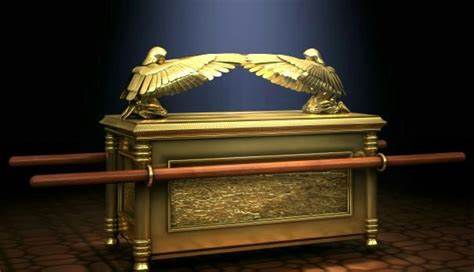
In the final verse, God’s temple in Heaven is opened. This is to distinguish between the former earthly temple (gone since 70 AD) and the arrangement of the New Jerusalem which will have no temple. Within it is the ark of the Covenant. So it is not in a church in Ethiopia https://nypost.com/2021/02/20/at-least-800-ethiopians-killed-after-defending-ark-of-the-covenant/ , nor is it in a US government warehouse like in Indiana Jones. God’s most holy relic is His. Its unveiling is merely to show that God’s people will have direct access to God.

What Will Our Resurrected Body Be Like?

Lately I have been considering my own health, fitness and appearance. I am 60. I think that I can say that I am in pretty good shape. But I have to add the qualifier: for a 60-year-old. If I were 25, I couldn’t say the same. Our health and appearance is a downward trend. God’s promise is not just that we escape the body. It is that we will receive a resurrected body at Judgment Day. Do we know anything about this resurrected body?

We do. First, it is not merely a repaired body. There were people raised from the dead in the Bible. They were fixed not resurrected. Resurrected is a more comprehensive overhaul. Jesus is the “first-born of the dead”. In other words, Jesus was the first resurrected human. He is also the Son of God incarnate. So as we look at the properties of Jesus’ resurrected body, we can’t be sure if it’s a resurrection property or a property of His divinity.

What stands out as different about Jesus post-resurrection? He is still touchable, He still eats, He still has scars from the crucifixion. These things are actually a little surprising, but good. Jesus is recognizable, but not always. The disciples on the road to Emmaus do not recognize Him until He breaks bread and then He disappears. Did Jesus change His appearance or mess with their minds? We don’t know.

Jesus also is able to appear inside the house where the disciples are hiding. The doors were locked. While I do not expect to be a shapeshifter or to impede the thinking of others, I would not be surprising if a resurrected body can move differently. The phrase “new heavens and new Earth” refer to the remaking of this universe. I don’t expect our domicile to be just another planet. I expect it to be a whole universe. If that is not enough to keep us engaged forever, I have an even stronger expectation that we will be able to move from Earth to Heaven and Heaven to Earth.

References to “heavenly bodies” in 1 Corinthians 15 and to “further clothed”, “eternal in the Heavens” in 2 Corinthians 5 leads me to understand that we will have a body that is meant for the time-space of Heaven, which I expect is parallel to this universe. A resurrected body is for this universe. To connect them both is a gift that makes us similar to angels as far as movement. This may also give us the ability to move at will great distances in this space.

Resurrected bodies also come into play in Isaiah 65. As noted in the article Wrestling with Isaiah 65, https://wordpress.com/post/afterdeathsite.com/1982, the text of Isaiah 65:17-25 may not be very literal. Some possibilities that arise from this section are: the ability to procreate; the ability to age well, die, and regenerate; the ability to work without laboring; and the ability to live in harmony with nature.

Will the resurrected body be indestructible? 1 Corinthians 15:42-44 speaks of this body:

42 So is it with the resurrection of the dead. What is sown is perishable; what is raised is imperishable. 43 It is sown in dishonor; it is raised in glory. It is sown in weakness; it is raised in power. 44 It is sown a natural body; it is raised a spiritual body. If there is a natural body, there is also a spiritual body.

1 Corinthians 15:42-44 (ESV)

The resurrection of our bodies is something that happens to both the righteous and the unrighteous according to Daniel 12:2-3. But those whose names are not “written in the book” because they are not connected to Jesus will have a different fate.

For behold, the day is coming, burning like an oven, when all the arrogant and all evildoers will be stubble. The day that is coming shall set them ablaze, says the Lord of hosts, so that it will leave them neither root nor branch. But for you who fear my name, the sun of righteousness shall rise with healing in its wings. You shall go out leaping like calves from the stall. And you shall tread down the wicked, for they will be ashes under the soles of your feet, on the day when I act, says the Lord of hosts.

Malachi 4:1-3 (ESV)

The resurrected bodies of the unrighteous are apparently not imperishable. Imperishable, even for the righteous doesn’t necessarily mean that you can’t damage them. The Trees of Life found in the New Jerusalem (Revelation 22) are for the healing of the nations. “Healing” can mean a lot of things, but it could be a reference to resurrected body repair.

It typical for people to just think of going to Heaven. A New Earth, much less a resurrected body, is not on their radar. But these things are written about more than Heaven. A resurrected body is part of the package. Perhaps you are looking forward to the trade-in.

An Insight into Heaven

I am fascinated by those who were chosen as prophets. They tell us what they have received from God, but rarely give any insight into how they received it. As a pastor I have a “semi-prophetic” role. I don’t produce a sermon out of brute biblical research. I do experience ideas that are true to the text or texts, and they seem to come so easily. Too easily for me. It is a spiritual gift. No visions. No voices. No out-of-body experiences. What happened to John as he received Revelations? Was it a vision or a field trip?

This week is All Saints Sunday. It is a day to remember those who have gone before us, and a day to think about what comes next after we die. The text I am using is Revelation 7:9-17. It makes you think. Was it a trip or a vision? Where is this? When is this? There are clues. Here is the first part:

After this I looked, and behold, a great multitude that no one could number, from every nation, from all tribes and peoples and languages, standing before the throne and before the Lamb, clothed in white robes, with palm branches in their hands, 10 and crying out with a loud voice, “Salvation belongs to our God who sits on the throne, and to the Lamb!” 11 And all the angels were standing around the throne and around the elders and the four living creatures, and they fell on their faces before the throne and worshiped God, 12 saying, “Amen! Blessing and glory and wisdom and thanksgiving and honor and power and might be to our God forever and ever! Amen.”

13 Then one of the elders addressed me, saying, “Who are these, clothed in white robes, and from where have they come?” 14 I said to him, “Sir, you know.” And he said to me, “These are the ones coming out of the great tribulation. They have washed their robes and made them white in the blood of the Lamb.

Revelations 7:9-14 (ESV)

I believe that it is very possible for God to take us anywhere in Creation, even forward or backward in time. That said, I believe that other visions of God’s throne room in Heaven, Isaiah 6 and Daniel 7 for example, are visions not trips. The reason is that Jesus said no one has gone into Heaven, among humans to that date, except Him (John 1:13). The reason, I believe, is that we could not tolerate it prior to our sin being atoned for by Jesus. John wouldn’t have that restriction. Still, the last line quoted above gives away that this is a vision.

Jesus’ blood cleanses souls not robes. The robes are symbolic of the human soul. Therefore, I think it likely that this is vision. Being a vision doesn’t make it unreal or just a dense metaphor of some sort. It is much like being there. Still, it is an input straight to his mind or right before his eyes.

Where is there? It could be Heaven, but it could be the New Earth. God’s throne room is currently in Heaven, but will move to the New Earth post-Judgement Day. There are no telltale clues in the text. The context places this in Heaven because it is in the midst of the opening of the seven seals. John’s Revelation moves across the breadth of the Earth’s remaining time several times. But this is in the midst of it. Judgment Day happens on the next page with the seventh seal and time resets.

When is it? Before Judgment Day, to be sure, but is it at John’s time? The clue is who is seen. John sees millions of people. By John’s date there would be the Old Testament righteous and those converted since Jesus (maybe 55 years), that might be a big number. But John notes that there are people from every tribe and nation. That wouldn’t be true then and not yet even. This is future, just before God wraps things up. The people are also described as “those who have come out the great tribulation”. It doesn’t say that they were martyrs as Revelation 6 and 20 note. So I don’t see that Heaven is only for those martyred. The great tribulation could be a period of time just before Judgement Day when persecution is very high, but it could also be a reference to every period and place in this life. Living under the curse and with sin and Satan is tough. Relatively speaking this world stinks.

The last part is exciting:

15 “Therefore they are before the throne of God,
    and serve him day and night in his temple;
    and he who sits on the throne will shelter them with his presence.
16 They shall hunger no more, neither thirst anymore;
    the sun shall not strike them,
    nor any scorching heat.
17 For the Lamb in the midst of the throne will be their shepherd,
    and he will guide them to springs of living water,
and God will wipe away every tear from their eyes.”

Revelation 7:15-17 (ESV)

At first blush, maybe serving God in His temple “day and night” doesn’t sound exciting. It is hard to conceptualize what it will be like to see God and what exactly we will do but expect it to be very exciting and a type of duty that you will covet. Also, don’t think that this is your whole existence.

The end of 15 and all of 16 describe a curse-free existence. All the things that make life now uncomfortable and frustrating will be gone. That is true for the redeemed after Judgment Day as well. In fact the similarities between Heaven and the New Earth lead some people to conflate them. They are two distinct things.

Finally, verse 17 is an intriguing one. Jesus, the Lamb “in the midst of the throne” will be their shepherd. Maybe we are thinking about the throne as just a large chair. It could be a whole world, or even a whole universe parallel to this one. We will be will Jesus doing many things beyond our comprehension. And there will be no reason to grieve and we will have a reconciled memory of what we went through here.

When you consider even the little that we know about Heaven from this text. It is hard to imagine that there could be more. But God plans more. The resurrection of our earthly bodies and a new Heaven and Earth.

Insider Information from Jesus

Usually when one speaks of “insider information” you are talking about investments. There are laws against using information that is not available to the general public to either purchase or sell your stocks in a company to make a profit or avoid a loss.

In the strange parable of the Dishonest Manager (Luke 16:1-13), Jesus gives some good advice on investing from a true insider, and it is not illegal. The parable is strange, and it confuses people about what it is teaching. The context of this parable is that Jesus is teaching his disciples in the presence of the Pharisees (Jesus’ most fierce rivals). He has already done one thing of which they disapprove. He is hanging out with the rabble of society (tax collectors for the Romans and “sinners”) In response to their disapproval, Jesus tells three stories: the Parable of the Lost Sheep, the Parable of the Lost Coin, and the well-known Parable of the Prodigal Son. Now Jesus is going to pick on the Pharisees other glaring defect–their love of money.

The story is about a manager who is going to get fired. To cushion his fall, he seeks to make friends with his boss’ debtors by fudging the books in their favor. It is strictly illegal, and Jesus’ is by no means approving of fraud; but the boss in the story is impressed by the shrewdness of the manager.

Some people want to make the boss in the story a metaphor for God. It is not. Is the story about mercy or forgiveness? For a change, no. The story is about Jesus’ encouragement of his disciples being shrewd with their money. How? He wants them to invest in people. He wants people to hear the Gospel, repent, believe God’s promise of forgiveness and eternal life, and inherit eternal life. How is this shrewd? You no doubt have heard the cliche, “You can’t take it with you.” It is almost true. All the wealth you accumulate in this world stays in this world, and you must leave. But if you have eternal life through Jesus and you use worldly assets (money, time, talent, etc.) to be a part of helping others have eternal life, then those people do follow you past the veil of death.

Jesus puts it this way,

And I tell you, make friends for yourselves by means of unrighteous wealth, so that when it fails they may receive you into the eternal dwellings.

Luke 16:9 (ESV)

People are a worthy addition to what God gives us in eternal life. They are a reward. Jesus says more:

11 If then you have not been faithful in the unrighteous wealth, who will entrust to you the true riches? 12 And if you have not been faithful in that which is another’s, who will give you that which is your own?

Luke 16:11-12 (ESV)

God considers many things that we have in this world to be ultimately his. We are just stewards and we will be evaluated on our stewardship on Judgment Day. Good stewardship can’t save us or add to what Jesus did for us, but it can be a source of something more. What are “true riches” in this sentence? Is it eternal relationship (i.e. people), is it honor, is it something else that we can’t imagine?

People who are saved by God’s grace in the first place need to be careful about feeling entitled. Good stewardship is just our job. But Jesus’ words bear consideration. Perhaps the best investment is the truly long-term investment.

Making the Most of This Life

One criticism that gets launched at Christianity is that Christianity moves your focus to life after death and neglects this life. While individuals may do this, true disciples of Jesus know this is certainly not true. This relatively short period of our existence, that we give the misnomer “life”, is important for its own unique purpose; and you would do well to understand what it is all about. It is having eternal life as a promise from God that makes effort in this life meaningful. Without it we are just chasing the wind.

The most important thing to realize is that our purpose in life is not trying to earn a place in Heaven and the New Earth. All our efforts will be so feeble in comparison to the glory God wants to give us that trying to merit eternal life is a fool’s errand. Eternal life has to be a gift and Jesus is the giver. Once you are connected to Jesus then what? God doesn’t move Christians immediately to Heaven because there is work to do. Jesus wants to work primarily through us. Maximizing this relationship is making the most of our lives.

You could pick a different purpose for life. You could see life as a time to amass wealth or power. You could make your goal travel. You could even seek to make a scientific or technological breakthrough. These things will end up as meaningless. Solomon found that out. (Ecclesiastes) Don’t worry about what people will think of you when you are gone or if they even remember your name. Care about God’s evaluation. There are things that God does care about. If you work with God and do things His way, not only will your accomplishments leave a big positive impact on other people, they will be honored with some type of eternal reward by God. Again, it is important to stress that entry into eternal life is the work of Jesus and a gift to you; responding to that gift with a fruitful life pleases God and adds to your future existence in some way.

So, what matters to God? God wants to save people from a necessary eternal damnation and bring them to eternal life. He does this by the power of the Holy Spirit working through story of Jesus and its associated promise of forgiveness and eternal life (the Gospel). First on the list of what we can do is to disseminate information about Jesus. Only God can make a believer, but we are part of the process via words and example. Everybody can do this.

Next, God wants more than people who believe Him. He wants disciples. He wants people who will learn and multiply the process. You can maximize your life by teaching your children, teaching others, and by financially and prayerfully backing others who do so. These two things are the main thrust of what cares about but not all.

God also wants kindness and care for others to flow from His people. Visit and care for the sick. Feed the hungry. Encourage the imprisoned. Help them to reintegrate into society. Fight injustice. Propagate the truth. Provide whatever kind of care that love requires. There are millions of opportunities to do these things.

God also includes us in spiritual warfare. Satan and his associates are real and present. They influence the minds of sinful people. Counteract their actions when you see it. Pray against the power of the evil one.

God also cares about our “normal” vocations in life. You have a job? Do it as one who is working for God. As long as the job is not illicit, it can be done for God’s glory.

Being a spouse or a parent or grandparent can also be done in a godly way that benefits your own family. God cares about this.

Got neighbors? Be neighborly. Help them. Get to know them. Pray for them.

We are also stewards. God considers us to be managers of assets that He puts in our care. This includes our body, our time, money, abilities, the planet, knowledge, relationships and more. Take care of them well. Use these things in a way that honors God.

Your ongoing relationship with God matters too. Communicate through prayer as with a friend. Worship God in sincerity (spirit) and accurately (truth). God seeks this type of interaction.

When you have eternal life through Jesus, your life is heaped with purpose. You will have purpose in eternity as well, but work in this fallen world is unique. All of these things are important to God but it is also important how you do them.

10 So you also, when you have done all that you were commanded, say, ‘We are unworthy servants; we have only done what was our duty.’”

Luke 17:10 (ESV)

You can’t do these things with a sense of entitlement. We are saved by grace, so we are not entitled. Humble service gains undeserved rewards. While there are many motives for doing these things, the best is love. Don’t work for reward. Work because you love God and God’s love is in you.

I hope that you can see that our lives can be meaningful to the last moment. Through transition of purpose, suffering, illness, even dementia.

Being mindful of our God-given purpose and pursuing it is living wisely. Maximize your life.

Scattered to the Wind

I very common way of disposing of somebody’s earthly remains is to have them cremated and then to dump their ashes in a place that had some significance to them while they were living. Maybe it was a trail on a mountain or at the seashore or just scattered to the wind.

This raises a practical question for one of the things revealed by the Bible–the resurrection of the body. If our remains are scattered or even if they are not, the molecules that made up that body end up as part of the soil and very likely a part of another living being, maybe even another person. Right now, your body could have in it carbon that was a part of an animal, a bug, or possibly several other people. At the resurrection of the dead do we fight for our original molecules?

This is part of a bigger question. What constitutes me? We are not just temporary chemistry with the illusion of having a consciousness. That idea, advanced by hardcore evolutionists, does not match the evidence at all. It feels more like the opposite. That I am a soul that is merely borrowing a body. That idea is common in Eastern religions (Hinduism, Buddhism, etc.) The Bible argues that we are a soul and an earthly body, and I would argue, even a heavenly body.

What is resurrected on Judgment Day, and how can it be me? Throughout our lives we are exchanging atoms with the environment around us. We should not assume personal possession down to the atomic level. What truly distinguishes our physical, earthly self is our DNA. Even our DNA is a flawed blueprint of our earthly being as it contains mutations passed on to us from our original distortion in the Garden of Eden, all our ancestors, and some we have suffered in our lifetime. We are truly not evolving but devolving.

That is why I am skeptical that our resurrection will involve our disposed of remains much or at all. The resurrected body will be raised perfected and indestructible. I expect it will retain many unique qualities that will reflect who we are, but none of the acquired weaknesses and flaws. God retains the design of what we are physically. As Adam was made from the earth, so will we be raised from it. Not necessarily, from the earth of our old bodies, or even in the location. For this reason, choosing a burial place is more a consideration for the living than the dead.

So is it with the resurrection of the dead. What is sown is perishable; what is raised is imperishable. 43 It is sown in dishonor; it is raised in glory. It is sown in weakness; it is raised in power. 44 It is sown a natural body; it is raised a spiritual body. If there is a natural body, there is also a spiritual body.

1 Corinthians 15:42-44

Assuming that our dead body forms a literal starting point for the resurrected body may be true or may be pushing the biblical analogy of a seed too far. Either way God has the matter in control regardless of where our dead remains end up.

Is It Acceptable to be Cremated?

Cremation has become a very popular choice for dealing with our earthly remains. There are a variety of reasons why people choose cremation: cost, use of space, even environmental reasons. In the past, pastors spoke against cremation. Why? Is it a biblically acceptable choice?

The first thing to consider is the Bible’s teaching about the resurrection of our bodies. At Judgment Day all people, both saved and not, are to be raised in a physically imperishable form. (For one of many articles on this topic see the following) https://wordpress.com/post/afterdeathsite.com/825 This will be good news for those who have a part in God’s New Heaven and New Earth. It will not be so great for those who will be forsaken by God. (Use the search bar for more on all of these topics)

In the past, it was common for people to be cremated either in an attempt to stop their own resurrection or to make a statement that they didn’t believe in a resurrection. In such a context, cremation was unacceptable. That is typically not the motive today.

Another objection sometimes raised against cremation is that the Jews buried their dead and pagans burned their dead. In the case of paganism and Eastern religions, cremation did have a theological significance. These religions saw the body as something evil. Our goal was to be free of the body. Burning the body liberated the soul. Conversely, burying the body had a theological foundation that acknowledged that our body, even after death, was a part of us. We are not a soul renting a body. We are body and soul.

That said, there is no laws against cremation in the Bible. Having examples like that stated above do not create unwritten rules. God has no problem resurrecting a person regardless of how their body was disposed. It is not a given that He will use the very same molecules. You will get a body that is uniquely you that is appropriate for the New Earth or Gehenna.

Cremation sometimes can have a positive or negative psychological effect on a person before they die. Some are distressed by the thought of their bodies burning. Others are distressed at their bodies decaying or being eaten. Both are unnecessary concerns, because you will be unconnected and unaware at the time.

Scattering of ashes in a favorite place is a common practice. This too finds its origin in the idea being freed from the body. It is not the greatest witness but few think of the theological origins of such a practice.

There is nothing wrong with saving money. Nor is there anything wrong with being mindful of space or ecology. I would conclude that there is nothing wrong with cremation if that is your preference and not distressing for your relatives.

God is able to take you to the next step no matter what you do. He can even resurrect ashes flung to the wind.