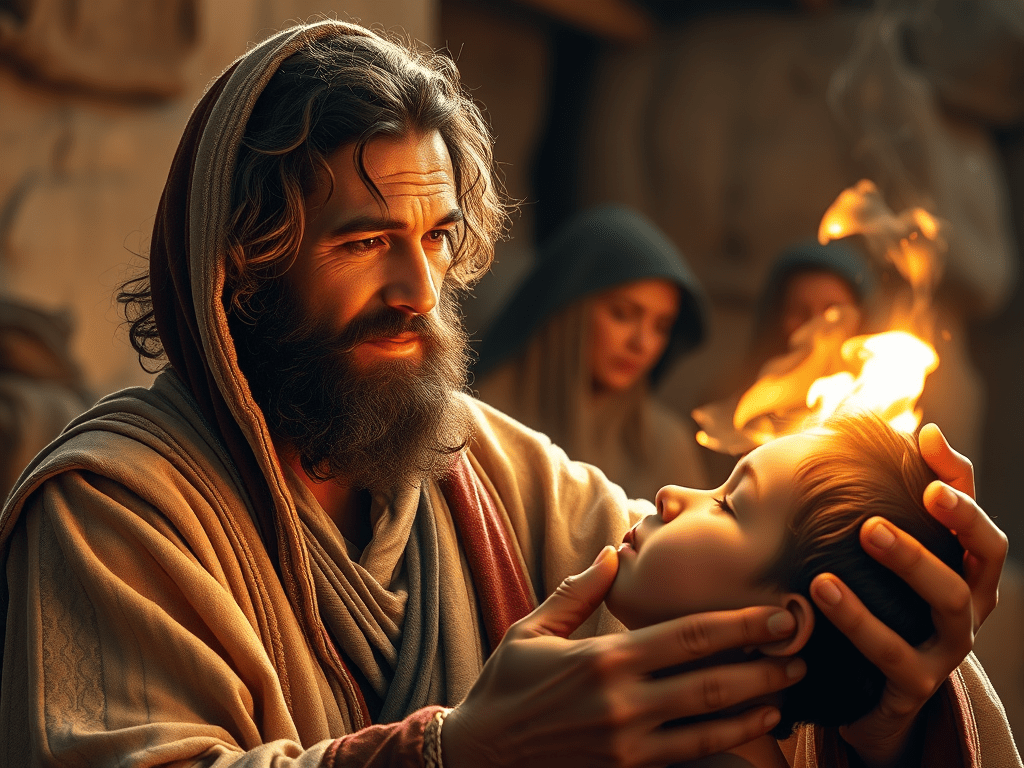

God’s Declaration In Isaiah 66

The content discusses the prophetic insights of Isaiah, emphasizing accurate predictions concerning Jesus and His significance beyond Israel. It highlights themes of eternal life and the New Earth, expressing God’s promise to reach all nations. The conclusion warns of the consequences for those rejecting Jesus, presenting a stark contrast to the hope provided in faith.

Looks into the future within the Old Testament are common. That is what prophecy is. We are living far enough in the future from the time of Isaiah that almost everything in it we can examine through hindsight. Almost.

Isaiah had warnings for the people of Israel and for the surrounding nations. It has all come true to my knowledge. It is so accurate that skeptics conclude that Isaiah had to be written after the fact, but there is no proof of this. Isaiah also spoke a lot about the coming of Jesus: virgin birth, living in Galilee, heir of David, widely rejected by the Jews, put through a judgment process where He did not defend himself, crucified for the salvation of others, and buried with the rich. They would be impossible or undesirable events to stage.

Toward the end of Isaiah there is a large and confusing section about the New Earth which is still future even to us. Check out my take on this section here: https://afterdeathsite.com/2022/05/24/wrestling-with-isaiah-65/

Then there are the final verses of the last chapter. It speaks about some stuff that is in our rear-view mirror and some that is not. It starts like this:

18 “For I know their works and their thoughts, and the time is coming to gather all nations and tongues. And they shall come and shall see my glory, 19 and I will set a sign among them. And from them I will send survivors to the nations, to Tarshish, Pul, and Lud, who draw the bow, to Tubal and Javan, to the coastlands far away, that have not heard my fame or seen my glory. And they shall declare my glory among the nations.

Isaiah 66:18-19 (ESV)

It is intriguing (to me) to ponder what constituted the right time to send Jesus to fulfill the Law and create an opening for people to have eternal life with God starting with Heaven and then later adding the New Earth. With this event comes a spreading out of knowledge about the God who encountered Israel for millennia, the events around Jesus’ life, and the promise of eternal life. God didn’t keep His promise within the borders of a chosen people. He opened the doors to everyone starting most likely 33AD. His description of “the nations” is strange to us, but must have been well known to the contemporaries of Isaiah. “They” in verse 19 must be the early disciples. The communication of God’s actions and the promise of eternal life continues with the disciples of Jesus today all around the world.

20 And they shall bring all your brothers from all the nations as an offering to the Lord, on horses and in chariots and in litters and on mules and on dromedaries, to my holy mountain Jerusalem, says the Lord, just as the Israelites bring their grain offering in a clean vessel to the house of the Lord. 21 And some of them also I will take for priests and for Levites, says the Lord.

Isaiah 66:20-21 (ESV)

Not only was it surprise to hear that God would reach out to other nations, but an even bigger surprise that some of them would be used like the priests and Levites. This chosen group served in the temple as their sole occupation. They were chosen because of the faithfulness of one clan during the Exodus. In the future this would be opened up. I am such a person.

Another surprise is that these saved foreigners would be “your brothers”. This is not a promise to gather the dispersed Jewish people but rather to gather the elect from every nation. These are people whom God can foresee that He will be able to reach. Not everyone will embrace the promise of Jesus. This is sadly observable. Why? I’m not sure the cause or causes. But some will.

The weird modes of transportation are interesting too. I have never brought somebody to church on a dromedary. But this isn’t transportation to a place exactly. This is being involved in diverse ways in people’s lives so that they are connected to Jesus and when we all move past Judgment Day and to the New Jerusalem (Revelation 21-22), we will be like a grain offering that makes God very happy. The New Jerusalem is a place. We just help bring people to Jesus.

“For as the new heavens and the new earth
    that I make
shall remain before me, says the Lord,
    so shall your offspring and your name remain.
23 From new moon to new moon,
    and from Sabbath to Sabbath,
all flesh shall come to worship before me,
declares the Lord.

Isaiah 66:22-23 (ESV)

Eternal life with God is just that–eternal. That is the consistent message of the rest of Scripture. This passage speaks of the permanence of the New Heavens and New Earth, the offspring of the people of faith within Israel, and their name. Part of our experience in Heaven and the New Earth will be worship. Don’t relate that to times you were bored in church. It is also notable that it is “all flesh”. Humans aren’t complete as a disembodied spirit. Paul calls that being “naked” (2 Corinthians 5). We will have a Heavenly Body and a resurrected Earthly body. Worship will be an immersive and positive experience. Everyone will do it. Everyone who is saved that is.

24 “And they shall go out and look on the dead bodies of the men who have rebelled against me. For their worm shall not die, their fire shall not be quenched, and they shall be an abhorrence to all flesh.”

I don’t think that we will make it a part of our eternal routine to observe “dead bodies”. The Bible says that everybody (saved and not) will be a part of the resurrection of our earthly bodies. While this may seem like an amazing and hopeful moment, those who stand judgment bearing their own sin rather than the righteousness we receive from Jesus will find their resurrected bodies are not indestructible. Malachi 4 speaks about them being turned to ash. That will be observable on Judgment Day, probably not after it.

The spirit of a damned person then experiences the ultimate consequence for sin that was completely avoidable. By rejecting Jesus they allowed themselves to bear the full consequence of the Law. They will experience an unending decay (the worm does not die), a fire that is never quenched, be abhorrent to themselves and others, and forsaken by God.

For my part, I wish this ended at verse 23. I can’t deny verse 24 and others like it. Jesus says many will enter destruct and few into life. I hope those relative terms do not mean like they sound. It sure sounds like the majority will experience verse 24.

How Will We Be Like Him?

The author contemplates the transformative experience of Heaven and the New Earth, focusing on how believers will resemble Christ in character and have new, indestructible bodies free from sin. They explore the uniqueness of individual personalities, potential cognitive abilities, recognition, and the non-divisive nature of gender and race in the afterlife.

I think that it is exciting to think about what I will be like in Heaven and the New Earth. It is not just our environment that will change, but we will be changed. The classic teaser passage about this is 1 John 3:2,

Beloved, we are God’s children now, and what we will be has not yet appeared; but we know that when he appears we shall be like him, because we shall see him as he is.

1 John 3:2 (ESV)

My question for this article is, “How will we be like Him”? Jesus is the incarnate Son of God. He became human and all indications is that He remains human to this day. I am human and when I pass I will remain human. I will not become an Angel. Angels are a separate yet similar species. I will be a human with a heavenly body (2 Corinthians 5:1). That will be a body very different than I one I now have. It will not have the genes or the structures formed by sinful nature. That is a big plus. It will be a body formed to exist in the dimensional space of Heaven and not this universe. That may not be noticeable to me. What else?

When Jesus rose from the dead, He had a resurrected, human body and also was the incarnation of the Son of God. I am not sure that I will have the same properties when I have a resurrected body that is built for this universe. What can we say about our heavenly body and our resurrected earthly body or just “our self” after death in Christ?

Our character will be like Christ, not just “sort of” like Christ as we are now? I will have all of the fruit of the Spirit to the full:

22 But the fruit of the Spirit is love, joy, peace, patience, kindness, goodness, faithfulness, 23 gentleness, self-control; against such things there is no law.

Galatians 5:22-23 (ESV)

Beyond this there are many other personality qualities listed in the New Testament. These won’t make us into personality clones of each other. We will just be great people. I expect that we will retain certain personality traits that make us unique now–positive ones.

My body(ies) will be indestructible and eternal. No more sickness, aging, or death. I’m looking forward to that. Anything else? The rest is strictly hypothetical.

1 Corinthians 15:42-44 speaks about the resurrected body, not necessarily the heavenly body:

42 So is it with the resurrection of the dead. What is sown is perishable; what is raised is imperishable. 43 It is sown in dishonor; it is raised in glory. It is sown in weakness; it is raised in power. 44 It is sown a natural body; it is raised a spiritual body. If there is a natural body, there is also a spiritual body.

1 Corinthians 15:42-44(ESV)

I’m going to say “glory” in verse 43 means in part “beautiful”. Most of us will not leave pretty corpses. Some of have been unattractive even as babies. It will be equal, yet diverse, forms of beautiful. How will we know each other then? If you die looking awful. Will you be unrecognizable? I hypothesize that we will have a gift of recognition not based on seeing faces. This would be great for those who are currently “face blind”. Peter, James and John knew Moses and Elijah at the Transfiguration. We are not told of introductions or name tags.

The quote above uses “powerful”. I expect both bodies to be “powerful”. But with what powers? No fatigue? Able to move fast? Able to lift heavy stuff? I am not really sure what “powerful” all entails. But we will in no way be feeble.

Will we retain gender or race? God desires people from every nation and Revelation 7 says:

After this I looked, and behold, a great multitude that no one could number, from every nation, from all tribes and peoples and languages, standing before the throne and before the Lamb, clothed in white robes, with palm branches in their hands,

Revelation 7:9 (ESV)

I expect that the answer is yes, but it will in no way be divisive or diminishing.

What about cognitive abilities? Not sure. Muscle memory and athleticism? Exciting to think about, but I don’t know. Abilities that have no analog with our abilities now? I sure hope so. The resurrected Jesus seems to either blind people’s recognition abilities or to be a shape-shifter. That may be a God quality. Might we able to present as a child, adult, or good-looking senior? It’s an intriguing idea.

There is much to look forward to when you are connected to Christ and have God’s grace covering you.

Biblical Stories of Being Raised from the Dead

The Easter story celebrates Jesus’ unique resurrection, contrasting it with other instances of being raised from the dead, like Lazarus and others. While Lazarus and others experienced repair or temporary returns, Jesus’ resurrection signifies a transformative experience, promising believers a future spiritual body and a restored existence in Heaven and Earth.

On Easter we celebrate Jesus being raised from the dead, but the Easter story is not the only story about being raised from the dead. The Easter story is unique, however, because Jesus isn’t just raised, He is resurrected. This is a very different thing. Perhaps in the course of your lifetime you might be clinically dead. You may even experience leaving your body. But modern medicine will bring you back. You will not come back as resurrected. You will merely be repaired, at least enough to get you by for a while.

The second most famous story is the raising of Lazarus in John 11. Jesus intentionally drags His feet on going to help His sick friend. The raising of Lazarus is going to be a powerful sign of what God can do. By the time Jesus arrives at the scene, Lazarus has been in the tomb for four days. Everybody expects physical decay to have begun. Has it? Not beyond the ability of Jesus to fix it. Where was Lazarus these past four days? Technically, Lazarus dies (the first time) before the atonement for sins is complete. I would expect that he had a brief stay in the good neighborhood of Sheol (aka The Bosum of Abraham or The Limbo of the Fathers)https://afterdeathsite.com/2021/05/11/an-expectation-of-sheol/ . Would that be upsetting to be recalled? I am not sure about the quality of existence in this space. It is a sort of waiting room for Heaven and may not be that different than living here. Lazarus was no doubt honored to be such a powerful part of the ministry of Jesus. There was one definite downside:

When the large crowd of the Jews learned that Jesus was there, they came, not only on account of him but also to see Lazarus, whom he had raised from the dead. 10 So the chief priests made plans to put Lazarus to death as well, 11 because on account of him many of the Jews were going away and believing in Jesus.

John 12:9-11 (ESV)

We are not given follow-up on this story. I would have to assume that Lazarus was later murdered. He would go through the process of dying twice, which tells me that it is not so bad on the relative scale of things. Lazarus’ resurrection is still pending.

Other people beside Jesus were given the ability to raise the dead. Elijah in 1 Kings 17:17f raises the son of a widow, and Peter in Acts 9 raises a beloved woman (Dorcas/Tabitha). The power of repair work can be given as a spiritual gift. Both are powerful signs. It is hard to say where the boy was for he was neither a Jew nor necessarily under grace. He may have come from the bad neighborhood of Sheol, and would have been overjoyed to get out. Tabitha would have been in Heaven. She had been dead for hours. Like Lazarus, I’m sure she was willing to fulfill God’s purpose in her existence. Also, like Lazarus she would die again.

Jesus raises the daughter of Jairus. This is similar to the boy raised by Elijah in the sense that the grief of parents is uniquely difficult. She is dead for less than a hour probably. It would be more like Near Death Experiences done by medical means. People who experience NDE’s of Heaven don’t want to return, but they continue to live with an excitement of getting back to Heaven.

One last non-resurrection “return”. The prophet Samuel is summoned by non-acceptable occultic means through the Witch of Endor (1 Samuel 28). Samuel is not pleased. Samuel says that he was “disturbed” and “brought up”. It doesn’t seem to be in physical form, so he remained dead but could communicate his displeasure.

What is different between being “repaired” and raised, Near Death Experiences, occultic summoning, and resurrection? A lot. We will receive a heavenly body for heavenly realms, but we are not complete until we receive a resurrected earthly body. This won’t happen until Judgment Day. The resurrected body exceeds our current body in every way. Paul describes it this way:

42 So is it with the resurrection of the dead. What is sown is perishable; what is raised is imperishable. 43 It is sown in dishonor; it is raised in glory. It is sown in weakness; it is raised in power. 44 It is sown a natural body; it is raised a spiritual body. If there is a natural body, there is also a spiritual body.

1 Corinthians 15:42-44 (ESV)

https://afterdeathsite.com/2024/12/10/pondering-the-properties-of-our-resurrected-body/Jesus was raised with all this plus being the incarnate Son of God, so the properties of His physical being are beyond our knowledge and all comparison.

While we won’t have some of the unique properties of Jesus, we will be vastly different than today, able to enjoy a restored Earth and Heaven. Easter joy is a celebration of a major mile post of the plan of God for our salvation. It also is a time to ponder what comes next for those who belong to Jesus.

The Human Soul

The text explores the concept of consciousness, discussing its relationship with the body, spirit, and soul from both scientific and biblical perspectives. It argues that while natural materialism reduces humanity to the body, biblical teachings emphasize a multi-faceted existence. Death is viewed as unnatural, separating spirit and body, necessitating a heavenly counterpart.

From a scientific standpoint, we speak of such things as consciousness as being the mysterious part of the human experience. Is consciousness an illusion? Is it just the chemical and electrical activity among our neurons or is there something more?

The Bible talks about our spirit, soul and body. Natural materialism wants to reduce us to one thing–a body. The Bible speaks of three. The body is easy to identify. The spirit seems to be something not of this three-dimensional space, but rather something connected to the body during our lifetime. The “soul” is sometimes used as a synonym for the spirit like here:

28 And do not fear those who kill the body but cannot kill the soul. Rather fear him who can destroy both soul and body in hell.

Matthew 10:28 (ESV)

This passage is interesting because it speaks of destruction, which apparently doesn’t refer to elimination. It also speaks of a body in Hell. Even the lost get a resurrected body, but it seems to be turned to ash according to Malachi 4. This must be a body for the space of Hell, the counterpart to a Heavenly body for the redeemed. The necessity of an accompanying body to our spiritual component is what is relevant to my blog today.

Paul says,

23 Now may the God of peace himself sanctify you completely, and may your whole spirit and soul and body be kept blameless at the coming of our Lord Jesus Christ.

1 Thessalonians 5:23 (ESV)

Here Paul is either being redundant or he is making a distinction between soul and spirit. The soul seems to be the interaction of spirit and body. It may be what you see when you image a brain. The soul could include our consciousness or just be an element of it. Where do such things as cognition, memory, self-awareness reside? When we are as we are created to be, a body and spirit united, then the answer is all of the above. Our memories are stored in our brain (a part of the body). The soul is the functioning of spirit and body together.

Death is an unnatural thing when compared to how God designed us. It is because of God’s sentence on sin that spirit and body are torn apart. Cognition, memory, consciousness go with the spirit. Be we are not whole without a body. We are “found naked” .

For we know that if the tent that is our earthly home is destroyed, we have a building from God, a house not made with hands, eternal in the heavens. For in this tent we groan, longing to put on our heavenly dwelling, if indeed by putting it on we may not be found naked. For while we are still in this tent, we groan, being burdened—not that we would be unclothed, but that we would be further clothed, so that what is mortal may be swallowed up by life.

2 Corinthians 5:1-4 (ESV)

“Unclothed” must be a ghost-like state, lacking the benefits of spirit-soul-body. It is because of this passage that I am convinced we have a heavenly body. The idea that Heaven is a part of an other-dimensional space than Earth helps this to make sense. Our bodies that we possess now are constrained to occupy the three-dimensional space of this universe. A parallel universe, like Heaven could be, would require a different body. Perhaps Hell would require a different one yet.

With each body-spirit combination comes a soul. The interaction of body and spirit. The description of our resurrected, earthly body as being “spiritual” (1 Corinthians 15:44) may refer to the ability to unite them both–our spirit with both the resurrected, earthly body and the heavenly body.

How far can science probe this? Not very. It can measure the explosion of energy when the spirit and body disconnect-likely the temporary disappearance of the soul. But science is also constrained to examining these dimensions. It certainly points to the existence of others through quantum mechanics, but that is all.

Revelation from God, though sometimes cryptic, gives us a greater insight into ourselves–an exciting insight.

Pondering the Properties of Our Resurrected Body

The blog discusses the complexities of eternal life, particularly the distinctions between various theological concepts such as Heaven, the New Earth, and the nature of resurrected bodies. Highlighting 1 Corinthians 15, the author contrasts current bodies with future resurrected ones, emphasizing themes of imperishability, glory, power, and the spiritual essence of these bodies in eternal existence.

One of the reasons that I have written this blog since 2016 is because the topic of eternal life is a little confusing. It is confusing enough that good theologians have merged some things that I believe should not be merged. For example, they merge Heaven with the New Earth or Sheol with the Lake of Fire/Gehenna/Hell. These mergers are easily shown to be mistaken. Another merger is the Heavenly body of a person, which 2 Corinthians 5 speaks of metaphorically, with the resurrected body which gets a lot of press.

How can we have an “eternal home” in Heaven (speaking of a body not a house) and a resurrected body on Earth. This isn’t a contradiction. As usual, it is describing a complex and new thing to us.

Today I would like to ponder the main text describing the resurrected body, 1 Corinthians 15:42-54. Let’s start with v.42-44:

42 So is it with the resurrection of the dead. What is sown is perishable; what is raised is imperishable. 43 It is sown in dishonor; it is raised in glory. It is sown in weakness; it is raised in power. 44 It is sown a natural body; it is raised a spiritual body. If there is a natural body, there is also a spiritual body.

1 Corinthians 15:42-44 (ESV)

Here are some interesting comparisons between the bodies we currently have and our resurrected bodies. The first is pretty easy to understand: perishable now and imperishable then. My body has built into it the process of aging, vulnerabilities to outside agents, defects from the start, and the inescapability of death. Freezing it and waiting for future technology is foolish. I consider the idea of digitizing our soul to be even more ignorant. I am going with God’s promise of an indestructible body.

“Indestructible” does seem to come with a few caveats. The unrighteous arise with a resurrected body as well, but after their Judgment Day rebuke their bodies are turned to ash (Malachi 4:1-3). Their spirit is cast into Hell. Perhaps there is a form of indestructible body for Hell, but you don’t want it.

Indestructible also raises the question of how reckless you can be on the New Earth. You might be able to damage the resurrected body, but the Tree of Life (Rev. 22) seems to be the only repair kit that you need.

Does the resurrected body age? This depends on how we are understand Isaiah 65 https://afterdeathsite.com/2022/05/24/wrestling-with-isaiah-65/ . It may speak of a lifecycle of the resurrected body or perhaps it is just making the point that we don’t have to worry about pillaging or death in any form. We know the resurrected body is eternal for the righteous from other sources.

Then there is the contrast between our current “dishonor” and future “glory”. Dishonor would be the presence of our sinful nature and all the products thereof. Glory would be at least the absence of these. Is it more? Will we be like a walking night light in some environments? It used to work at a nuclear power plant and people asked me if I glow at night. Will we have a visible aura? Maybe. Will we be beautiful? Beauty is a relative standard, but I have no doubt that we will look at each other and see unique beauty. Here we may be attractive for a while, but it definitely degrades until the best we can hope for is that we look good “for our age”.

Then there is the conversion of weakness to power. There was a time I was helping a man to whom I donated a sofa-sleeper. That is some heavy furniture, and, of course, he lived on the third floor. I am decently strong, but we got to the top floor and my muscles just said, “we’re done”. Weakness. Someday I may not be able to stand up on my own. So how powerful is powerful for the resurrected body. I expect much stronger, faster, agile. Also, I expect keener if not additional senses. And maybe new abilities. Will there be limits? I expect so. Just much higher limits.

Then the real mysterious trait: spiritual. Paul goes on to speak of this trait:

45 Thus it is written, “The first man Adam became a living being”; the last Adam became a life-giving spirit. 46 But it is not the spiritual that is first but the natural, and then the spiritual. 47 The first man was from the earth, a man of dust; the second man is from heaven. 48 As was the man of dust, so also are those who are of the dust, and as is the man of heaven, so also are those who are of heaven. 49 Just as we have borne the image of the man of dust, we shall also bear the image of the man of heaven.

1 Corinthians 15:45-49 (ESV)

This paragraph doesn’t get into specifics but rather just says that we will be like Jesus’ resurrected body in many ways. 1 John 3:2b echos this fact. But how? This may be the way that our Heavenly body and resurrected Earthly body are integrated. We would possess the ability to be present in the space-time of a new universe and be present in the space-time of Heaven. With so much freedom it is easy to imagine why we won’t get bored with eternal life.

Paul continues:

50 I tell you this, brothers: flesh and blood cannot inherit the kingdom of God, nor does the perishable inherit the imperishable. 51 Behold! I tell you a mystery. We shall not all sleep, but we shall all be changed, 52 in a moment, in the twinkling of an eye, at the last trumpet. For the trumpet will sound, and the dead will be raised imperishable, and we shall be changed. 53 For this perishable body must put on the imperishable, and this mortal body must put on immortality. 54 When the perishable puts on the imperishable, and the mortal puts on immortality, then shall come to pass the saying that is written.

“Death is swallowed up in victory.”

1 Corinthians 15:50-54 (ESV)

I main point here is that everybody, including those still alive when Jesus returns, needs to go through this transition. It is not just God’s requirement; it is because of the laws of the physics of what He has created. Another point made here is that until this happens, we are still partially under the consequence of sin–which is death. Moving to Heaven at our death is a big step, but our bodies are a part of us, and they need to be elevated are reintegrated. Then we are complete.

It is a lot to ponder but encouraging to do so. Thanks be to Jesus.

And I Will Raise Him Up on the Last Day

The blog discusses John 6, emphasizing Jesus’ teachings on eternal life and resurrection. It distinguishes between physical death and spiritual life through a relationship with God via Jesus. The author reflects on personal mortality and anticipated resurrection, contrasting the hopeful fate of the righteous with the dire prospect for the unrighteous, urging faith in Jesus as the path to salvation.

Recently, on my other blog (GivingChrist.com), I discussed a very controversial passage–John 6. You can see that discussion here:https://givingchrist.com/2024/09/17/the-mystical-union-lords-supper-and-john-6/. In John 6, Jesus uses a phrase twice. It the title of this article.

44 No one can come to me unless the Father who sent me draws him. And I will raise him up on the last day.

John 6:44 (ESV)

54 Whoever feeds on my flesh and drinks my blood has eternal life, and I will raise him up on the last day.

John 6:54 (ESV)

At the time, Jesus wanted the crowd, the Jewish leaders, and even His disciples to look for something more substantial than miracles, healing and food. He finally spells it out for them: eternal life and the resurrection.

The topic of the resurrection is a complicated thing. Daniel reveals that everyone will be resurrected for Judgment Day. It is not like one could avoid it. From Jesus’ perspective, the Resurrection is not synonymous with eternal life. We blur these topics together because we simply think of “life” as conscious existence. “Life” says Jesus, is knowing the true God and Jesus Christ whom You have sent. Or, as stated above, being drawn in to a relationship with God and sustaining a God-created bond through Jesus’ body and blood. The only experience that deserves the positive title of “life” is existing in the full presence of God. With that definition in mind, eternal life can be something you already have. I have it through the connection that Jesus has made between Him and me.

I have eternal life while my physical body is noticeably wasting away. I don’t have the stamina I used to have. I must take some medicines. I’m forgetting a few words. I know the direction that this is going. While I might realize a few short-term improvements, the general trend is toward my physical death. I am not a fan of the process, but I understand it and have confidence in its ultimate goal. My current body, brain included, has always been diminished by sin and a sinful nature. It was damaged goods at my conception. The plan is to dump this body but eventually gain a superior one.

How will we experience the resurrection of body? There are three possible scenarios. The one I expect to experience goes like this. I’ll die someday, and my spirit will separate from this body. I will immediately go to Heaven because of what Jesus did for me. My spirit will join with a heavenly body and recreate a soul. (See https://afterdeathsite.com/2024/03/26/your-body-soul-and-spirit/). My conscious existence will joyfully be engaged with Heaven until the day that Jesus rounds us up to head back to this planet. As we arrive, I will acquire my resurrected body. A body meant for a recreated version of this universe without any sin and with major upgrades.

Another possibly that is acceptable to me is if Jesus comes before I die. If this is going to happen, I hope it does before I break down too much. We still have to experience a break between spirit and body, but it will happen fast.

51 Behold! I tell you a mystery. We shall not all sleep, but we shall all be changed, 52 in a moment, in the twinkling of an eye, at the last trumpet. For the trumpet will sound, and the dead will be raised imperishable, and we shall be changed.

1 Corinthians 15:51-52 (ESV)

For those who come to Judgment Day without the prior forgiveness of their sins through Jesus. The resurrection of the body will be of little comfort.

Some will have spent a long conscious existence in Sheol. They will have suffered much. Who can speak of their state of mind. It is like a long incarceration before facing a judge. Without eternal life, the resurrection is more of a curse.

The status of the resurrected body of the damned is a bit unclear. The passage above makes it sound like a resurrected body is imperishable. Malachi makes it sound like the resurrected bodies of the damned are torched.

“For behold, the day is coming, burning like an oven, when all the arrogant and all evildoers will be stubble. The day that is coming shall set them ablaze, says the Lord of hosts, so that it will leave them neither root nor branch. But for you who fear my name, the sun of righteousness shall rise with healing in its wings. You shall go out leaping like calves from the stall. And you shall tread down the wicked, for they will be ashes under the soles of your feet, on the day when I act, says the Lord of hosts.”

Malachi 4:1-3 (ESV)

Perhaps “indestructible” only applies to the righteous. Unfortunately for the unrighteous, this is not total destruction. Their spirits and possibly their resurrected bodies are cast into Gehenna, the lake of fire, along with Satan and his angels and forgotten.

There is a way to avoid such a fate. The way is Jesus. We all deserve the latter, but as a gift of God we can have the former. There is no greater gift to receive.

Does Life After Death Have Proof?

The only undeniable proof of life after death is experiencing it. Belief in God and the Bible’s promises is crucial. Jesus’ miracles and resurrection offer insight into the afterlife. Near Death Experiences (NDEs) provide further evidence. Denying the existence of an afterlife due to lack of proof is self-deception and disregards the love of the Creator.

In the end, the only thing that will constitute seamless proof of life after death proof is experiencing it yourself. Once that happens, you had better hope that it is positive life after death because there probably isn’t a way to change course. Promises made in the Bible, experiences documented in the Bible, and more recent Near Death Experiences constitute the proof that you can have. God has put a premium on having faith. In this instance faith means, confidence that He exists (see my last blog entry), confidence that what the Bible records about Jesus actually happened, and confidence that God can and will deliver on His promises. Faith is confidence in something you cannot see.

What is your default belief about life after death and why? Some think it to be more intelligent and educated to only believe something they can experience first. To me that seems like a dangerous position, and I doubt that you follow it consistently. Must you see germs to believe in their existence? I think not. Must you die to believe it will happen to you? We need the experiences of others and sometimes revelation from God to fully understand what we are, what will happen to us, and what (if anything) exists beyond death.

Jesus demonstrated that He was not just an ordinary being. He did it through miracles and even bringing back people from the dead. People saw these things and were profoundly changed. Jesus gave a couple of pieces of insight into life after death to be noted here.

13 No one has ascended into heaven except he who descended from heaven, the Son of Man

John 3:13 (ESV)

You may suspicious of someone who claims sole authority over the topic of the existence of Heaven, but Jesus wasn’t just some crazy person without evidence of His claims. He also said,

“Let not your hearts be troubled. Believe in God; believe also in me. In my Father’s house are many rooms. If it were not so, would I have told you that I go to prepare a place for you? And if I go and prepare a place for you, I will come again and will take you to myself, that where I am you may be also.

John 14:1-3 (ESV)

His testimony is that there is eternal life with God after death. He states that if this life is all we get, He would have said so. Trust Him or not.

Then there is Jesus’ own experience. To win a favorable outcome for us after death, Jesus had to fulfill some legal requirements. We are sinners. To deserve a place in Heaven on our own merits we would have to be sinless. The Bible’s testimony is that the default outcome for a human being upon death is bad–very bad. Jesus’ came so that there would be one route to something much better. To fulfill the “legal requirements” Jesus had to be human, live a sinless life, and pay for an already accumulated sentence on human sin. That included experiencing being damned while hanging on a cross and a physical death. His death was guaranteed and certified by professional executioners and was more than obvious to observers. Yet in three days He rose from the dead and was observed by over 500 people.

If that is not enough, then you must deal with the experiences of now thousands of people who have been clinically dead, experienced an out-of-body experience and then were revived. Recent studies have shown that our brain has a storm of activity right before it has none. It is tempting to attribute NDE’s to that storm and claim that they are just an illusion created by that storm. I would advance a different theory. That the “storm” is our soul separating from our brain. Not unlike the arcing seen when slowly pulling out an electrical plug. The storm is not the creator of the out-of-body experience.

Near Death Experiences include both Heaven and Sheolhttps://afterdeathsite.com/2021/08/17/examining-near-death-experiences/ , https://afterdeathsite.com/2023/11/14/how-is-sheol-different-than-hell/

Remaining confident that death is the end because there is no “proof” is a form of self-deception in my opinion. If someone doesn’t want God to exist, doesn’t want dependency on Jesus, doesn’t want judgment on sin, doesn’t want to change their worldview, they can tell themselves that proof for eternal life is not ironclad. They can also ignore the giant holes in the proof of their worldview. That will be throwing away the love of their Creator and a tremendous existence.

Has Anyone Escaped Dying?

The saying goes, “The only things that are certain are death and taxes.” This is more a comment on the ubiquity of taxes than anything else, but I’m sure plenty of people have escaped taxes. Have any escaped death?

There are certain overarching passages that would suggest that answer is “no”:

“The wages of sin is death.”

Romans 6:23

“For as in Adam all die, so in Christ all will be made alive.”

1 Corinthians 15:22

There are many more, but perhaps they are hyperbolic or have a few exceptions. The Bible does use language that way. Even in the above passage, not all will be saved and made alive by Christ. You learn that from other passages.

The utility of death is easy to understand. When Adam and Eve had sinned, God made sure that they could no longer eat from the Tree of Life. As long as they continued to live they would live with a sin altered bodies and suffer all the consequences from aging to illness. Dying allows us to shed our bodies which is where our “sinful nature” resides. Death may be a consequence or punishment for sin, but it is useful in fixing that issue.

The Bible presents us with three strange candidates for skipping death: Enoch, Melchizedek and Elijah. Did this happen or is it simply a lack of reporting?

“Altogether, Enoch lived 365 years. Enoch walked with God; then he was no more, because God took him away.

Genesis 5:22b-23

There is clearly nothing usual about Enoch’s life. He is part of period in human history before God dialed us back to a 120 year max (Gen. 6:3). The phrase “Enoch walked with God” is somewhat enigmatic. I would not read this literalistically, but take it to be a comment on his unusual righteousness for a person born with a sinful nature like the rest of us. “God took him away”, could easily be a euphemism for death. Let’s look at the others before hazarding a conclusion.

Melchizedek was king of Salem and priest of God Most High…Without father or mother, without genealogy, without beginning of days or end of life, like the Son of God he remains a priest forever.”

Hebrews 7:1,3

“And what we have said is even more clear if another priest like Melchizedek appears, one who had become a priest not on the basis of a regulation as to his ancestry but on the basis of the power of an indestructible life.

Hebrews 7:17

Melchizedek gets more said about him in Hebrews than he does in the Old Testament (Gen. 14:18-20, Psa. 110:4). The discussion in Hebrews is about how Jesus can serve as our priest before God in Heaven. He is not a Levite by birth, but rather a priest like Melchizedek who pre-dates the Levitical priesthood. Melchizedek seems to be a person who continues to have knowledge of God from Noah. The text does not record any family history or birth and death record. Does that mean that he is not human? If he is, does it mean that he did not die? Jesus is the one with an “indestructible life” after his resurrection. This is not necessarily true of Melchizedek.

“As they were walking along and talking together, suddenly a chariot of fire and horses of fire appeared and separated the two of them, and Elijah went up to Heaven in a whirlwind.”

2 Kings 2:11

Elijah’s departure is at least recorded. Was his death a form of dying or skipping it all together. Elijah was a great man but also a sinful man, could there be another form of transformation for his flesh?

Jesus who raises from the death with an indestructible form of an earthly body is referred to as the “firstborn from the dead”. From this alone, I would conclude that Enoch, Melchizedek and Elijah all shed their sin-affected bodies in some way. Jesus’ words in John 3:13 would further support that these men did not progress from Earth to Heaven, but rather from Earth to Sheol to Heaven like the rest of the Old Testament righteous. Their descriptions remain mysterious to be sure.

There is one other way mentioned to lose our sinful bodies and gain a resurrected body without the process of death. It is a future process, however.

“Listen, I tell you a mystery: We will not all sleep, but we will all be changed– in a flash, in the twinkling of an eye, at the last trumpet. For the trumpet will sound and dead will be raised imperishable, and we will all be changed.”

1 Corinthians 15:51-52

While that sounds very good, there is no need to fret about the normal way to be “changed”. Death as a process is not necessarily pleasant, but short; and it can have some beautiful moments. The result, when you are connected to Christ, is wonderfully transformative. No more sinful nature, no more results of the curse. A serious upgrade.

The Way That We Are Made

What makes a human being special, if anything? A Materialist would say that nothing is special. We are just a biological robot doing what chemistry is forcing us to do with no specific purpose. Materialism is a very disparaging philosophy that doesn’t fit our experience. I don’t believe it at all. I experience myself making choices, contemplating my existence, living with purpose; and even though I have not died and returned from the dead yet, I have a sense that I am not limited to my physical lifespan. That may lack scientific vigor, but the atheistic claims of a Materialist do as well, and are clearly rubbish.

Human beings are more than interesting chemistry. Complex chemistry is a part of our being, but not the whole of it. Most people have thought so. The dissenters have a clear bias–they don’t want God to exist.

The Bible says something different about humans. It says we were created in the “image of God”. What does that mean? I don’t think it is the common meaning of the term “image”. The Bible declares several times that God is a spirit or is spirit. While the meaning of “spirit” is also vague, I would gather from usage that it means that God is not set in his appearance by a defined physical form. Part of being created in the “image of God” is having a part of our being not connected to a defined physical form.

Our bodies are a “defined physical form” the way I am using the phrase. The Bible speaks of humans as also having a “spirit”. Our spirit may be what we experience as consciousness. But our spirit is not the whole of us. We are body, and possibly bodies, and spirit. Our spirit can be liberated from connection to our body. That is what death is. Our spirit can interact with our body. That is why we can control it and that is what is observed when mapping brain activity.

We know that our earthly body can die and decay. Our spirit cannot, which is another aspect of being made in the image of God. We are eternal. While I do not believe in reincarnation, I understand the Bible to say that we can have a heavenly body (1 Corinthians 15:40, 2 Corinthians 5:1). In that case, our spirit is interacting with a body made for the physical dimensions of Heaven. I also know from the Bible that we will have a “resurrected” body. In this case, our spirit is interacting with a recreated, indestructible body built for the physical dimensions of this universe. Being eternal, we will never lapse into non-existence.

Being created in the image of God means, among still other things, that we have an eternal, non-material part that can interact with material bodies that can exist within their respective physical realms. This is theorizing that Heaven is a parallel universe to this universe rather than a remote part of it. The same can be said for Hell. How we will spend eternity depends on our relationship with God.

Humans were not created by God to be in an antagonistic or forsaken relationship to Him. We were created for Him, to be with Him. But that relationship was broken a long time ago. When we come into being at our conception, we do not arrive with a good relationship and with an unblemished image of God. God creates us, but in the sense that He created the biological system of reproduction that makes us. We do not start from scratch. As such, we inherit physically a nature that is antagonistic to God and under God’s judgment. (Romans 7, Psalm 51:5 et al). The only fix for us is Jesus. Jesus’ actions created the opportunity to repair our relationship with God. God seeks us out to connect us to Jesus; and, if successful, to restore us to what we were originally intended to be.

Would we know this without being told about it by God? I doubt it. We would only experience a vague sense of something amiss. We would see a troubled and often ugly world made painful by human actions. We would walk blindly into our own deaths, perhaps expecting the end of our existence. Finding instead a far worse continued existence.

Created in the image of God is what we are for better or worse. Thank God, He did not abandon us to a hopeless fate.

The Story of Lazarus: Resurrected or Fixed?

In John 11 we find the story of the death of Lazarus.  Lazarus was the brother of Mary and Martha, and all were friends of Jesus.  Lazarus fell mortally ill.  We are not told what type of illness.  In an attempt to help their brother, the sisters sent word to Jesus of Lazarus’ illness.  Jesus was in Judea, keeping his distance for the time being from the Jewish leadership.  Mary, Martha and Lazarus lived just outside of Jerusalem.

Time was of the essence, but Jesus delayed His departure for two days.  He told his disciples, “This sickness will not end in death.”  A true statement, though Lazarus would literally die and be dead for four days.  Jesus allows the death to happen to demonstrate His power over death and His compassion for all of us with respect to our eventual death.

Jesus told his disciples, “Our friend Lazarus has fallen asleep.”  They, naturally, assume Jesus was using the word sleep in the usual sense, but He was not.  Lazarus had died.  Why did Jesus and later Paul refer to death as sleep?  They want to save the word “death” to describe eternal exile from God.  The choice of sleep has lead to some confusion, though.  When we naturally sleep, we enter an altered state of brain activity.  We are not inanimate.  When we die, we may be unaware of the state and surroundings of our bodies, but we are very much aware and animated.  Our awareness will be of wherever our soul happens to be.  So where was Lazarus?

Lazarus was not having your typical near death experience.  He was dead for four days.  Still, as a pre-resurrection of Jesus person, I would expect that he was experiencing what every righteous, Old Testament person experienced–which is not Heaven but a part of Sheol.A Word You May Not Know: Sheol  As Lazarus is summoned from the grave, it would be easy to say that Jesus resurrected him; but that would not be technically correct.  As with people who have Near Death Experiences, Lazarus was temporarily fixed and revivified by Jesus.  Resurrection is something much bigger.

When Jesus comes out of the tomb after three days, He is resurrected.  His body is more than just alive again.  He has the full remake that humans have been promised by God:  no more sickness, aging, pain, death or whatever.  A new set of capabilities and less limitations can be expected as well.

The best modern medicine and even future science can hope to do for you is fix you.  That isn’t so special.  We look forward to being resurrected.  Resurrection may not even use that much, if anything, of your earthly remains.  It will be uniquely you, but cleansed of sin and the curse and perfected.

Lazarus would have to die again.  In fact, some conjecture suggests that Lazarus might have made it on a hit list.  His existence would have made him unpopular with Jesus’ enemies.  Now Lazarus is in Heaven.  Jesus has cleared the way.  Lazarus still waits for the resurrection.  It is something to which to look forward.  The Resurrection of the Body