
Biblical Stories of Being Raised from the Dead

The Easter story celebrates Jesus’ unique resurrection, contrasting it with other instances of being raised from the dead, like Lazarus and others. While Lazarus and others experienced repair or temporary returns, Jesus’ resurrection signifies a transformative experience, promising believers a future spiritual body and a restored existence in Heaven and Earth.

On Easter we celebrate Jesus being raised from the dead, but the Easter story is not the only story about being raised from the dead. The Easter story is unique, however, because Jesus isn’t just raised, He is resurrected. This is a very different thing. Perhaps in the course of your lifetime you might be clinically dead. You may even experience leaving your body. But modern medicine will bring you back. You will not come back as resurrected. You will merely be repaired, at least enough to get you by for a while.

The second most famous story is the raising of Lazarus in John 11. Jesus intentionally drags His feet on going to help His sick friend. The raising of Lazarus is going to be a powerful sign of what God can do. By the time Jesus arrives at the scene, Lazarus has been in the tomb for four days. Everybody expects physical decay to have begun. Has it? Not beyond the ability of Jesus to fix it. Where was Lazarus these past four days? Technically, Lazarus dies (the first time) before the atonement for sins is complete. I would expect that he had a brief stay in the good neighborhood of Sheol (aka The Bosum of Abraham or The Limbo of the Fathers)https://afterdeathsite.com/2021/05/11/an-expectation-of-sheol/ . Would that be upsetting to be recalled? I am not sure about the quality of existence in this space. It is a sort of waiting room for Heaven and may not be that different than living here. Lazarus was no doubt honored to be such a powerful part of the ministry of Jesus. There was one definite downside:

When the large crowd of the Jews learned that Jesus was there, they came, not only on account of him but also to see Lazarus, whom he had raised from the dead. 10 So the chief priests made plans to put Lazarus to death as well, 11 because on account of him many of the Jews were going away and believing in Jesus.

John 12:9-11 (ESV)

We are not given follow-up on this story. I would have to assume that Lazarus was later murdered. He would go through the process of dying twice, which tells me that it is not so bad on the relative scale of things. Lazarus’ resurrection is still pending.

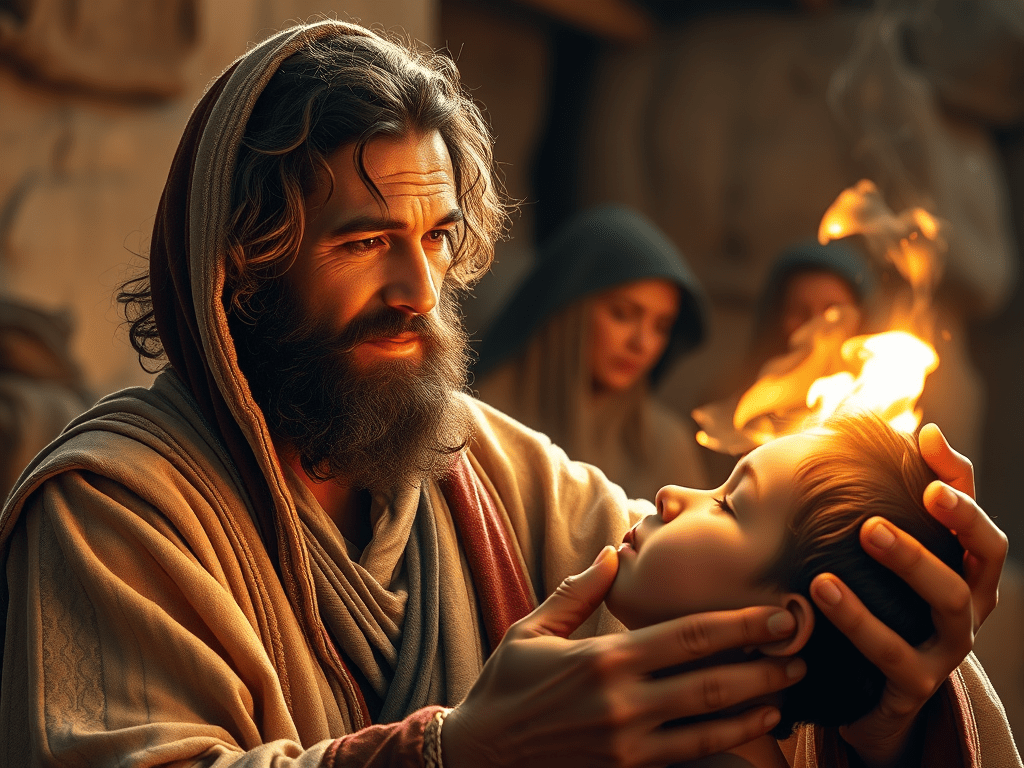
Other people beside Jesus were given the ability to raise the dead. Elijah in 1 Kings 17:17f raises the son of a widow, and Peter in Acts 9 raises a beloved woman (Dorcas/Tabitha). The power of repair work can be given as a spiritual gift. Both are powerful signs. It is hard to say where the boy was for he was neither a Jew nor necessarily under grace. He may have come from the bad neighborhood of Sheol, and would have been overjoyed to get out. Tabitha would have been in Heaven. She had been dead for hours. Like Lazarus, I’m sure she was willing to fulfill God’s purpose in her existence. Also, like Lazarus she would die again.

Jesus raises the daughter of Jairus. This is similar to the boy raised by Elijah in the sense that the grief of parents is uniquely difficult. She is dead for less than a hour probably. It would be more like Near Death Experiences done by medical means. People who experience NDE’s of Heaven don’t want to return, but they continue to live with an excitement of getting back to Heaven.

One last non-resurrection “return”. The prophet Samuel is summoned by non-acceptable occultic means through the Witch of Endor (1 Samuel 28). Samuel is not pleased. Samuel says that he was “disturbed” and “brought up”. It doesn’t seem to be in physical form, so he remained dead but could communicate his displeasure.

What is different between being “repaired” and raised, Near Death Experiences, occultic summoning, and resurrection? A lot. We will receive a heavenly body for heavenly realms, but we are not complete until we receive a resurrected earthly body. This won’t happen until Judgment Day. The resurrected body exceeds our current body in every way. Paul describes it this way:

42 So is it with the resurrection of the dead. What is sown is perishable; what is raised is imperishable. 43 It is sown in dishonor; it is raised in glory. It is sown in weakness; it is raised in power. 44 It is sown a natural body; it is raised a spiritual body. If there is a natural body, there is also a spiritual body.

1 Corinthians 15:42-44 (ESV)

https://afterdeathsite.com/2024/12/10/pondering-the-properties-of-our-resurrected-body/Jesus was raised with all this plus being the incarnate Son of God, so the properties of His physical being are beyond our knowledge and all comparison.

While we won’t have some of the unique properties of Jesus, we will be vastly different than today, able to enjoy a restored Earth and Heaven. Easter joy is a celebration of a major mile post of the plan of God for our salvation. It also is a time to ponder what comes next for those who belong to Jesus.

An Expectation of Sheol

All his sons and all his daughters rose up to comfort him, but he refused to be comforted and said, “No, I shall go down to Sheol to my son, mourning.” Thus his father wept for him.

Genesis 37:35 (ESV)

The above quote comes from the story of Joseph. His brothers, in spite, had just sold Joseph into slavery and then reported him as dead to their father Jacob. Joseph was the favorite son of Jacob, and he is crushed by the news. He basically says that he will mourn until he dies, and then he will go where Joseph is–Sheol.

Sheol, the place of the dead, is where every Old Testament person expected to go. They are divided as to whether the experience will be a conscious or unconscious experience. None of them really look forward to it.

There is an expectation of bodily resurrection someday. This can be found in the oldest book in the Old Testament, Job, and it is briefly taught at the end of Daniel. Time will elapse between their death and the resurrection, however.

As mentioned in previous blog entries, translators have struggled with what to do with word, “Sheol”, and its Greek counterpart, “Hades”. Some translations have decided to make it “the pit”, “the grave” or even “Hell”. Usually it is marked with a footnote acknowledging that the word is “Sheol”. Basically, an admission that the translators were not sold themselves on the translation. For this reason Sheol is unknown to most Christians.

Is Sheol Hell? I capitalize both, because both are place names. And no, Sheol is not what I mean when I use the word “Hell” as a place name. “Hell”, for me, corresponds to the final place of forsakeness and suffering reserved for the damned. This corresponds with the word “Gehenna” or the description, “Lake of Fire” found in Revelation 20. Sheol/Hades is dumped into the Lake of Fire in Revelation 20:14. Clearly, it is a distinct place.

Does Jacob expect to suffer after death then? Not necessarily. Sheol is spoken of 63 times in the Old Testament. I am not certain how the people of the Old Testament acquired their knowledge of Sheol. It may have been from revelation from God, but not necessarily. Near Death Experiences and even the forbidden occultic arts could have given to society scraps of information about Sheol. It is allowed to remain in inspired works because it serves God’s purpose in telling the stories. At no place, is there a theological treatise on the nature of Sheol.

In general, Sheol is described as either unconsciousness or unawareness. It is always pictured as the wages of sin and bad. That makes it surprising that all, even the righteous, express an expectation to go there. Sheol is spoken of in poetic terms in Isaiah. It becomes a synonym for death, even though it retains the nature of a place name.

The Old Testament holds only a very modest hope for eternal life. The most detailed description of life after death applies to the New Earth described in Isaiah 65. This description itself is problematic as it describes existence more in terms of long, pleasant life rather than eternal life.

The lack of information about eternal life and the complete absence of an expectation to go to Heaven raises some interesting questions about the nature of revelation. If one sees the religion surrounding Yahweh (whether Jewish or Christian) as the product of humans, then you would explain the doctrine of eternal life as a development–something added later either because it was borrowed from somewhere else or imagined by somebody later. If, rather, you understand both Old and New Testaments as an ongoing dialogue between God and humanity, you understand that God can reveal information when He chooses to reveal information. Theological development is people having more information then they had before.

Sheol is “developed” by Jesus in the story of Lazarus and the Rich Man. No one would have better and more information about such a place than Jesus. In the story, Lazarus, a poor beggar, dies and is carried to Abraham’s side. The story does not immediately identify where Abraham is. From the Old Testament we should expect that this is Sheol. The rich man also dies and is take to Hades. Here the place is named. He is conscious. He is tormented by flames. Still, he is able to converse with Abraham. Lazarus, however, is being comforted. His place in Sheol is not a place of suffering.

Many jump to the conclusion that Abraham and Lazarus must be in Heaven. That is where the righteous go. But Jesus blocks that conclusion in John 3:13 by telling us that no one has gone into Heaven, at least not yet. Abraham and Lazarus are in a separate parts of Sheol divided by a chasm from the rest, but not prohibiting some communication between the two parts.

Some church bodies have given names to the pleasant part of Sheol. The Catholic Church refers to it as the “Limbo of the Fathers.” Others just refer to it as Abraham’s Bosom. Most just ignore it.

Sheol as a destiny for the righteous awaited the atonement for sins that Jesus would complete. I expect “Abraham’s Bosom” to still exist as a place. But it is now an empty place. Our expectations are now happily turned to Heaven. That humans should occupy Heaven awaited not only atonement but the expulsion of Satan and his minions as described in Revelation 12.

While I don’t need independent confirmation of God’s revelation, it does exist. Near Death Experiences include both seeing Heaven and Sheol as briefly described by Jesus. The expectation of the resurrection of our bodies still stands as a future promise awaiting Judgment Day.