Do You Get a Body in Heaven?

Do you like your body?  Probably the majority of people have some complaint about their bodies.  Either they are the wrong shape or size or their functioning is poor.  Or both.  If you have a body that you consider beautiful, that is great.  Don’t get to comfortable with it.  Age comes to everyone.

We will all grow old, unless we die young.  We will acquire physical misfunctions.  That is the way it works in a world altered by sin.  And that is really all we deserve.  It is only by the forgiveness that comes through Jesus’ death and resurrection that we have a promise of more.

This blog has tried to bring out what is promised in the Bible about life after death.  There is Sheol and then, after Judgment Day, the lake of fire for those who remain unforgiven.  There is Heaven and then, at Judgment Day, a resurrection of the body and a New Earth for those who belong to God.  Details are limited.  Questions are abundant.

Do we get a body in Heaven?  The resurrection of the body is for the New Earth, so is Heaven a sort of body-less dream state?  There is surprisingly little said about our heavenly experience, but there is enough said to establish that Heaven is a destination for the Redeemed.  A couple of passages talk about our heavenly “physicality”.  First, 2 Corinthians 5:1-5:

For we know that if the tent that is our earthly home is destroyed, we have a building from God, a house not made with hands, eternal in the heavens. 2 For in this tent we groan, longing to put on our heavenly dwelling, 3 if indeed by putting it on we may not be found naked. 4 For while we are still in this tent, we groan, being burdened—not that we would be unclothed, but that we would be further clothed, so that what is mortal may be swallowed up by life. 5 He who has prepared us for this very thing is God, who has given us the Spirit as a guarantee.

Because Paul is using a metaphor, you might not catch that “the building” is your heavenly body.  Our spirit is “clothed” with a body (house) “eternal in the heavens”.  Now that is confusing.  We know that we will have a resurrected body on a New Earth from the Bible.  How can we have also a body that is eternal, not temporary, in the heavens?  Furthermore, why would you want a resurrected, earthly body if you have an eternal, heavenly body?  What are the differences?

I will be honest, I don’t know.  But I am really excited to find out.  I also have a theory that I can neither test nor substantiate.  More about this in just a bit.  Another passage that seems relevant here is 1 Corinthians 15:39-41:

39 For not all flesh is the same, but there is one kind for humans, another for animals, another for birds, and another for fish. 40 There are heavenly bodies and earthly bodies, but the glory of the heavenly is of one kind, and the glory of the earthly is of another. 41 There is one glory of the sun, and another glory of the moon, and another glory of the stars; for star differs from star in glory.

While “heavenly bodies” may refer to the type of thing mentioned in verse 41, but I think it is referring to our heavenly bodies.  The glory of that body is different than the glory of our resurrected earthly body, but we have no details of how they are different.  They both glorious, however.

When we consider the complex creativity of the function of our present bodies, you could say that they have a glory of their own.  It is a glory altered from the original design, accumulating genetic flaws as we move generation to generation, and slowly dying because of sin.  We can count on sin, aging, defect and disease being gone in our future bodies.  Isn’t it exciting to think about what capabilities God has in store for us and what beauty!

A metaphor that comes to mind is the girl who was awkward and a little homely in middle school, who grows up to be a knockout as an adult.  We might be quite a mess at this point, but just wait.

The converse is true for the damned.  There seems to be a body for those in Sheol, for they suffer physical torments.  The resurrection of the body is for all, but the damned are forsaken by God and cast into Hell.

So besides the vague description of differing glories, how can we have an eternal heavenly body and a resurrected earthly one?  My theory is that it has to do with where you are dimensionally.  I think Heaven is in a different dimensional space, so our heavenly bodies are constructed to be a part of that “universe”.  Our resurrected and current bodies are for this dimensional space.  Perhaps, after Judgment Day, we can move freely in both.

You Are Dust and to Dust You Shall Return

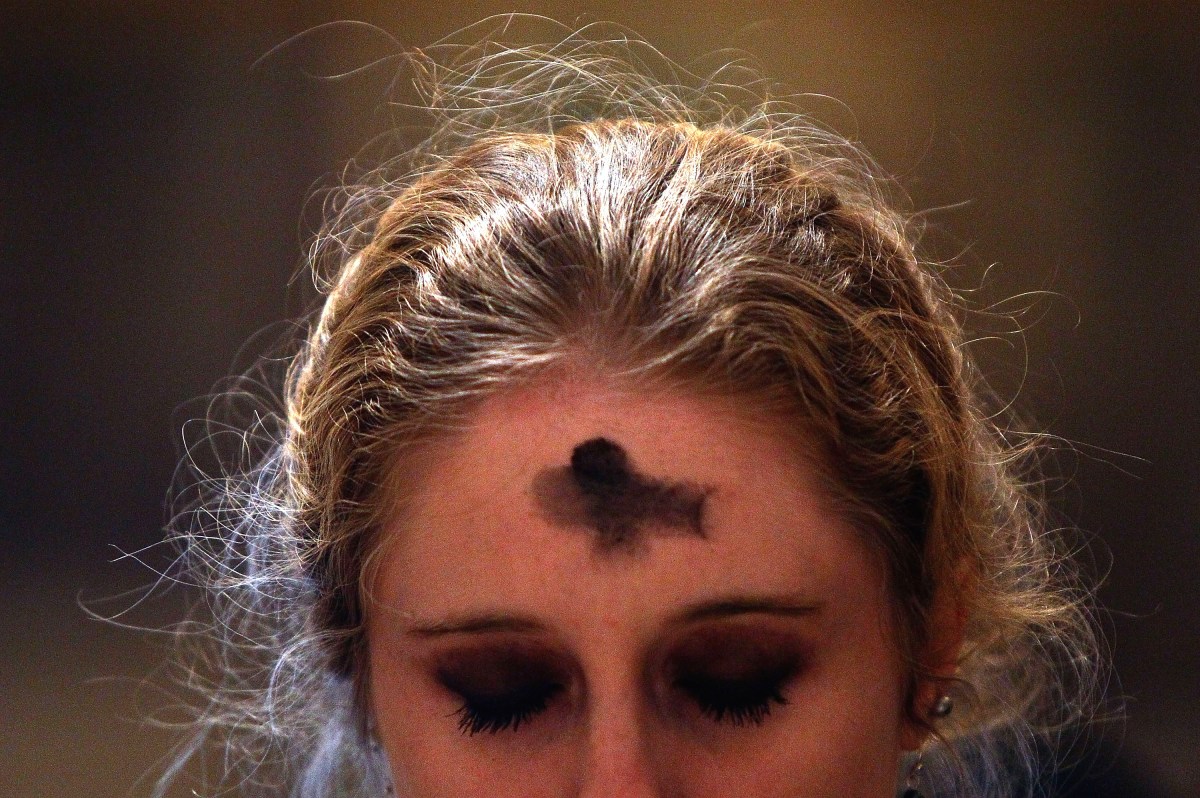
The title of this blog are the words we say when applying the ash cross on the forehead of a person on Ash Wednesday.  Which is today.  It is a reminder of something, of which we strangely need to be reminded:  We will die.

Death can seem to be surreal.  We re-spawn in video games.  For all the violence seen on TV, we really don’t look at death but for a moment.  It has the effect of de-sensitizing us about our mortality, more than making us aware of it.  Death happens in hospitals and nursing homes and behind police tape.  Most of us don’t see it nearly enough.

But without a doubt, we will die.  Even if we live to be very old, it will come for us faster than we ever imagined.

Remembering that we will die is important.  It forces us to confront what will come next.  If makes us consider what is the purpose of this brief life we live on Earth.  If we don’t consider that we will die, will we really live correctly?

The Ash Wednesday ritual doesn’t just speak morbid reality at us, and put a black mark on our heads.  The mark is in the shape of a cross.  Ironically, a cross was originally a form of torturous capital punishment.  But God used it to creatively fulfill an unbreakable law on the behalf of everyone who would be connected to Christ.  Jesus was forsaken so that we would not have to be.  The result is eternal life with God.

Yes.  I will die.  My body still has to die and is built to die.  But I won’t have to be exiled from the one source of all good.  More than that, my body, which will decay away, will be resurrected by the power of God.  That is His promise.  It is regrettable that death is a process I must endure.  My sin makes this so.  But Jesus Christ has created a real solution to my dilemma.  Death no longer has permanent power over me.  In fact, I kind of look forward to it.  The best part of my existence is on the other side.

Ash Wednesday is the beginning of Lent, and, yes, it is a little dark.  But it is a darkness with a very bright light that is following it.  With a black, ugly, ashen cross smeared on my forehead, I am remind and I proclaim that I am dust; but I am dust that will rise again.

If you are in the area and read this today, we invite you to our Ash Wednesday services.  At Redeemer, Evansville, they are at noon and 6pm at 1811 Lincoln Avenue.  At Redeemer, Newburgh the service will be at 6pm at 7811 Oak Grove Road, up on the hill on the south side of the road.

Resurrection? Are You Sure?

What is your expectation of life after death?  Reincarnation? A spiritual existence? A dream state? Heaven? Nothing?

What is the basis of your expectation?  Observation? Real or imagined experience? Your upbringing?  Revelation from God?

From observation you might conclude that we merely cease to exist or that we experience some sort of spiritual liberation from the body.  The ravages of what we see happen to our body, lead several world religions to  teach that escape from the body is the goal, even if it takes several cycles to achieve it.

How strange it is for God to reveal in the Bible that eternal life in a body is the goal.  Both Old and New Testaments speak of the resurrection of the body.  Many Christians don’t even have that as part of their model for eternity.  They hold to a semi-heretical view that we live in Heaven as some sort of spirit.  This is not biblical, but is an inherited worldview from other cultures.

It is hard to imagine both the how and the why of the resurrection of the body.  This is especially true if you understand that Heaven and a heavenly body will come first most likely.

God hasn’t provided the all the details, but here is what we know.  The resurrection of the body will include both those who have been forgiven and those who have not.  People who are still alive at the date of Christ’s return will be instantly changed from a living, but flawed body, to a resurrected body.  A resurrected body isn’t just a repaired version of what we have now.  Some people have been “raised” only to die again at a later date.  To this point, only Jesus has a resurrected body.  So “resurrected” isn’t the same as “reconditioned”.

For those who have been forgiven through their connection to Jesus, the resurrection and life in a new Heaven and new Earth will be the ultimate experience.  How can it be an upgrade from Heaven?  We will have to wait and see, won’t we.

The Bible gives just enough information to be intriguing.  Add to it, if you wish, the reports that come from Near Death Experiences.  The upgrade from this life, where we have pain, illness, aging, interpersonal strife and sin, to Heaven, where there is none of this, is staggering.  Can there even be a further upgrade?

God is good and God is creative, so I am confident that the answer is yes.  From the vantage point of our current ignorance, I can say that the Bible sees us as both body and soul.  Even with a heavenly body, that does not leave us “naked” (2 Corinthians 5:3), our current body is still a part of us.  It is not completely redeemed until the resurrection.

Will God use our remains to make this resurrected body?  Should we be careful about how we dispose of our remains?  The bible puts no restrictions on the disposal of dead bodies, so I think we can conclude that nothing that happens with our remains is an obstacle for God in resurrecting us.

Here is just a theory.  Our genetics produce our body.  The Bible speaks of inheriting a sinful nature from our conception.  So it follows that our genetics have been altered from what they would have been had sin never entered the equation.  Our ideal genetics are like the Word of God speaking us into existence.  They are His information coding our design.  God will “re-speak” our ideal genetics and thus resurrect the ideal us.  It may or may not include any existing material from our remains.  We may or may not resurrect where we are “laid to rest”.  But we will resurrect, and it will be great for those who belong to Jesus.

What To Do With “Sheol”

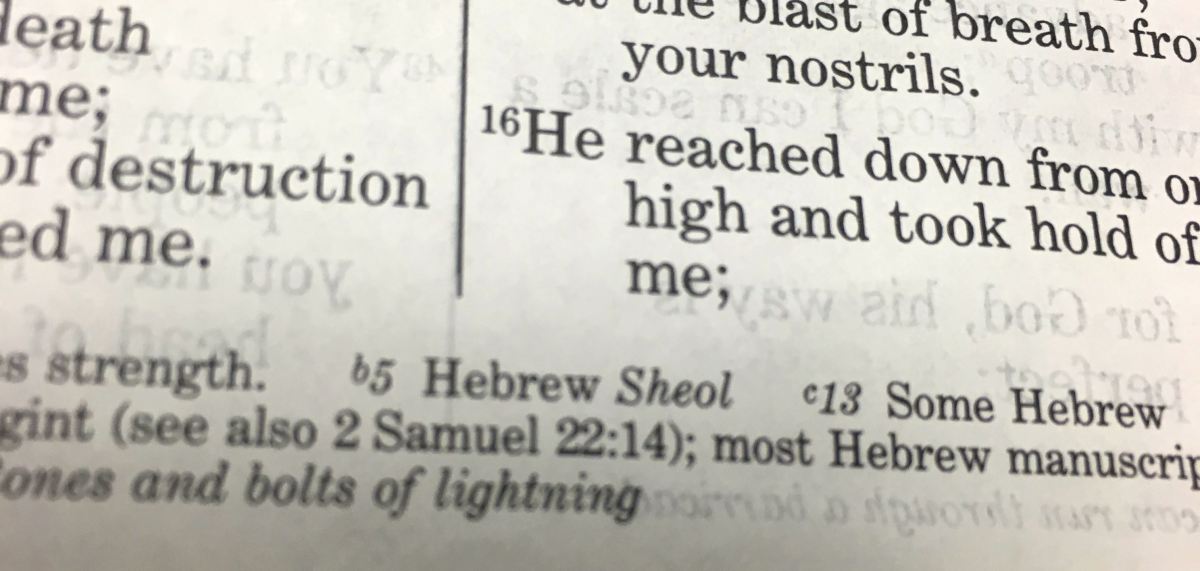
Unless you are quite the Bible expert, you probably don’t even know what “Sheol” is.  You might be shocked to find out that this Hebrew word is actually quite common in the Old Testament, yet in many English Bible translations the editors struggled to know what to do with it.  It is a place name.  So it should capitalized and left as is, still many times it is translated as “grave”, “pit” or “Hell” with a little footnote that says:  Hebrew:  Sheol.  The footnote almost seems like an apology.

The main reason why Sheol is not something you heard about or that it gets translated away is that it doesn’t fit in the most common understanding of places in the afterlife.  Most people just know Heaven and Hell.  It is poorly recognized that Judgment Day makes a big difference in what will exist.  Before Judgment Day the best fitting understanding of what exists after death is Sheol and Heaven.  After Judgment Day, Sheol (or in Greek Hades) is thrown into a “lake of fire” along with Satan and his angels, as well as, all the damned of humanity.  This lake of fire is what I think of when I use the word “Hell”.

Sheol/Hades does have some Hell-like properties, which adds to the confusion.  There is suffering, fire, worms.  It is a prison.  But I can’t connect the presence of Satan and demons nor can I connect being completely forsaken by God with Sheol.  It is different than the final destination.

The classic picture of demons tormenting people, whether it be from Michelangelo or “The Far Side”, is biblically incorrect.  In Sheol, they don’t seem to exist.  In Hell, they suffer with everybody else.

I’m sure most people dismiss both Sheol and Hell as a myth.  Who wouldn’t want to?  I don’t like the idea that these places are the destination of most people at their death.  I hate it, but I can’t dismiss it. Jesus speaks of both Hell (Gehenna) and Hades.  Jesus also descended to Sheol.  It is forbidden, but apparently possible to communicate with people in Sheol.  And modern people have had out-of-body experiences of Sheol.

My dog hates going to the Vet.  When they are about to do a procedure on him, he hides his face under my arm.  It is like he is thinking, “If I can’t see you, you don’t exist.”  That is how those who dismiss Hell or Sheol are coping with a frightening reality.  Unfortunately, the Vet still exists, so does Hell and Sheol.

Would God really do this?  Where is the love?  God is very “literal” in the sense that once a law is written in Heaven, it is enacted.  The Law requires sinners to be sent to Sheol and Hell.  The love is found in that God created a personally costly way for both the Law to be fulfilled and people to be spared Hell and Sheol.  That way is Jesus being forsaken on the cross.

That is serious stuff.  You don’t go to the extremes that Jesus went to if you don’t really love who you are trying to save and what you are trying to save them from is something aweful.

Rationalizing about Hell, living in denial, ignoring it until later are all dangerous coping mechanisms that push one close to finding out about Sheol and Hell from personal experience.  I would rather just read about it.

Respecting the Danger

Imagine this.  It is a beautiful night for a walk in your neighborhood.  It is dark, but in your experience your neighborhood is a safe place for an evening stroll.  But tonight, this is not the case.  Danger is waiting for you.  Would you rather know about the danger or would you prefer to believe what you want to be true is true?

It should be self-evident that if there are a bunch of villanous thugs, or rabid dogs, or a giant sinkhole that is now part of the neighborhood, we would want to know about it.  Danger is bad, but danger we are unprepared for is the worst.  Still, many people approach death with such a wishful and ignorant attitude.  We must take the walk of death someday, but we don’t want to think about it or even hear what could await us.  As a result, many will pass through death expecting something heavenly, or to be non-existent, or to reincarnate; and that won’t happen for them.  It doesn’t matter what you believe, it is what exists.

My point is that it makes sense to think about and study claims about death, because we definitely will do it, and it will prove to be the most important thing in our existence.  I am not saying I expect all to believe the Bible on this topic.  But beware of the bias caused by what you want to be true.  The Bible actually puts forward something that I definitely don’t want to be true.  Jesus says,

Enter through the narrow gate.  For wide is the gate and broad is the road that leads to destruction, and many enter through it.  But small is the gate and narrow is the road that leads to life, and only a few find it. (Matthew 7:13-14)

I would love to deny that this is true.  But I do feel that the Bible, especially Jesus, has credibility.  This comes not only from historical and archeological evidence, but also from reason and, in the end, from the Spirit of God.  This is the giant pothole in the neighborhood.  So I definitely want to be a part of the “few” and I want you to be a part of the few as well, even if I never met you.

This narrow road is Jesus.  Oddly, God would rather this not be the fact either.  God loves people, but people willfully became sinful and this matters.  God is also a being who lives by His Law.  He doesn’t compromise it.  Jesus’ incarnation, life, death and resurrection create a path by which God can both save and fulfill the requirement of the Law.  It’s the only path.

If you don’t believe this yet or don’t understand it, please fully investigate it.  Ask God for help.  Even if you are not sure there is such a being. Understanding death, what comes after it and why, is an existence defining body of knowledge.  It deserves our time and effort. Not only will we avoid a bottomless sinkhole, we will have a redefined life and death will be but the beginning of the best part of our experience.

No More “Oi!”

Perhaps you have heard the Yiddish expression “Oi Vey”.  It is an expression of  frustration that literally means, “Woe to us”.  In Isaiah 6, Isaiah has an experience of Heaven.  What kind of experience isn’t clear, even to Isaiah.  It seems like an actual field trip.  What could be cooler than a field trip to Heaven!  Isaiah probably thought that way at first until his unworthiness to be there set in.  At that point he exclaims, “Oi li!”, “Woe to me”, “for I am a man of unclean lips and I live among a people of unclean lips.”  Isaiah didn’t need a napkin at that moment.  He realized that a sinner didn’t belong with the holy, and he was a sinner because of what he had said and more.

Isaiah’s experience was both terrifying and exhilerating.  A Seraphim flys to him and touches Isaiah’s lips with a burning ember from the altar.  “See this has touched your lips, your guilt is taken away and your sin atoned for.”  From that point Isaiah felt like he belonged.  There was no more “Oi!”

As it turns out, Isaiah saw and felt all these things without actually being in Heaven.  It was a vision of some sort.  Jesus said in John 3:13, “No one has ever gone into Heaven except the one who came from Heaven–the Son of Man.”  We can add “up to this point.”  Isaiah had not gone.  Daniel had not gone. Elijah and Enoch had not gone.  To this point no Old Testament person had gone because the true atonement for sins, which is represented by the coals in the altar, is Jesus’ death and resurrection.  They all would really go when Jesus accomplished what He came for.

When we are connected to Jesus through faith and baptism, then the “coal” has already touched our lips.  We are made holy by Jesus and belong in a holy place like Heaven.

Some people have out of body experiences of Heaven.  It is hard to say for sure what they are.  Are they a vision, a field trip or something else?  It is possible that they don’t have an “Oi” experience because of Christ.  This is certainly the experience we all should wish to have upon our death.  We certainly don’t want to experience an “Oi” because we have landed in Sheol without forgiveness and without a Savior.  That need never happen because Christ came to save “the world”.  While many are called but few are chosen, it is not because God doesn’t want us.  Those who reject Jesus will have the full “Oi” experience.

Faith Enough?

If questioned, many people would agree that Heaven is real.  Many of those would also agree that they believe that Jesus is their Savior and that we are saved by faith not by works.

A problem can exist in our understanding of what “faith” is?  Is “faith” synonymous with “trust” or “confidence”.  If so, how much “faith” is enough?  There is a reason why God takes into His hands almost every element of our salvation.  If we are left in charge, we mess it up.

I’ve been with many faithful people who have become suddenly terrified when they found out that they were in the process of dying.  New things are scary, right?  We don’t practice dying.  Do their doubts and fears constitute a lack of saving faith?

I’ve met many others from non-Lutheran denominations that have participated in many altar calls.   Each time they were convicted that they hadn’t truly believed in the past.  Do they believe enough now?

I would contend that the Bible uses the word “faith” in more than one way.   Sometimes “faith” does mean “trust” or something close to that.  That is where you get the definition-like verse Hebrews 11:1

Now faith is being sure of what we hope for and certain of what we do not see.  This is what the ancients were commended for.

In the remainder of that chapter, that is what “faith” means.  It can also mean something like “religion”, as in 1 Timothy 4:1, “in later times some will abandon the faith.”  But when Paul says  in Ephesians 2:8, “For it is by grace you have been saved, through faith–and this not from yourselves, it is the gift of God, so that no one can boast”, does “faith” mean either of these?

Remove the church-speak and here is the Bible’s message.  We are saved by what Jesus did.  He lived as a representative of the human race and kept God’s law for us all.  On the cross, He experienced the punishment for sin for us by being forsaken by His Father. Next, Jesus working through the Holy Spirit creates a connection between you and Himself.  This connection is not cognitive.  It is something harder to explain, something deeper.  This is what Ephesians 2:8 is calling “faith”.  This connection can only be made by God.  It is “not of yourself”.  It is a “gift of God”.  So when Paul says you are saved through “faith” and James says, “what good is it..if a man claims to have faith but has no deeds”, they are not creating a dichotomy between what you think versus what you do; they are showing the difference between what God does and the proof that God has done it.  Follow me?

You are saved by what God has done for you.  Jesus is the cause.  Being saved produces certain signs, at least usually.  Confidence and trust are signs.  Good deeds are signs.  These are the effects of being saved by God.  Effects are nice.  They build confidence.  They give a good witness.  But they do not save you.  Jesus saves you. So if you are facing death and you have fears or are a little uncertain, this does not mean you don’t have faith enough to be saved.  Less than stellar proof of being connected to Jesus has many causes:  mental health, our sinful nature, blood sugar level, intelligence or lack thereof and more.  If you beleive the Gospel, live like you do.  God knows who are His.  Your certainty must come not from whether you have faith enough but rather on Jesus being enough.

Life After Death Impossible?

In an article published on the British website Express, Sean Carroll a physicist at California Institute of Technology categorically states the life after death is impossible because we are subject to the laws of physics and, of course, the laws of physics are completely understood.

Perhaps this is a misquote, but how many times in history have scientists been arrogant enough to say physics is completely understood only to find out that they really didn’t understand it at all.  If it is completely understood we should stop spending money on physics research projects.

The problem with Mr. Carroll is his devotion to a flawed philosophy–Materialism.  The belief that all that is real is measurable pervades the scientific community, but does it represent reality?  Perhaps the point of greatest contention is the understanding of our own consciousness.  Many people, including atheists, find the materialistic answer unsatisfying.

Scientists feel confident that consciousness is nothing more than the chemical reactions in our brain.  They feel this way because artificial stimulus of various parts of the brain can cause false experiences.  But this does little to show that consciousness is actually resident in the brain.  The same would be expected if the brain was merely the material interface with the conscious.

The philosophical viewpoint also diminishes Near Death Experiences (NDE) and out of body experiences as merely the fading memories of a dying brain.  This does not explain how people can experience sights and sounds while the brain is essentially shut down and the eyes are closed.  People have experienced travel outside of their bodies and accurately described surroundings without the use of their eyes.

Looking for proof one way or another about life after death using scientific methods is using the wrong tools for the job.  The hard part for science minded people is admitting that science does have its limits.  It is great for exploring the material universe but blind otherwise.  Even science posits the existence of other universes, yet can say basically nothing about them.

There are two ways to know about life after death: dying or revelation.  Dying makes it tough to change if change is needed.  God’s revelation about life after death can be trusted or not trusted. May God Himself give you insight on where to put your trust.

The Special Status of Martyrs

The word “martyr” gets in the news these days in the context of suicidal Muslim terrorists.  It is ironic that such people are called “martyrs”.  The word actually means “witness”.  What does their actions and their death say about their theology?  I hear, “God is full of hate”, “I am full of hate”, and “I will do anything to advance my selfish ambitions for the afterlife.”  Not exactly a compelling witness.

Christians have long used the word “martyr” for those who lost their lives because of their faith.  They did not commit suicide or even seek death, their lives were taken from them out of hatred for God or his message.  Their witness was “The gift of eternal life is better than this life”, and “I am not afraid to die because I trust God”.  That is a very different witness.

Martyrdom for Christians is not something isolated to the first century.  While the Romans took their share, genuine disciples of Jesus have been killed through the centuries, sometimes even by nominal Christian institutions.  Today, Christians are under the greatest threat of death in Muslim and Communist countries.

A strong theme, maybe even the main theme, of the book of Revelation is that martyrdom for the sake of Christ is well worth it.  Martyrs get special mention in Revelation 6:9-11, 12:11 and 20:4.  What do these passages teach us about this special class of people?

When he opened the fifth seal, I saw under the altar the souls of those who had be slain because of the word of God and the testimony they had maintained.  They called out in a loud voice, “How long Sovereign Lord, holy and true, until you judge the inhabitants of the earth and avenge our blood?  Then each of them was given a white robe, and they were told to wait a little longer, until the number of their fellow servants and brothers who were to be killed as they had been was completed. (Rev. 6:9-11)

This passage is important because it rules out the idea of soul sleep or that we go immediately to Judgment Day at our death.  It also lines out one of the criterion for the timing of Judgment Day–there are a preset or pre-known number of martyrs.  You might think this a strange and morbid standard, but to be a martyr is a high honor.  Those who experience this are chosen for this.  Their location “under the altar” brings to mind where the blood of the sacrifices was poured.  Only the sacrifice of Christ has merit in saving others.  But the death of the martyrs hasn’t historically deterred faith in Christ but it has counter-intuitively advanced it.  They are a sacrifice pleasing to God in the sense that they truly trusted him, and their deaths advanced the Gospel.

The gift of a “white robe” is common for all who die in Christ.  It is probably not clothing but a reference to a heavenly body that is pure.  The desire for judgment may be a surprise.  It doesn’t feel like love for your enemy.  Such judgment is just, however.  It doesn’t preclude the possibility of repentance and forgiveness.

In Revelation 12 the martyrs are honored and their praise is sung.  In Revelation 20 it speaks specifically of souls who were beheaded.  This is probably synecdoche and actually refers to all martyrs.  Here they have the honor of reigning with Christ.  What is that?  In this context, it would seem that they are part of God’s divine council, which actually participates in making decisions executable on Earth.  This honor would make sense since their lifetimes were cut short on Earth.

The Citizens of Heaven

We have a sketchy picture of what Heaven is like.  We have an even more cryptic description of who or what will be there.

As you read through the Old Testament it is never revealed that humans had any hope of being citizens of Heaven.  There are a few visions of Heaven, but nothing more.  Old Testament believers understood that they were heading first to Sheol (preferably a good part of it) and that their ultimate hope was their resurrection from the dead and a New Earth.

I don’t believe that this means that Heaven wasn’t in the plans for humans or that the idea of going to Heaven was a “development of theology” or borrowed from other cultures at a later time.  Our place in Heaven had to be secured before it was promised.  Satan held some leverage over us.  Our species were rebellious sinners just like he was and like a significant minority of angels.  As long as humans were “under the Law”, we were stuck.

Jesus’ fulfillment of God’s Law as a human and His sacrifice of Himself to reconcile creation to God caused some major reorganization.  Satan and his minions lost their legal leverage and being inferior in power to God were cast out (Revelation 12:7-10). Humans were lead in a victorious procession in.  (Ephesians 4:7)  So for now, Heaven is the destiny of redeemed humanity until Judgment Day and a New Earth.

Who else will we find in Heaven?  Angels are one form of resident.  It is said of angels that they are “spirits”.  What does that mean exactly?  I think it means that they are properly citizens of Heaven’s dimensional space and not properly a part of this universe.  They can take on a form here or not, but it is not necessarily their form.  So what does an angel in Heaven look like?  We don’t know.  How many are there?  Beyond saying that there are many, we don’t know.  What are their abilities?  We can say that they are intelligent beings and that in some ways have higher capabilities than we presently have.  The name by which we know them, “angels”, speaks more to their function as “messengers” than as a proper name of their species.  I would expect them to be human-like in many ways.

Angels should be distinguished from Cherubim/Seraphim.  Isaiah 6, Ezekiel 1 and Revelation 4 described these beings as “living ones”(cherubim) or “burning ones” (seraphim).  They are described as intelligent and powerful beings who surround the throne of God.  Their physical description may be more symbolic than actual.  The description includes multiple faces, four to six wings, and covered with eyes–a rather frightening appearance.  Satan is described as being a disowned, guardian cherub (Ezekiel 28), beautiful, part of the council of God, and blameless until wickedness was found in him.

The only other citizens of Heaven that are described in the Bible (that doesn’t mean that their aren’t others) are a mysterious group of 24 elders. Who are these beings?  What are they?  They could be humans.  They do not appear in the only other descent description of God’s throne room in Daniel 7.  They are described in Revelation 4.  Since Revelation is full of symbolism, this could be a group symbolic of a greater portion of humanity.  Or not.  It is intriguing to think about how the picture given in Revelation 4 (a New Testament if not future picture) relates to references to a divine council found throughout the Old Testament.  More about this in my next blog.