
The Cup of God’s Wrath

In studying the topic of existence after death in the Bible, we would all much rather focus on Heaven and the New Earth. It is easy to go into complete denial about God’s judgment. But information about God’s judgment is there for a reason. We should know it. In this article, I will focus on just three verses and they are frightening.

Revelation 14:9-11 reads like this:

 And another angel, a third, followed them, saying with a loud voice, “If anyone worships the beast and its image and receives a mark on his forehead or on his hand, 10 he also will drink the wine of God’s wrath, poured full strength into the cup of his anger, and he will be tormented with fire and sulfur in the presence of the holy angels and in the presence of the Lamb. 11 And the smoke of their torment goes up forever and ever, and they have no rest, day or night, these worshipers of the beast and its image, and whoever receives the mark of its name.”

Revelation 14:9-11 (ESV)

The context of this passage is the confrontation of the Church with the two beasts of Revelation 13. These “beasts” likely represent a strong demonic presence in a political form and a religious form. When will or did this happen? I think the most reasonable answer is that these beasts exercised their power during the Roman Empire. This doesn’t leave out the possibility that they are something still to be seen in the future. For our purposes, when they exist is irrelevant. The warning is not to receive their “mark”, which is something willingly and knowingly received, shows loyalty to the beast and rejects loyalty to Christ.

God is not soft on those who make such a choice. God’s wrath against such people is poured “full strength” into the cup of His anger. How does this fit into “God is love” and John 3:16? Jesus is given to us out of love and a desire to save people. His death is sufficient to save everyone. Outright rejection of such a heroic and costly act brings God’s wrath in full form. You experience what is known as the “alien” nature of God. God is not normally a wrathful being, but He can be.

When is this wrath revealed? It could be during the lives of the people in question, but it is definitely also a part of Judgment Day for them. While this group may find Judgment Day less tolerable than Judgment Day for others who are not saved, others will definitely also experience an eternal form of God’s wrath for basically the same reason–rejecting Christ.

Do the words of this passage suggest that God sits over these people and takes satisfaction in making them suffer eternally? While it does say that the “smoke of their torment goes up forever and ever”, I reject the idea that God and the angels are observing it or making it happen eternally. In fact, the worst part of being in the final form of Hell (The Lake of Fire) is not the fire but the abandonment by God. It is better to have God actively punishing you than to have Him forsake you. The forsakeness (God completely abandoning you) that Jesus experienced on the cross was Jesus taking the worst punishment of Hell for us.

One last thing to note about this situation is to ponder why “fire and Sulphur” doesn’t consume these people. Some “theologians” have tried to soften the idea of Hell by assuming than you burn up and are gone. That would be nice. The emphasis on the eternal nature of Hell, seems to refute that idea.

The resurrection of the dead is something that happens to all people, including the damned. The nature of the resurrected body may be why they don’t burn up. The resurrected body suffers but remains even in such a harsh environment.

By this passage we are duly warned about God’s alien nature. It is not to be trifled with. Praise God that we can experience only His love. Jesus specifically took on our forsakeness so that we never have to experience it. Thinking about God’s wrath can remain an academic topic for us.

Time and Eternity

I recently stumbled across an article with this title, “Scientists Create a State of Matter that Has Time in Two Dimensions.” In the common experience of our universe everything can be described by three spatial dimensions and the fourth is time. What would be described in that article would certainly bend the mind as most quantum mechanics does. I read only a short distance into the article before giving up. Their observation was that a second dimension of time was “borrowed” from another spatial set of dimensions “that did not exist”. I’m not sure how you arrive at that conclusion.

I share this brief synopsis to introduce the idea that time is not as straight forward as we might think. It seems to be something definitely tied to creation. It does not transcend creation. One fallacy that I have seen in some theological thinking is that we will transcend creation and time at our death. For instance, one common view is that when we die, we move forward directly to Judgment Day because we transcend time. Revelation 6:9-11 puts a hole in that theory:

When he opened the fifth seal, I saw under the altar the souls of those who had been slain for the word of God and for the witness they had borne. 10 They cried out with a loud voice, “O Sovereign Lord, holy and true, how long before you will judge and avenge our blood on those who dwell on the earth?” 11 Then they were each given a white robe and told to rest a little longer, until the number of their fellow servants and their brothers should be complete, who were to be killed as they themselves had been.

Revelation 6:9-11 (ESV)

Here people who have been martyred, so they are definitely dead, are asking how long it will take to get to Judgment Day. They are asking a time question. They are told to wait (a time answer). Nobody is transcending anything.

I do believe in the possibility of transcending all time, space, and physical laws. That is what God does. He is the Creator of all of these things and is “outside” of the constrains of time-space. People do not become like God in this regard. This may explain why to God a “day is like a thousand years and a thousand years is like a day.”

In the study of our universe, it was theorized and later proved that time changes as you approach the speed of light. From our experience it would seem like time is a constant. Would time remain the same if you moved into a different time-space continuum? This is what I theorize happens when we die. Heaven isn’t a distant part of our universe. It is a parallel universe that does exist. The passage of time there and the passage of time here may not be in lockstep. What would this mean for our experience? I’m not sure. I believe that post-Judgment Day we will have a resurrected body that will be movable from this renewed universe to a renewed Heaven. The Bible hints that we have an eternal inheritance in both. If time doesn’t move the same in both, that might lead to an interesting experience.

The final “time” topic I have is that of the word “eternal” itself. Is eternal a straight-line unending stream of experience? In the description of the new Earth in Isaiah 65 the length of our existence is compared to the lifespan of a tree. It doesn’t seem unending there. This dissonance with later revelations which use the word “eternal”, could be attributed to the limited revelation given to Isaiah who lives before Jesus’ victory.

God certainly had at least the ability to know that Jesus would succeed in His mission to atone for the sins of the world. He might just be not letting on to Isaiah that a place in Heaven was in the future for redeemed humans and that life in the New Earth was more than long but rather eternal. It also might be true that we just don’t know what it is like to transcend time as God does.

While I expect the meaning of “eternal” might be more complex than our minds can comprehend, I think the message is that our existence will be pleasingly unending. We will not return to beginning as some views in Eastern religions suggest.

While eternal joy sounds great, eternal suffering and damnation is another story. The Bible definitely portrays a majority being damned. It does not leave room for a damnation that consumes a being and leaves them non-existent. I suppose a possibility is that the experience of time might be vastly different in the time-space of Hell. This might mitigate the horror in some way.

With our limited experience and our limited revelation, there are more questions than answers. It is a topic that challenges the mind and leaves room for our imagination. We can be certain that whatever we experience, because of Christ, it will be good.

The Glory I Had with You

In Jesus’ High Priestly Prayer in John 17, Jesus speaks of returning to a “glory I had with you before the world existed”. What would Jesus consider to be glorious? Is it a glory that we will be able to see? Is it something that will be experienced in other ways?

The first thing to note is that “glory” is probably not the same in God’s eyes as in ours. We think in terms of power, praise, pleasure, and authority. I expect that such categories would also be a part of God’s definition. But God would add love to that list.

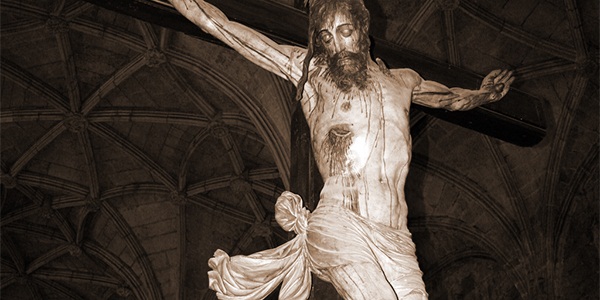
In His prayer, Jesus asks the Father to glorify Him. This request is focused on what would happen before Jesus ascended back to Heaven. Crucifixion is not glorious. Being forsaken by God is even more inglorious. Being crucified with the purpose of fulfilling God’s Law for others because you love them and honor the Father, that is very glorious. Paying the ultimate price when you didn’t owe it out of love, that is the pinnacle of glorious.

Prior to the crucifixion James and John and their mom went on a glory-seeking mission. Having been enculturated to see glory in terms of praise and power they approached Jesus about sitting on His right and left when He entered into His glory.

20 Then the mother of the sons of Zebedee came up to him with her sons, and kneeling before him she asked him for something. 21 And he said to her, “What do you want?” She said to him, “Say that these two sons of mine are to sit, one at your right hand and one at your left, in your kingdom.” 22 Jesus answered, “You do not know what you are asking. Are you able to drink the cup that I am to drink?” They said to him, “We are able.” 23 He said to them, “You will drink my cup, but to sit at my right hand and at my left is not mine to grant, but it is for those for whom it has been prepared by my Father.”

Matthew 20:20-23 (ESV)

James, John and mom definitely were thinking in terms of some sort of throne arrangement. Jesus indicates that this isn’t what you are thinking. His ultimate glory would be on the cross. The thieves to the right and to the left are the ones “chosen” for roles. These are not necessarily coveted positions. None-the-less, James and John would be chosen for the glory of suffering for the Gospel and, in James’s case, martyrdom.

This brings me back to the idea of heavenly glory. Is it all just bright lights, beautiful music and praise? I expect the glory of love will remain a big part of it. Will there be a necessity for sacrificial love in Heaven or the New Earth? Maybe. It will be nothing like the cross and nothing near forsakeness. The need to care for each other, to give to each other is not just limited to a world with sin and the curse in it. We will experience God’s love for us and a love for each other in many ways.

For me, this emphasizes the importance of our current life. Because sin, the curse, and the work of Satan are such influential forces, the need for genuine, sacrificial love is so important. The need and the opportunities abound. This won’t be so in Heaven or the New Earth. Living in a world that incorporates evil is terrible and I want no more of it than I have to take; but I am willing to stay as long as I can be useful and exercise my “glory” which is the love of God working in me.

This point-of-view can also illustrate why Sheol and Gehenna are so bad. Yes, the description of fire and maggots is mortifying. But the absence of the glory of God is worse. There is a growing absence of love.

In the one story about Sheol that we have, that of the beggar Lazarus, at least the rich man has compassion on his living siblings. He cares whether they arrive in Sheol. This indicates to me that being forsaken by God has not yet set in. In Gehenna, post-Judgment Day, I don’t expect any hope or unselfishness to be found. It is completely inglorious.

The glory of God, in Jesus’ crucifixion, enables the experience of the broader glory of God in eternal life. We will observe His glory in astounding beauty and power. We will live in the midst of the light of His glory in the New Jerusalem. We will experience and express His glory in a great love for each other. We can get a head start on it now.

What Is It Like To Be Forsaken?

One of the things I often force myself to do during Holy Week is to watch The Passion of the Christ. This movie is a very graphic depiction of what happened to Jesus. I suspect that Mel Gibson got it mostly right. It is rough.

There is one aspect of Jesus’ crucifixion that one can never fully capture on film. It is the most important part–Jesus being forsaken by His Father. I don’t think people understand this in general. God’s Law needs to be fulfilled. God is not inclined to compromise or change any part of it. As it stands the wage of sin, (being contrary in any way to the way we were originally meant to be), is death.

Death is the “destruction” of the parts that make us. Our bodies are segregated from our souls and our bodies break down to the elemental level. Our souls, which cannot be similarly destroyed would first go to Sheol and eventually would be forsaken by God in Gehenna (Hell). This required consequence of sin, Jesus absorbs willfully himself, so that humans can have eternal life and Creation can be remade.

Jesus experiences the elements of death in a different order than we would. While still physically alive, He experiences being forsaken. I would guess that this is connected to the three-hour period of supernatural darkness. What does He feel? Hopelessness, horror, physical dysfunction, the absence of love, and I don’t know what else. Jesus knew this had to happen. It scared him. To know about it and to experience it is two different things. The Son of God, fully prepped, determined to do this thing, still is crushed.

46 And about the ninth hour Jesus cried out with a loud voice, saying, “Eli, Eli, lema sabachthani?” that is, “My God, my God, why have you forsaken me?”

Matthew 27:46 (ESV)

These words are our only window into being forsaken. It is the only window I want. Jesus knows why. But in such a state of abandonment, He can’t make sense of His condition.

We may not acknowledge it, but God is with us in multiple ways all the time. God makes our body function. God oversees our minds. We may feel far from God, but we have never been forsaken. Not yet.

Jesus is forsaken so that I will never know what it is like.

What did that mean for the Trinity? I don’t understand the type of unity that makes God one and still three persons. Likewise, I can’t fathom what it means when the Father forsakes the Son. But I know it isn’t easy and I know it is a big deal, and it happened for me.

The classic picture of eternal suffering is being in fire. Those who know Jesus’ words also include a kind of perpetual form of decay (…the worm does not die). These apply to Sheol as well as Gehenna and therefore create confusion between the two. The final, distinguishing factor is forsakeness. Sheol seems to lack this. There is nothing funny about forsakeness.

All good things come from God. Hell is not the party spot for the wicked. There is no party, no friendship, no comfort, no hope. And by the grace of God there doesn’t have to be us either.

Jesus’ forsakeness, His death applies to us and satisfies the legal requirements of God’s law for us when we are connected to Christ. We become part of His body and consequently His death through baptism. Not so much what we do in a baptism, but what God does in the spiritual realms.

It is still good that we should remember, at least once a year, the tremendous cost of saving us. We should look with grateful wonder at Jesus forsaken.

Will Many Be Saved?

Have you gone to many, or any, funerals where you assumed a negative eternal destiny for a person? This is so hard to think about that we simply hope for the best, even in cases where there is little evidence that this could go well.

We are not to judge. We don’t have the ability to know what interactions a person has had with God. But even with the fact that Jesus died for the sins of everyone, and that God desires all people to be saved, one sobering verse stands out for me. I call it my least favorite passage of Scripture:

13 “Enter by the narrow gate. For the gate is wide and the way is easy that leads to destruction, and those who enter by it are many. 14 For the gate is narrow and the way is hard that leads to life, and those who find it are few.

Matthew 7:13-14 (ESV)

The word “few” devastates me. It is a relative term, so against the billions of people who have lived and currently live “few” could still be a vast number. Still, to imagine an even larger number going to eternal damnation is staggering.

How can this be? Isn’t God love? Isn’t God all-powerful? Yes, He is. But He is also a God of justice who abides by what is “written”. So, He will not do a compromising end run around the Law, even for this. If Scripture is to be believed at all, people are damned and they are damned in vast numbers.

I would love to wrong about this. Perhaps, “few” is 49.999%. Or it could be “few” relative to the 100% that could have been saved. Maybe 95%. Or maybe the key is the word “destruction”. If destruction refers only to Sheol and not necessarily Gehenna, then perhaps Jesus would have a mechanism to evangelize the dead and to do so in mass. I’m not saying that any of these could not be, but the most natural way to read this verse is to expect many losses.

Who would make up the many? Good works can’t make up for sins. There would be many “good people” by our standards who would miss out. Many consider Jesus to be irrelevant and hold on to a “let’s see what happens” approach to death. They reason that either they just cease to exist, or it will be O.K. because they are nice.

Many hold on to an alternative worldview with an alternative means of salvation, even if they have heard the Gospel. Muslims hold on to a somewhat vague hope of Allah’s mercy if they follow the Five Pillars of Islam well enough. Hindus cling to gradual ascension through reincarnation if they live well. Cultural Christians cling to being “good enough” if they don’t understand the Bible. Then there are the atheists who expect to disappear. That is a lot of people.

Maybe there are multiple paths to salvation?

Jesus said to him, “I am the way, and the truth, and the life. No one comes to the Father except through me.

John 14:6 (ESV)

It makes sense. If there were other ways, would God have made Jesus do what He did? If you don’t like it, speak to Jesus. I didn’t say it.

Many people have not even heard the Gospel of Jesus. What about them? I personally think that 1 Peter 4:6 alludes to how God deals with the Church’s failure to get the Word out.

For this is why the gospel was preached even to those who are dead, that though judged in the flesh the way people are, they might live in the spirit the way God does.

1 Peter 4:6 (ESV)

It is a somewhat vague, one passage testimony; but it makes more sense to understand this passage as Jesus or somebody preaching to the dead than all of the other weak explanations I have seen. If this were so, what sort of fool would reject the Gospel while toiling in Sheol? The mystery of faith is great. You would be surprised at how dense people can be.

When you add it all up it is sadly easy to imagine how the many end up in destruction. Can we move the needle in any way? Yes. Our witness to people matters. The few will still be a “great multitude that no could count.” (Revelation 7:9) I want to be in that multitude. I want those I love to be in that multitude. I want to have some role that many others will be in that multitude. And I still hope that the obvious way of understanding Matthew 7:13-14 is wrong.

The Divisiveness of Eternal Life

I love the Bible. It has taught me and changed me so much. I understand how it has been transmitted down through history. I have confidence in its divine origin. But there are a couple of passages in the Bible that I just hate. I hate that they are true. No doubt God isn’t crazy about them either. Here is the first:

13 “Enter by the narrow gate. For the gate is wide and the way is easy that leads to destruction, and those who enter by it are many. 14 For the gate is narrow and the way is hard that leads to life, and those who find it are few.

Matthew 7:13-14

Jesus’ fulfillment of God’s Law was on behalf of all mankind. His being forsaken on the cross could be for literally anyone. That the reality is that “few” will benefit is tragic. That means “many” will suffer eternally as forgotten by God. I would be thrilled to have this not be true, but I don’t doubt the source.

The other was our “Gospel” lesson just this past Sunday. Jesus speaking:

“I came to cast fire on the earth, and would that it were already kindled! 50 I have a baptism to be baptized with, and how great is my distress until it is accomplished! 51 Do you think that I have come to give peace on earth? No, I tell you, but rather division. 52 For from now on in one house there will be five divided, three against two and two against three. 53 They will be divided, father against son and son against father, mother against daughter and daughter against mother, mother-in-law against her daughter-in-law and daughter-in-law against mother-in-law.”

Luke 12:49-53 (ESV)

Jesus brings peace with God, which is the most important thing; but that doesn’t equate to peace between humans. A strong Satanic resistance campaign against the Gospel’s spread and acceptance accounts for most of the divisiveness. The rest is sinful human nature. Jesus knows this. Clearly, He isn’t thrilled with the fact; but it is the only way forward.

The result has been divided families all over the world. The consequences of which vary from heartbreak to violence. When somebody becomes a Christian in the midst of a Hindu, Muslim, Buddhist or Jewish home, it doesn’t always or often result in accepting curiosity. Parents, spouses, or extended families can resort to threats, beatings, even “honor” killings. They are worried about family reputation, preservation of culture, and even the response of the gods. Jesus is seen as a Western culture invasion. But Jesus increasingly is not a part of Western culture. Jesus didn’t grow up in the United States or Europe. Jesus was a Jew. His culture is primarily the culture of God, not of some people group.

What Jesus did He did for the whole of Creation. It is a pity that the whole of Creation, especially every human being won’t benefit from it. Division on Earth will result in division in eternity. Some will have been made sinless by the death of Jesus and inherit Heaven and then at Judgment Day a New Earth in addition. Others will find themselves horrible surprised that they are consciously “alive” but excluded from the presence of God. It won’t be because they were not wanted.

When I think about my own “loved ones”, do I think they will all be with me? I hope so. There is a reasonable chance. Amongst the dead, I am not sure about the status of a couple of grandparents. God’s grace is very broad, but I didn’t see convincing evidence that God had reached them. Will my heavenly experience be diminished by their absence?

I answer this with a metaphor. In my yard there were a couple of bare spots where the grass had died. Its loss diminished my yard. Since then, grass has grown in and eliminated the bare spot. My yard looks whole again. And so will we be. We don’t want to lose anybody. Their presence would always improve our joy. We should be willing to take great risks to bring them the Gospel. The rest is on God. But maybe there will be losses. The bare spots will grow in through the beautiful relationships we will have with those who were strangers in life and with the face-to-face presence of God.

Where Is Satan?

Many people, including many Christians, regard Satan as a mythical being. It is right to say that Satan is not mentioned often in the Bible. Should he be? Need he be? The Bible makes us aware that such a being exists, but it is not about him. Satan is not the equivalent of God. Satan is a thinking, powerful, personal being–not just the personification of evil. Satan is the originator of rebellion within God’s creation. He is created by God as well. Both Jesus and the Gospel writers refer to Satan. Where is he now and what is his impact on our eternity?

We first see Satan in the Garden of Eden, which was on Earth. He tempts Eve, then Adam to question the honesty of God, and floats the idea that being like God was achievable for humans. That was the bait that sank the hook. The hook was the vast alteration of humans and all creation by the Tree of the Knowledge of Good and Evil. It seems mythy (my word–so you can’t use it for Scrabble), but Jesus does not cast doubt on the book of Genesis, so I will accept it as historical. Could it be real? Why not? An being of advanced being of great knowledge and power could create the means to genetically alter two human beings with direct contact. That we can almost do. How he manages to alter the rest of creation is more of a mystery.

Satan had access to Earth, now he held dominion over it. Evil and death would be the norm. In the rest of the Old Testament, you only see Satan twice for sure and possible two more times. In Job and in Zechariah you see Satan in Heaven as an accuser. In Job, he also has access to Earth as a disrupter and tempter. Two other “maybe it’s Satan” passages tell his backstory. Isaiah 14:9-16 and Ezekiel 28:14-19 do not refer to Satan directly, but rather the king of Babylon and the King of Tyre. The descriptions seem too much for a human. Could these men have been possessed by Satan himself or even been incarnations of Satan? If so, we learn that Satan is a cherubim/seraphim and that his downfall was essentially pride and wanting to be God. Sound familiar?

The arrival of Jesus, the incarnate Son of God, changes things. Satan was still the dominate spiritual force on Earth, but he is no match against the Son of God, except perhaps in the fact that Jesus has human flesh. The goal of Jesus is to fulfill God’s law for all of humanity and to suffer the required punishment for sin, at least the demand for God to forsake (remove from His presence entirely), all humanity. The counter move for Satan must have been to get Jesus to fail or quit. Killing Jesus was attempted via King Herod, via Jesus himself during Jesus’ formal temptation, and lastly through the crucifixion. Did Satan understand that killing Jesus at the crucifixion was playing right into God’s hands? I think he figured it out, but too late.

Revelation speaks of Satan being driven from Heaven. This is somehow connected to Jesus’ work on Earth and likely Jesus’ death:

Now war arose in heaven, Michael and his angels fighting against the dragon. And the dragon and his angels fought back, but he was defeated, and there was no longer any place for them in heaven. And the great dragon was thrown down, that ancient serpent, who is called the devil and Satan, the deceiver of the whole world—he was thrown down to the earth, and his angels were thrown down with him.

Revelation 12:7-9 (ESV)

So Satan no longer has access to Heaven. Why would he in the first place? It doesn’t say, but I would surmise that it had something to do with Satan knowing that God wanted to save humans and Satan using that as leverage to delay is own judgment.

Satan is cast to Earth. Again, why? It seems that at least some of Satan’s angelic followers are thrown into “prison” :

For if God did not spare angels when they sinned, but cast them into hell[a] and committed them to chains[b] of gloomy darkness to be kept until the judgment;

2 Peter 2:4 (ESV)

I left the footnote annotation in this quote because it matters. Both the ESV and KJV choose the word “hell”, but the Greek word is different from any other in the Bible. I think “Gehenna” refers to what we think of as Hell–the post-Judgment Day place of eternal punishment. This is not “Sheol or Hades” either. They refer to the post death, pre-Judgment Day destination for human condemnation. This word is “Tartarus”, which is borrowed from Greek mythology. It was a prison for souls or specifically for the Titans. Here Peter uses it for a place that is possibly equated to the “abyss” found in Luke 8:31. Why isn’t Satan there? Instead, it appears that he is here with us.

Revelation 20:1-3 holds out this information:

Then I saw an angel coming down from heaven, holding in his hand the key to the bottomless pit (Abyss) and a great chain. And he seized the dragon, that ancient serpent, who is the devil and Satan, and bound him for a thousand years, and threw him into the pit, and shut it and sealed it over him, so that he might not deceive the nations any longer, until the thousand years were ended. After that he must be released for a little while.

Revelation 20:1-3 (ESV)

The timing of this is greatly debated and beyond the scope of this blog. It would appear that Satan himself or at least some aspect of his power or following is still at work influencing the affairs of mankind. How much of the evil in this world is our own doing and how much can we say, “The Devil made me do it?” is unknown.

Satan’s final disposition is most relevant to the topic of this blog. In Revelation 20:7-10, we get the end of it:

 And when the thousand years are ended, Satan will be released from his prison and will come out to deceive the nations that are at the four corners of the earth, Gog and Magog, to gather them for battle; their number is like the sand of the sea. And they marched up over the broad plain of the earth and surrounded the camp of the saints and the beloved city, but fire came down from heaven and consumed them, 10 and the devil who had deceived them was thrown into the lake of fire and sulfur where the beast and the false prophet were, and they will be tormented day and night forever and ever.

Revelation 20:7-10 (ESV)

Cartoons and even great works of art can depict Satan as the ruler of Hell, joyfully tormenting the damned of mankind. That is not the case. Satan suffers with the damned. To be forsaken by God is a torment even for God’s first and greatest enemy.

Satan is on a misery loves company campaign. God is still saving people with the Gospel, and Satan is still opposing it using every avenue at his disposal. There is no need for you to share his fate.

You’re Invited to a Wedding Feast

As a pastor I would estimate that I have done around 200 weddings in my career. Here is a bit of a confession. I don’t usually enjoy weddings that much. I’m not much of a dancer, I shouldn’t drink to excess, the food is usually OK no better, and the room is often loud, so conversation is hard. That said, maybe a wedding feast isn’t the best metaphor for conveying the joy that awaits me in Heaven and the New Earth. Probably a Packer football game would be a better metaphor for me, except this week.

For many people in many cultures, however, weddings are a blast. Probably the most anticipated social event of the year. For this reason, Jesus uses a wedding feast to convey not only the joy to be expected but several other aspects. Let’s take a look at them.

We will start with Jesus’ first miracle at Cana (John 2). While this is not obviously a statement about eternal life, the significance of Jesus making this His first public miracle suggests that it is more than a miraculous favor for the wedding hosts. Jesus creates the “best of wines” and in an overflowing abundance (120-180 gallons). The message? God is preparing the best for last for His people. It will not only be quality, it will be quantity.

In Matthew 22, Jesus tells a parable about a wedding banquet. Again, the banquet is unmistakably speaking about eternal life with God and a wedding is used as a metaphor to convey the party nature of eternal life. The point of the parable is different, however. In this case, it is about the snubbing that the initial set of guests give to the invitation. This is about the Jewish rejection of Jesus as the Messiah. The invitation then goes to everybody else:

Then he said to his servants, ‘The wedding feast is ready, but those invited were not worthy. Go therefore to the main roads and invite to the wedding feast as many as you find.’ 10 And those servants went out into the roads and gathered all whom they found, both bad and good. So the wedding hall was filled with guests.

Matthew 22:8-10

Notice that the invitation is to both “good” and “bad”. It speaks of the time of evangelization in which we are currently living. Behavior or character is not a pre-condition. Obviously, many non-Jews reject the Gospel as well, but the end result is still a “wedding hall filled with guests.” Jesus’ death and God’s promise could save so many more than will be saved. People foolishly reject it as fiction or choose other priorities.

A problem exists with one guest:

11 “But when the king came in to look at the guests, he saw there a man who had no wedding garment. 12 And he said to him, ‘Friend, how did you get in here without a wedding garment?’ And he was speechless. 13 Then the king said to the attendants, ‘Bind him hand and foot and cast him into the outer darkness. In that place there will be weeping and gnashing of teeth.’

Matthew 22:11-13

The wedding garment is representative of the righteousness that Jesus provides for us. We don’t do anything ourselves. It is a gift, but absolutely necessary. Though invited, this guest also rejects the Gospel and consequently finds himself in Hell which is described as “outer darkness..(where) there will be weeping and gnashing of teeth.”

This is wedding that you don’t want to miss, and don’t have to. The invitation is extended to you. The necessary righteousness is given to you. Why would people reject it and face the only alternative? You tell me.

The other wedding metaphor used to describe eternal life is in Matthew 25:1-13. Here a common wedding week game is used to teach. In Jesus’ culture the bridegroom would go away and build a room for he and his wife at his parents’ home. Then he would sneak back to the bride’s town where the wedding was held. The game was that the bridesmaids had to catch him returning. In this parable the bridegroom comes at night, and lamps that represent a person’s faith in Jesus as their Savior have to remain lit. The problem is that the bridegroom and Jesus’ return is a long time in coming. Some of the lamps run out of oil just as some people’s faith, when unfed, dies out.

When the festivities kick off the following happens:

10 And while they were going to buy, the bridegroom came, and those who were ready went in with him to the marriage feast, and the door was shut. 11 Afterward the other virgins came also, saying, ‘Lord, lord, open to us.’ 12 But he answered, ‘Truly, I say to you, I do not know you.’

Matthew 25:10-12

The promise of eternal life through Jesus is out there now. It has to create faith in a person now. It is too late after you die or when Jesus is visibly returning. It is a disaster to be shut out.

These comparisons of eternal life with God to a wedding feast are definitely double-edged. First, it will be great to be a part of it–a party, a joy. The invitation is extended. The requirements for entrance covered by God. But the other edge is a warning of disaster. To reject it or to be shut out due to neglect is the worst thing that can happen to a person. May it not happen to you.

Are There Levels of Hell?

One book that I remember reading in high school and enjoying was Dante’s Inferno. Actually I read the whole Divine Comedy . It details a fictitious trip through Hell, then Purgatory, and finally Heaven. Within the Inferno section of the poem was a description of Hell containing nine levels. On each sinners experienced eternal punishment that fit their crimes. At the very bottom was Satan chewing on the classic traitors of history.

Interesting book but not biblical. Yet Jesus says a few things that suggest that Hell is not a uniformly miserable experience. For instance, when sending out his disciples on their first mission trip, Jesus instructs his disciples to shake off of their feet the dust of cities that will not welcome them. He says of these cities:

I tell you the truth, it will be more bearable for Sodom and Gomorrah on the day of judgment than for that town.

Matthew 10:15(NIV)

Descriptions of Hell are very few. Really the most detailed descriptions are of Sheol/Hades. Revelation refers to the “Lake of fire” as the final place of judgment that we call “Hell”. Jesus’ words above refer to the “day of Judgment”, so he is not talking about experiences in Sheol but rather post-judgment day. So how could they differ? Both would include being forsaken by God, for that is the penalty for sin.

In the next chapter Jesus says,

Woe to you Korazin! Woe to you, Bethsaida! If the miracles that were performed in you had been performed in Tyre and Sidon, they would have repented long ago in sackcloth and ashes. But I tell you, it will be more bearable for Tyre and Sidon on the day of judgment than for you. And you, Capernaum, will you be lifted up to the skies? No you will go down to (Hades) If the miracles there were performed in you had been performed in Sodom, it would have remained to this day. But I tell you that it will be more bearable for Sodom on the day of judgment than for you.

Matthew 11:21-24 (NIV)

It would seem that the opportunity to believe and be saved that should have been enhanced by seeing miracles performed, actually creates a more grievous punishment if the miracles are ignored, rationalized away, or attributed to Satan. It is the later that most likely happened in these places.

Jesus suggests that seeing miracles would have at least prompted a temporary repentance if not salvation in some of the classic places of sin. This is not true in some devoutly Jewish towns.

What makes their experience “more bearable”? This question remains unanswered. It is not necessarily that there are circles of more intense suffering or longer sentences (because they are all eternal). The suffering of Hell is primarily psychological. It is being forgotten and excluded by God. To have nothing but to remember that Jesus was right there proving himself with miracles no less and you did not believe has to be an agonizing thought.

Might there be other circumstances like these? Perhaps a person ignored the love and constant witness of family out of pride or rebellion. Maybe others were among the ranks of the clergy and rejected their faith for flimsy reasons. In the quotes above both Bethsaida and Capernaum were the home towns of original disciples (Andrew and Peter respectively). Ignoring a witness or being offended by it because it came from family might be a source of greater “intolerability”.

In Dante’s fiction the punishment was made to fit the crime. In the end, the crime of damned will end up being rejecting the sacrifice the Son of God made to forgive their many lesser sins. One level suffices for all. Only the knowledge that this was easily avoidable makes it worse.

The Fate of Angels

If you don’t know the Bible hardly at all, you might think that people become angels when they die. This errant idea is told to children when somebody dies. It is propagated by movies (i.e. It’s a Wonderful Life), songs, and even art (like the George Floyd mural seen on the news). It cuts against popular culture to say this but angels seem to be a species of their own, you can’t become an angel, angels are not described as having wings, angels and cherubim are not the same thing, and evil angels don’t share the same fate as evil people until Judgment Day.

We can say that some angels sinned:

For if God did not spare angels when they sinned, but cast them into (hell) and committed them to chains of gloomy darkness to be kept until the judgment…

2 Peter 2:4 (ESV)

I put parentheses around the word “hell”, because it is used too liberally as an English translation for many words in Hebrew and Greek in my opinion. At least ESV footnotes this translation. One would expect Hades was the translated word, but it is not. A new word shows up: Tartarus.

There are a number of words or phrases that are place names associated with existence after death or at least existence outside of life on Earth: Sheol, Hades, Heaven (ouranos), Gehenna, lake of fire, Tartarus, and the Abyss . It is confusing as to what are synonyms and what describes distinct places. Context and comparing translations are the only way to figure it out. We know the Hades and Sheol are the same from a Hebrew to Greek translation of the Old Testament called the Septuagint. Also you can tell that Hades and the “lake of fire” are distinct things from Revelation 20:14 where Hades is thrown into the lake of fire. Then they are not distinct anymore. What does Gehenna describe? I think context suggests that Gehenna is Jesus’ word for the lake of fire.

What do we mean by “Hell”. I mean that place of final judgment. That would then be English for Gehenna or lake of fire. If you mean the place of immediate judgment. Then use it for Sheol or Hades, but using it for all of the above covers up the fact that there are distinct places. Is Tartarus another synonym? It is only used once. Like Hades it is word borrowed from Greek mythology. Tartarus was an abyss used for suffering of the wicked and the prison for the Titans. Using the world “Tartarus” sounds like borrowing from another religion, just as the use of “Hades” does. I have another theory. That other cultures have similar ideas of what exists beyond our universe by the use of forbidden cultic practices that permitted communication with the dead.

Peter’s choice of the word “Tartarus” wasn’t adopting Greek mythology, but was using a commonly understood word to describe some place that was actually there. Further, using the context of the Bible, I think we can equate “Tartarus” here in 2 Peter with (abyssou) the abyss used in Revelation 9:2, 9:11, 11:7, 20:1, 20:2. This is different than how Job and Jonah used what could be translated as abyss. In those cases, it is more a concept of being in the “deep”.

So if we work with that theory, what is Tartarus? It would seem to be another realm of reality that is segregated from our universe, Heaven, and Hades/Sheol at the present time. It seems to be used as a prison for evil angels. Peter says that they are being kept there until the judgment (Judgment Day), for a final destination of Hell, with Satan and with people (Matt25:41). A further description of the angels in prison is given in Jude:

And the angels who did not stay within their authority, but left their proper dwelling, he has kept in eternal chains under gloomy darkness until the judgment of the great day…

Jude 1:6

If there are disobedient angels in Tartarus, then what are demons? Revelations 12:9 does the most to equate demons with some segment of disobedient angels.

And the great dragon was thrown down, that ancient serpent, who is call the devil and Satan, the deceiver of the whole world–he was thrown down to the Earth, and his angels were thrown down with him.

Revelation 12:9

So some disobedient angels end up in Tartarus and some here. Incidentally, a common understanding of the sin referred to in 2 Peter is what is described in Genesis 6:2–sexually crossing over to humans.

Revelation gives the idea that there is some sort of breakout or that there could be (depending on how Revelation is to be understood.) Since Tartarus is a place, could not the whole contingent of Satan and his angels have been placed there?

Either this all seems too complex or mythological for you or it makes you wonder how we fit in a broader struggle between God and part of His creation, and what is possible in that struggle.

The ugliness of this world can and should be accepted as a human product, but I wonder how much is initiated and antagonized by forces beyond our recognition. Jesus and the New Testament writers speak of this broader scale war. Our information about it is very limited. Clearly the methods of conventional warfare cannot remove the spiritual enemy only the people who are co-opted by it. Spiritual warfare as described by Paul in Ephesians 6 and the extension of the Gospel to new people, seems to be our role.