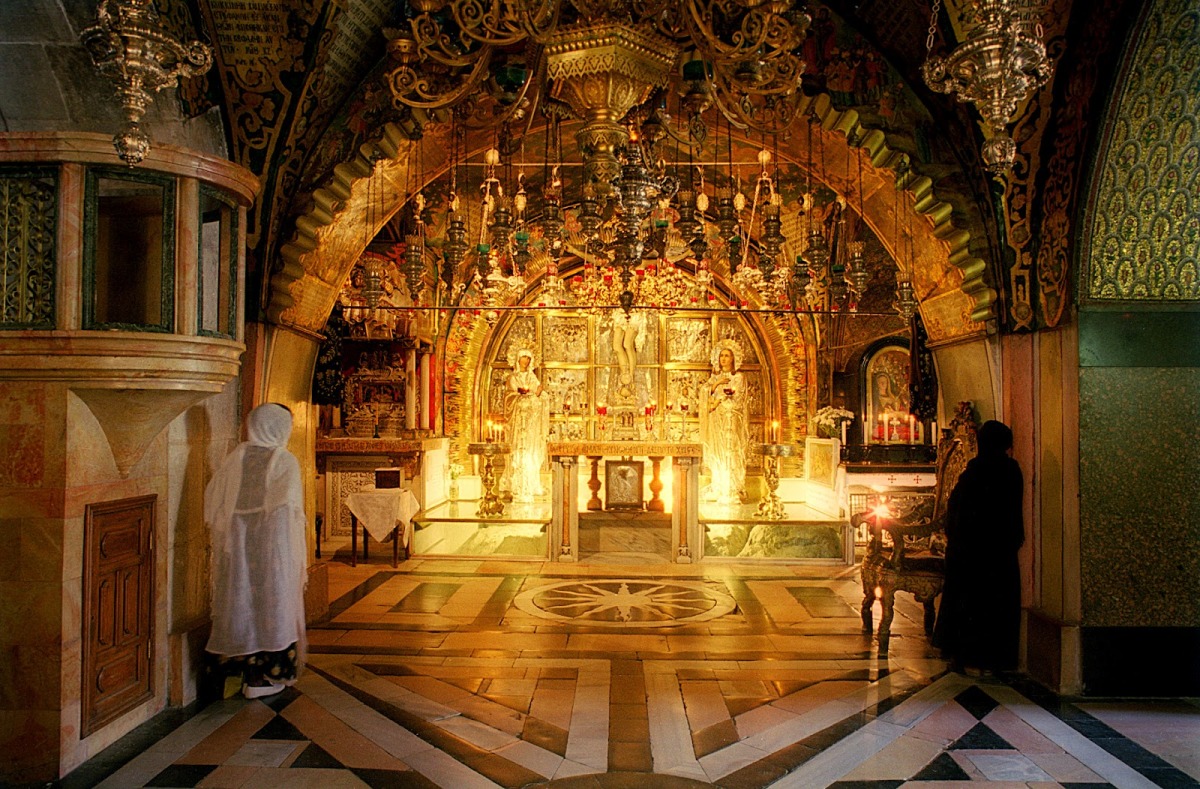
Weeping and Gnashing of Teeth

One of the problems with describing our existence after death is the limitations of words. Words have meaning because we can relate them to experience. If you have never experienced anything even similar to the glory of Heaven and the New Earth then all you can do is explain what is not there. Similarly, if you have not experienced the depth of sorrow, pain or hopelessness that characterizes Sheol or Hell, what do you say? 

The Bible pulls out a few negative experiences that happen on Earth to help us to understand damnation. Speaking of Hades/Sheol Jesus speaks of fire and the worm that never dies. Most of us have been burned at some time. It is intense pain. Many of us have seen maggots doing their work. The smell and the disgusting sight quickly elicits the gag reflex. Does this mean that there is actual fire and maggots? Maybe. It certainly means that the experience is intensely awful. 

A frequently used clause to communicate the horror of being exiled from God is the phrase, “weeping and gnashing of teeth.” All of the occurrences of this phrase are in the Gospels and out of the mouth of Jesus. Most are found in Matthew. Here are some examples:

11 I tell you, many will come from east and west and recline at table with Abraham, Isaac, and Jacob in the kingdom of heaven, 12 while the sons of the kingdom will be thrown into the outer darkness. In that place there will be weeping and gnashing of teeth.”

Matthew 8:11-12 (ESV)

The context is Jesus responding to the faith of the Centurion. He is bemoaning the fact that many of the Jews will not enter Heaven because of their lack of faith in Him. ”Outer darkness” conveys that Hell segregated away from God’s presence in some way. Darkness is an often-used descriptor for a number of things including ignorance, evil and the literal lack of light. Could all of these apply to the experience of Hell or even to a lesser extent Sheol? You and all around you are evil. Nobody can trust anybody. There are no bonds, or friendship or kindness. God and good feel like a distant dream. Maybe you do not even understand why you are there.

C.S. Lewis, in his book The Great Divorce, describes some of the inhabitants of Hell as firmly convinced that they are innocent and unjustly damned. Even when they are given the opportunity to enter Heaven by grace they resist. They live in the darkness of ignorance about themselves. 

Then Jesus uses the phrase “weeping and gnashing of teeth”. I expect that is a very literal description. What does the phrase connote? With damnation being an eternal sentence, all hope is loss and joy consumed. All good things come from God, so if God forsakes you, there are no good things. The sorrow must be overwhelming and so is the weeping. 

I have never been a tooth-grinder, but I can easily imagine such stress that one would grind their teeth together. Another reason for the gnashing of teeth may be anger. If not overcome by sorrow, a person may be filled with rage at God. It doesn’t matter which, both are horrible conditions that were avoidable since Jesus died for all.

Jesus also works this phrase into a bunch of parables that describe Judgment Day. The first is The Parable of the Weeds. This little story just conveys the fact that God is able to separate those who belong to Him from those who reject Him.

41 The Son of Man will send his angels, and they will gather out of his kingdom all causes of sin and all law-breakers, 42 and throw them into the fiery furnace. In that place there will be weeping and gnashing of teeth.

Matthew 13:41-42 (ESV)

A similar message is given using the same phrase in The Parable of the Net, Matthew 13:49-50. 

Then in The Parable of the Wedding Banquet, (Matthew 22:2-14) Jesus uses the phrase again to describe someone who is cast out of the banquet because they are not wearing “wedding clothes”. These “clothes” are the righteous of Jesus which are provided for a person. Just as the Gospel tells us that salvation is the gift of God and that Jesus provides the necessary righteousness through His obedient life and His forsakeness on the cross, so the clothes are a God’s grace to us but not optional.

A similar point is made in The Parable of the Talents, (Matthew 25:14-30). Here the person who is cast out does not invest the one talent (a unit of money) that the Master gives Him. This is not to suggest we are saved by a minimum level of good stewardship. The one talent must represent knowledge of the Gospel which the wicked servant buries. His punishment is to be cast “outside, into the darkness, where there will be weeping and gnashing of teeth.”

There are a few more, but you get the point. ”Weeping and gnashing of teeth” is Jesus’ most used phrase to describe Hell. It gets to the emotional side of the experience. It is not an experience that anyone would want. Some people erroneously think of Hell as a party for those who prefer an immoral life. Nothing could be further from the truth. To be thrown out from any presence of God is devastating even for those who hate God. There is no party, pleasure or friendship–only suffering and hopelessness.

Jesus: God in the Flesh

Without an amazing act of love that we celebrate at Christmas there would be no point in writing or thinking about eternal life, because all that would be waiting for us would be judgement. The miracle of Christmas is all about God becoming human. But what does that mean? The discussion below is largely theoretical based on the little information that we have.

Jesus is a unique being in several ways. First, He is a being that pre-existed His conception as a human. The rest of us started our existence at conception. We were not a soul waiting to jump into a body. Jesus is the Son of God — a being united with the Father in a way that none of us can understand. Still, the Son of God is known to have acted as a distinct person in the creation of the world, in interacting with Israel during Old Testament times, and probably in many other ways. This being was a spirit. What’s a “spirit”? It is an intelligent, powerful being that has no set physical or observable form. A spirit can take on a form and “manifest” itself, but it is not bound to that form. When Jesus “manifested” in the Old Testament, as when three visitors came to Abraham, we refer to Him as the “pre-incarnate” Christ. Incarnating is not the same as manifesting.

There is no biblical glossary that sets down the defining parameters of what it means to be a spirit or spiritual. Similarly, theological terms like incarnate, pre-incarnate, triune or manifest are subject to the understanding of the user. The definition of “spirit” above is my own as I struggle to understand God, Angels, Seraphim, and ultimately humans and myself. For now, I will stand with my definition of what God and the Son of God is.

I believe Angels and Seraphim are slightly different, even though the Bible speaks of angels as “ministering spirits”. In their formal space, that of Heaven, I expect that individual Angels and Seraphim have a set form. They also seem to have the ability to access our space, this Universe, and here they can “manifest” taking any form that they wish. This would be true of Satan (a Seraphim) and demons (Angels), only now they are excluded from Heaven.

For the time being, living human beings are stuck here with a set form. We have a body, and that body’s form cannot be shifted (not including surgery). When we die, we temporarily leave our “Earthly” body behind. If we are connected to Christ, we go to Heaven and assume a Heavenly body, which again has a set form (superior to what we left behind). We cannot return to this time-space, until we return with Jesus at Judgement Day.

Christmas is the story of the Son of God volunteering to doing something that is very restricting to Him yet is a marvelous act of sacrificial love. He takes on a set human form. By incarnating rather than manifesting the Son of God is stuck with this union. He becomes Jesus.

The Angels are said to have marveled at this. They likely marveled not so much at the fact that God could do this, but rather that He would. It is akin to our choosing to be a rat. The reasoning for it is clear and beautiful. God became human so that humans could have a chance at eternal life with Him.

God is a being of laws. He had the sovereign power to ignore His laws and save sinful humans simply because He wanted to. That is not God’s idea of justice. The Law had to be fulfilled and a sinless human being would do it. Because of the process of how our sinful human nature is spread (by heredity), there was no and would be no sinless human being; so the Son of God became one. A virgin birth avoided the inheritance of a sinful nature. The incarnation put the Son of God under the Law.

The fact that Jesus is the incarnate Son of God also made possible that human beings like us could be united with Jesus in a way similar to how the Son of God is united to the Father and the Holy Spirit. This allows us to have the righteousness of Jesus and for Jesus’ forsakeness on the cross to apply to us.

20 “I do not ask for these only, but also for those who will believe in me through their word, 21 that they may all be one, just as you, Father, are in me, and I in you, that they also may be in us, so that the world may believe that you have sent me.

John 17:20-21 (ESV)

Many people think this prayer of Jesus is unfulfilled, because the Christian church is divided structurally and doctrinally. That is incorrect. We are all united in some supernatural way to Jesus and therefore to each other. This saves us.

At Judgement Day we will take the final step of our salvation. We will acquire a resurrected, spiritual body. (1 Corinthians 15:44f) What does that mean? I don’t think it means that we will be like God without form, but rather a form for this Universe and a form for Heaven with the ability to move between both. Could that be a misread? Absolutely. Whatever having a spiritual body means, it will be great; and it will be because the Son of God chose transformation of Himself.

Does Jesus remain human? I think so. What will that look like? We will find out.

The Fate of the Old Testament Faithful

This topic does not directly impact any of us today, it is more of a curious bit of information. Still, the fate of the people of the Old Testament time does speak to the nature of God, the necessity of salvation through Jesus, and what God can and will do, besides being interesting.

It is clear that some people, not all people, from the ranks of Israel in the Old Testament received eternal life. God speaks of a “remnant” being saved. The word doesn’t inspire confidence that this is even a large minority of those in Israel. Did this remnant go to Heaven?

It may surprise people to know that there is no promise of humans residing in Heaven after death in the Old Testament. A few Old Testament prophets had out-of-body experiences of Heaven. The seventy elders of Israel at the time of Moses saw some shielded vision of God in Heaven. It says that Elijah was taken up into heaven.

 And as they still went on and talked, behold, chariots of fire and horses of fire separated the two of them. And Elijah went up by a whirlwind into heaven.

2 Kings 2:11 (ESV)

Being that this is an observation in the midst of a narrative, one can only conclude that Elijah went upward until he was out of sight. The passage doesn’t say anything about where he went. I would assume that even Elijah is not an exception. The Old Testament faithful all spoke of going to Sheol.

Serious theologians have been perplexed as to what to do with this word. Some translations rendered the word as “the pit” or “the grave”, and then would put a footnote saying : in Hebrew Sheol. Every word on the page was in Hebrew originally, so what was the footnote confessing? Sheol is not a hole in which we put a dead body. Sheol is a proper noun for a place. The place where the dead go pending some future event.

When the Old Testament was eventually translated into Greek, the word Sheol was translated as Hades. We could accuse the translators of coopting Greek religious ideas, since Hades is a place and a person in Greek mythology. It is Jesus who saves them from this fate. I would consider Jesus to be authoritative on this topic (actually any topic). In the story of The Rich Man and Lazarus, (Luke 16:19-31), Jesus gives us our most detailed look at Hades/Sheol. You might be fooled into thinking that this is a parable about Heaven and Hell, but the location of the rich man is identified as Hades.

In Hades the rich man is suffering. He states that he is in a fire. Hence the confusion with Hell. He has ability to speak with Abraham, one of the Old Testament faithful. Is this possible, or is this just a fiction? The use of names (Abraham and Lazarus) and the fact that this is not written as a parable with a symbolic lesson, suggests that this is an actual event. Add to it, that the Old Testament people spoke of going to Sheol and you learn that Sheol/Hades is a place divided by a “great chasm” where all the dead were to that point. Greek mythology states something similar. If this isn’t all myth, how would they know that? The forbidden practice of communicating with the dead could be a source.

The Old Testament faithful are not suffering in flames. Lazarus is being comforted. He is receiving good things. But he is not in Heaven.

Abraham and Lazarus may be among God’s chosen, but they are definitely still sinners. Why should they not be roasting with the rich man? A fairly well-known passage may have the answer:

25  [Jesus] whom God put forward as a propitiation by his blood, to be received by faith. This was to show God’s righteousness, because in his divine forbearance he had passed over former sins. 26 It was to show his righteousness at the present time, so that he might be just and the justifier of the one who has faith in Jesus.

Romans 3:25-26 (ESV)

This passage is a little hard to follow. It says the God offered Jesus as a sacrifice for sin to show that He didn’t compromise the Law with regard to the Old Testament faithful, even though He had left their sin unpunished up to the time of Jesus. He also offered Jesus to atone for those who have faith in Jesus presently and in the future.

The Old Testament faithful went to the comforting part of Sheol because Jesus would eventually pay for their sins. Are they still there?

They now dwell in Heaven because atonement is complete and Satan and his cronies have been booted. This movement is connected with “Jesus’ descent into hell”. More about that here:

https://afterdeathsite.com/2017/03/14/christs-descent-into-hell-part-1/

The Old Testament faithful are saved by being chosen by God, which manifested itself in trusting God for their salvation. They did not have details. Could such a path of salvation exist outside of Israel? I don’t see why not. There were faithful people before there was an Israel. Why not some outside of Israel and based on God’s mercy and foreknowledge?

So might you meet Abraham or Elijah or Lazarus in Heaven? I’m sure that is possible. They are alive and they are there. How about Adam and Eve so that you can thank them for messing up the world and your DNA for you? It would appear that they were repentant, so “yes”.

God reveals that He is unmoving with regard to keeping what is laid down as Law. Even though He spared the Old Testament faithful suffering, He did not just bounce them to Heaven until everything was actually completed. Foreknowledge was not enough. As people who live after Jesus, we can be thankful that God is faithful to His promises over millennia. We have the additional benefit of skipping Sheol all together in we are in Christ.

How Is Sheol Different than Hell?

Many, if not most people, have a simplistic view of what the Bible tells us about life after death. Simply put they believe in Heaven and Hell. One of the goals of this blog is to help people realize that two events change this model: the death and resurrection of Jesus and Judgment Day.

Prior to Jesus, the Old Testament people knew of two things regarding their existence after death. The knew that there would eventually be a bodily resurrection of dead followed by either everlasting life in a New Earth or everlasting contempt somewhere. (Dan. 12:2, Isaiah 65) This information can be traced as early as Job, which is likely the oldest book in the Bible.

For I know that my Redeemer lives,
    and at the last he will stand upon the earth.
26 And after my skin has been thus destroyed,
    yet in my flesh I shall see God,
27 whom I shall see for myself,
    and my eyes shall behold, and not another.
    My heart faints within me!

Job 19:25-27 (ESV)

The Old Testament people are aware that Heaven exists, but it is never promised as a destination for them after death. Instead, the Old Testament people had an expectation of going to Sheol (the place of the dead). This is not the same as the grave. Some translations of the Bible botch this and then note that the Hebrew word is “Sheol” in the footnotes. Sheol is a distinct place of conscious existence.

Sheol seems to be a two-part place. One section is comforting, but not necessarily better than life. The other section is a place of suffering. The New Testament and the Greek translation of the Old Testament (the Septuagint) switch from the word “Sheol” to the Greek “Hades”. These are synonyms. Jesus uses another word “Gehenna”, which is not a synonym. Gehenna refers to the final destination of the damned, the post-Judgment Day lake of fire. This would be my candidate for the English word, Hell.

Getting Hades/Sheol and Gehenna confused is pretty easy to do. They do share certain properties. Darkness, suffering, and fire seem to be a part of both. One description of Hades includes “where the worm does not die”. I don’t think this is talking about the decay of our corpse in the grave. This seems to be part of the suffering of Sheol.

Finding differences is harder. I can come up with only three within the scant information we are given.

  1. It appears that it is possible, but not acceptable, to communicate with the dead in Sheol. In the story of the Witch of Endor (1 Samual 28), Saul summons the prophet Samuel from the dead through the forbidden skills of the Witch of Endor. Samuel would have been in the comforting section of Sheol. He doesn’t seem too pleased about it either. This practice must have been a part of pagan Canaanite culture and possible also others. The Jews are strictly forbidden from doing this (Deut. 18:9-13). I would infer from this that those in the suffering section might also have been reachable. Once you are in Gehenna you are unreachable and no one will try. (More on that in a bit.)
  2. A second difference connects to what Jesus did right after his death.

For Christ also suffered once for sins, the righteous for the unrighteous, that he might bring us to God, being put to death in the flesh but made alive in the spirit, 19 in which he went and proclaimed to the spirits in prison, 20 because they formerly did not obey, when God’s patience waited in the days of Noah, while the ark was being prepared,

1 Peter 3:18-20a (ESV)

This is where we get Jesus’ “descent into Hell” from the Apostles’ Creed. Here “Hell” is a misleading term. It should be descent into “Sheol” or something to that effect. Originally it was.

What was Jesus trying to do? 1 Peter 4:6 explains it:

For this is why the gospel was preached even to those who are dead, that though judged in the flesh the way people are, they might live in the spirit the way God does.

1 Peter 4:6 (ESV)

It certainly sounds like these people, long dead, condemned, held in the prison of Sheol are getting a second chance through the preaching of Christ. Did this ever happen again? Don’t know. Is there another reference to this in Scripture? Nope. Outside of Scripture? Yes, a bunch. It was a favorite theme of the ancient Eastern church.

This leads to the final and most critical difference between Gehenna (Hell) and Sheol.

In Revelation 20:14, Hades/Sheol is thrown in “the lake of fire”/Gehenna/Hell. At that point, post-Judgment Day, they become one thing. It appears to me that the worst part of being damned doesn’t happen until then. At that point God forsakes you.

You are utterly separated from God and all of God’s redeemed forget you. Jesus experienced this for us on the cross. He was forsaken, and even though He knew it was coming, it crushes Him.

45 Now from the sixth hour there was darkness over all the land until the ninth hour. 46 And about the ninth hour Jesus cried out with a loud voice, saying, “Eli, Eli, lema sabachthani?” that is, “My God, my God, why have you forsaken me?”

Matthew 27:45-46 (ESV)

This whole topic can remain an academic discussion because Jesus took the suffering for us. If we are baptized in Christ’s name then we are baptized into His death–specifically, this part of His death.

I don’t need to get any closer to Sheol/Hades/Gehenna/the Lake of Fire/ Hell than this.

Life That Is Truly Life

People do crazy stuff sometimes. They jump out of airplanes, ski off the tops of mountains, kayak off of waterfalls. Often this is done for the adrenaline rush that comes with flirting with death. People also do dangerous “recreational” drugs to experience something beyond the boredom or the pain of their daily lives. These risky or reckless behaviors are often described as wanting to feel alive. What is being “alive” supposed to feel like? Let’s ask a crazier question, “Are you alive?”

Feelings are very much subject to the chemistry of our bodies. Depression is chemically mediated in our brains. It can have a cause in negative experiences, but it is then enshrined in brain chemistry. That is why medicines can help. Fixing relationships, changing how you think about your life, feeling hope can all help. These things also modify brain chemistry. So what is real? Is what you think real or what is happening to what you think with? Both. You are not a soul riding along in a body. You are a body and soul, even if those things are not what they should be at this time.

One of the unfortunate aspects of how our bodies have been modified by sin and the curse, is the strong tendency for our brains to seek pleasure and to become addicted to it. Life becomes a balancing act where we want to have pleasure but remain in control of ourselves. Some people have this tendency worse than others; they have an addictive personality. This is often seen as being “weak willed”. It is more being poorly constructed. “Friends” actor Matthew Perry, who drown at his home this week, freely shared how he became addicted early and could not shake it even with the best of care. This did not make him a weak or bad person. He was a person who could not handle any drugs of alcohol because of how sin and the curse had modified him.

We all need to have realistic expectations of how this life will feel and a clear understanding of why we are alive. Living under sin (we all have a sinful nature, for a better explanation of this go here: https://givingchrist.com/2023/10/10/what-is-sinful-nature/ This reality does create a far from ideal existence. Add to it what the Bible calls “the curse”, which is basically God not tightly controlling how the universe works, and you have the ingredients of a life than is disappointing at best. (Go to givingchrist.com and search “the curse” in the search box at the bottom of the page)

This explains an intriguing little phrase in the Bible:

17 As for the rich in this present age, charge them not to be haughty, nor to set their hopes on the uncertainty of riches, but on God, who richly provides us with everything to enjoy. 18 They are to do good, to be rich in good works, to be generous and ready to share, 19 thus storing up treasure for themselves as a good foundation for the future, so that they may take hold of that which is truly life.

1 Timothy 6:17-19 (ESV)

I am especially interested in the last two words here: “truly life”. Does “truly life mean our experience here not real or is it not worthy of the title “life”?

Recently scientists and noted personalities like Elon Musk have played with the idea that the whole universe is actually a simulation. It is like the movie, “The Matrix”. The reasons for this are because our planet seems too good to be true within the laws of physics. Because the odds are against it, we must be in a simulation. Others note that physical limits like the speed of light suggest a limiting processor speed.

This seems like a desperate attempt to get around that the world is a creation. The complexity of the universe that seems extraneous to the world’s existence is either God being creative for His own pleasure or some type of consequence of the curse. Living in a creation does not make it a simulation. However, living in a fallen creation does make it unpleasant and incomplete. That is why people who have Near Death Experiences (NDE) say that they feel more alive when they were clinically dead.

There will be heightened senses, greater joy, deeper love, engrossing amazement when we get out from under sin and the curse. It will be life that truly deserves the title life. In fact, this won’t be completed at your physical death, unless Jesus is coming again at that time. The fullness of your life will be accomplished at your resurrection from the dead (Search “resurrection of the dead” in the search box above). It is also a gift for those who are connected by faith and baptism to Jesus. It is not the general fate of mankind.

In the meantime, the muted nature of our experience now doesn’t make it worthless. This is God’s creation and it still has a purpose and so do you. You are not created for thrills and highs. You are created to know God, to know His love for you, to reflect his love for you to others. This is true in even the most miserable of situations (especially then). You want to be here to accomplish God’s plans for you.

10 For we are his workmanship, created in Christ Jesus for good works, which God prepared beforehand, that we should walk in them.

Ephesians 2:10 (ESV)

Having God work through you is a high that doesn’t do harm. It is a foretaste of life that is truly life.

The Sheep and the Goats

If you are not familiar with the Bible, you might think this blog will be about the care of livestock. It is not. It is about a description of Judgment Day that Jesus gives His disciples a few days before He is crucified. Taken out of context, this story can really mess up your understanding of how we are saved. Therefore, it is critical that you understand it properly. Here is the first half of the story:

31 “When the Son of Man comes in his glory, and all the angels with him, then he will sit on his glorious throne. 32 Before him will be gathered all the nations, and he will separate people one from another as a shepherd separates the sheep from the goats. 33 And he will place the sheep on his right, but the goats on the left. 34 Then the King will say to those on his right, ‘Come, you who are blessed by my Father, inherit the kingdom prepared for you from the foundation of the world. 35 For I was hungry and you gave me food, I was thirsty and you gave me drink, I was a stranger and you welcomed me, 36 I was naked and you clothed me, I was sick and you visited me, I was in prison and you came to me.’ 37 Then the righteous will answer him, saying, ‘Lord, when did we see you hungry and feed you, or thirsty and give you drink? 38 And when did we see you a stranger and welcome you, or naked and clothe you? 39 And when did we see you sick or in prison and visit you?’ 40 And the King will answer them, ‘Truly, I say to you, as you did it to one of the least of these my brothers, you did it to me.’

Matthew 25:31-40 (ESV)

If you look at this section without the context of Jesus dying on the cross and the explanation that we are saved by that sacrifice as a gift to us, you would conclude that we are saved by doing the good things listed above. I like to ask people where is God’s grace in this story (it is not really a parable)? The answer is hidden in how people are separated.

Why are some people sheep and the other goats? The answer is that those who are sheep are people who are connected to Jesus through faith and baptism. Their sins are forgiven by grace. The goats are not.

As Jesus speaks to the “sheep” it seems like they never did anything wrong nor missed any opportunity to do good. Are real people like that? I would argue that no one is. Their failures have been covered by the blood of Jesus. All that remains to be seen at Judgment Day is their good deeds. The good deeds are not causing their salvation nor are they a portion of why they are saved. But evaluation of deeds is what Judgment Day is all about.

The list of what Jesus cares about is helpful. It gives us an idea of what God is looking for from His disciples. These things are a portion of what our lives are about. Notice that “making disciples” (Matthew 28:19) is not in this list. Clearly leading somebody to the eternal salvation of their souls is a much bigger deal that simply giving them a meal. The list is not comprehensive, nor does it offer a way to prioritize our actions. It does show us some useful actions and not just because they meet needs. It is because they reflect love. Love that is felt for us and nurtured in us. When we have the love of Jesus in us we help out the “least” of humanity. It is like doing it for Jesus.

The second part of the story goes:

41 “Then he will say to those on his left, ‘Depart from me, you cursed, into the eternal fire prepared for the devil and his angels. 42 For I was hungry and you gave me no food, I was thirsty and you gave me no drink, 43 I was a stranger and you did not welcome me, naked and you did not clothe me, sick and in prison and you did not visit me.’ 44 Then they also will answer, saying, ‘Lord, when did we see you hungry or thirsty or a stranger or naked or sick or in prison, and did not minister to you?’ 45 Then he will answer them, saying, ‘Truly, I say to you, as you did not do it to one of the least of these, you did not do it to me.’ 46 And these will go away into eternal punishment, but the righteous into eternal life.”

Matthew 25:41-46 (ESV)

Do you think that the people addressed here never did anything good? While that may be more imaginable, many people who will end up lost aren’t horrible people on a human standard. You can be very kind and a decent citizen but, like everyone else, you are a sinner. This portion of the story illustrates that good deeds cannot overcome our sinfulness. God’s standard for saving yourself is perfection. That includes even genetic perfection (no sinful nature), so it was out of your reach from the start. That is why we need Jesus and God’s promise of forgiveness.

The consequence of sin is stiff. Eternal punishment seems radically disproportionate to the damage one might do because of our sinfulness. If you look at sin as being like a contagion, you get a better idea of why it is this way.

Anything that has sin cannot survive in God’s presence. You must be made sinless. God went through radical, costly steps to make that possible. The Son of God became human (a radical step), He lived 35 years keeping the Law flawlessly, and then He was willingly sacrificed paying the price for the sins of everybody else. The most critical part was Jesus being forsaken by the Father, which divided the Trinity (a very radical step). When you blow this off there is no other recourse than being eternal forsaken yourself and that means suffering.

The final thing that I would like to note about this passage is that the story makes it look like Judgment Day is done as a group. 1 Corinthians 3:10-15 tells us that it is individual. Perhaps it happens for us all at once. The judgment for those who have forgiveness through Christ is for the purpose of reward. People who are saved as a gift certainly don’t deserve a reward for doing what is right. It is just what we were supposed to do in the first place. But God is generous. God rewards in some way and I’m sure it is great.

Judgment Day for the Redeemed

There is a passage of Scripture that has captured my imagination. It is 1 Corinthians 3:10-15. I call it the “Three Little Pigs” passage, because verse 12 is reminiscent of that nursery rhyme. The passage gives a unique insight into what Judgment Day is like for somebody who has been saved by Jesus. I have written snippets about this topic in the past. In this blog I would like to give a more complete treatment. Here is the passage:

 According to the grace of God given to me, like a skilled master builder I laid a foundation, and someone else is building upon it. Let each one take care how he builds upon it. 11 For no one can lay a foundation other than that which is laid, which is Jesus Christ. 12 Now if anyone builds on the foundation with gold, silver, precious stones, wood, hay, straw— 13 each one’s work will become manifest, for the Day will disclose it, because it will be revealed by fire, and the fire will test what sort of work each one has done. 14 If the work that anyone has built on the foundation survives, he will receive a reward. 15 If anyone’s work is burned up, he will suffer loss, though he himself will be saved, but only as through fire.

1 Corinthians 3:10-15 (ESV)

It surprises people when they here that Judgment Day is a judgment of our deeds. This is said in several places in Revelation and is correctly stated in the Athanasian Creed, if you are familiar with that. What throws people off is the assumption that Judgment Day is about whether we are saved or not. For people who don’t have the forgiveness of their sins through Jesus, it is about that. But for those who have forgiveness, their salvation has been known for a long time. In fact, people could have been in the Heaven for millennia by the time Judgment Day rolls around. They are not going to be kicked out of God’s presence at that time.

So why should redeemed people go through the Judgment Day process at all? And what is “the process”? 1 Corinthians 3:10-15 tells us quite a bit. Let me set the stage.

Jesus returns from Heaven with all those who had previously died that were connected to Him (“in Christ” is a phrase frequently used in the Bible to describe that relationship). Everybody (living and the dead, saved and the unsaved) is resurrected or transformed into a new body as described in 1 Corinthians 15. The Redeemed are collected to be near Christ (this is the real Rapture) and are then seated on Christ’s right as described in Matthew 25:31f. Throughout this process the universe has been unraveling as God is changing everything. The Earth is eventually consumed by fire. It is not clear of where we are relative to this. The judgment of Judgment Day then proceeds.

Matthew 25:31-46 gives a general overview of the judgment. I’ll write about this next time. While is seems like a group judgement in that passage. Paul shows that it is very individualistic in the passage above. What happens?

It seems that we all will experience this “fire” that essentially reveals and evaluates everything that has happened in our lives here on Earth. I say “everything”, but it is actually everything minus what has been forgiven through our connection to Christ. The process shows whether we have “built” on the foundation of Christ with a life that is “gold, silver and costly stones” or “wood, hay and straw.” What constitutes “gold, silver and costly stones”?

These precious things are obviously metaphors. Paul urges us to live lives “worthy” of Christ. People who still have sinful natures will never truly be worthy of Christ’s sacrifice or of His presence and glory. But what we are asked to do is to be active being good stewards of everything God gives us in life (time, talents, money, body, the planet, our knowledge of God, etc.), to carry our the “good deeds prepared in advance for us to do” (Ephesians 2:10), to grow in the characteristics of God’s nature (2 Peter 1:4, et al)and to do all of this by the power of the Holy Spirit and with a humble and loving nature (Luke 17:10, 1 Corinthians 13:1-3)

Wood, hay and straw would constitute living as Christian and treating grace as cheap, straying into an attitude of self-righteousness and entitlement, ignoring the work of God’s kingdom, being a selfish steward and the like. The Day will reveal God’s evaluation of all of this. The fire referenced here, as well as by John the Baptist (Matthew 3:11) and Jesus (Mark 9:49), destroys the remembrance of such things and leaves only what God considers to be rewardable, if anything.

We are saved by grace. Without Jesus nothing we do can eclipse our sin. For some, even with Jesus, they have no reward; but they still have eternal life. They enter the New Heaven and Earth, but “only as through fire”. For the wiser disciple their life was not meaningless. They too are saved by grace, but they will also have a reward. What is the reward? Not much is said, but you can put a general idea together. I’ll save that for another blog.

Clearly, it is desirable to have a reward. So we want to keep this balance in our minds. We serve God because we love God and, as God’s nature seeps into our souls, we love people. We consider God worthy of our all and we do our best to give Him our all. None of this is done to save ourselves or to merit anything. We serve because we believe in the cause we are serving. We know that we are blessed to be saved by grace. We understand that if salvation rested on us somehow our sinful nature would mess it up. We leave this life expecting eternal life and no more. We receive more because God is good.

Can You Imagine a New Earth?

Today is a gorgeous fall day. There is bright sun and a warm breeze. It is wonderful. It is also just the remnant of the good things that God placed in the original creation. Sit outside long enough and you will notice the results of the “curse”.

Probably some insects will find you eventually and they will harass if not bite you. The sun might get too warm. Stay long enough and you will get sunburn. Discomfort, temperature change, hunger, thirst will all show up eventually. But what if the curse no longer existed? What if sin and Satan’s kingdom were no longer a part of your environment? Can you imagine it?

The Biblical description of the New Earth is pretty scant. All of the detail is left for us to discover in the future. Even a Near Death Experience is not a field trip to the New Earth. If it is not an illusion, it is an experience of Heaven during the “Intermediate Period”, the time between now and Judgment Day.

What can we say about the New Earth? First, it is not just for redeemed people, but it includes a redeemed version of the rest of creation. There will be animals, but a “no death” system of existence. Nothing will prey on you or anything else. A petting zoo of the grandest form.

The wolf shall dwell with the lamb,
    and the leopard shall lie down with the young goat,
and the calf and the lion and the fattened calf together;
    and a little child shall lead them.
The cow and the bear shall graze;
    their young shall lie down together;
    and the lion shall eat straw like the ox.
The nursing child shall play over the hole of the cobra,
    and the weaned child shall put his hand on the adder’s den.
They shall not hurt or destroy
    in all my holy mountain;
for the earth shall be full of the knowledge of the Lord
    as the waters cover the sea.

Isaiah 11:6-9 (ESV)

Can you imagine such a gentle and complementary relationship with nature? Never mind the food chain and the cycles that move energy or carbon. God can create sustainable worlds that work in many ways.

How about people? We are the most dangerous predator on this planet. What about on the New Earth?

But be glad and rejoice forever
    in that which I create;
for behold, I create Jerusalem to be a joy,
    and her people to be a gladness.

Isaiah 65:18 (ESV)

People will be one of the most enjoyable parts of the New Earth. No conflict, no unfriendly competition, just joyful relationships. We will not retain the relationships (like spouse) that we had here. That is not to say that we won’t know people from here. Our investment in helping others to know Jesus and be disciples is so that they will be a part of our “reward” in the New Earth.

Will we be bound to the New Earth? We are currently on the cusp of space tourism. Is our place restricted to the New Earth? One confusing aspect of God’s post-Judgment Day plans is that it appears to some that we either never go to Heaven or leave Heaven as Judgment Day commences. While I agree that we return with Jesus. I don’t think the Bible says we have to stay. Paul talks about “an eternal house in Heaven.”(2 Corinthians 5:1). What if an aspect of our resurrected bodies is that we can move between Heaven and this universe freely? What if we can move all over this universe and Heaven freely? Endless adventure, travel, investigating all that God will create.

Speaking of our resurrected bodies, what will we be like?

 So is it with the resurrection of the dead. What is sown is perishable; what is raised is imperishable. 43 It is sown in dishonor; it is raised in glory. It is sown in weakness; it is raised in power. 44 It is sown a natural body; it is raised a spiritual body. If there is a natural body, there is also a spiritual body.

1 Corinthians 15:42-44 (ESV)

A body that is no longer able to die, no longer sick or weak. Who knows what are its limits? I would understand “spiritual” in this context as that ability to move between and exist in parallel universes like Heaven and here. Will we be beautiful? I expect beauty will still be thing, but no one left out. Each person will have their unique and beautiful look.

One more thing to ponder. What about our relationship with God. We think of God being visible in Heaven, but He is able to be everywhere. I expect we will encounter Jesus in a face-to-face way every day in many settings. We will experience the Spirit and the Father in a multitude of ways, from seeing them take form, to being in God’s throne room, to experiencing their presence and power within us.

“Behold, the dwelling place of God is with man. He will dwell with them, and they will be his people, and God himself will be with them as their God.He will wipe away every tear from their eyes, and death shall be no more, neither shall there be mourning, nor crying, nor pain anymore, for the former things have passed away.”

Revelation 21:3b-4 (ESV)

Are you ready for this? This is the inheritance of those who are in Christ. God gets through to us so that we believe the promises connected to the death and resurrection of Jesus. We have eternal life from the time we are baptized in the name of Jesus, but it is ultimately and fully revealed when the New Earth begins.

Is Heaven a Destination for Humans?

Depending on your background the question in the title may seem strange to you. For many their understanding of eternal life is simply Heaven or Hell. There are others who come from the other side of this question. They would correctly note that Heaven was not promised as a human destination in the Old Testament. They would also note that we are promised a resurrection of the body and a place in a “new heaven and new earth.” If they wished, they could also note that “heaven” is oddly not capitalized in Greek like a proper noun, place name is in the rest of the New Testament.

Let’s start with the last point. Heaven is definitely a place and not a state of mind or physical condition. The problem is that for some reason Greek couldn’t come up with different words for atmosphere, universe and the place where God properly dwells. Sometimes the distinction is made 1st heaven, 2nd heaven and 3rd heaven, which corresponds with how they visualized these things spatially–like concentric circles. The fact that they have this wrong, doesn’t make God’s throne a non-place. Perhaps Heaven isn’t it’s proper name, just like “angel” might be more of a job description (messenger) than a name for a species (We could say the same for the title”God”) We use Heaven as a proper name, so I would argue that it should be capitalized regardless of what Greek did with it. Hebrew doesn’t capitalize, context is the key. The main point is that Heaven is a place and a future place for us.

Blessed be the God and Father of our Lord Jesus Christ! According to his great mercy, he has caused us to be born again to a living hope through the resurrection of Jesus Christ from the dead, to an inheritance that is imperishable, undefiled, and unfading, kept in (H)heaven for you,

1 Peter 1:3-4 (ESV)

Our inheritance is in Heaven. You can have treasure in Heaven (Mt.9:21). Your citizenship is in Heaven (Phil. 3:20) Your hope is laid up in Heaven (Col. 1:5). And there are proofs that don’t use the word “Heaven.” The martyrs are under the altar (in Heaven) and before Judgement Day. Paul talks about us having a building from God…eternal in the heavens. Why the plural? I think it is because there is Heaven, the dwelling place of God and the redeemed now, and post-Judgment Day a new Heaven. My way of reconciling Heaven and eternity is to understand that we don’t abandon Heaven for the New Earth, but rather we add the New Earth.

The fact that Heaven is mentioned, but not as a destination for humans, in the Old Testament; certainly seems like a theological development. I suspect that it a change in conditions rather than human thought. Satan is expelled from Heaven (Rev. 12), and sin is atoned for by the victory of Jesus on the cross. The result is our ability to “reign” with Christ in Heaven right now.

There is a hymn that goes, “I’m but a stranger here, Heaven is my home.” The thought is a little sloppy but not wrong. I am of the Earth–not a stranger. But because of Christ, the Earth, Heaven, the new Heaven and Earth, are all home for me.

Judgment Day for the Damned

This is a topic that many would rather not think about. To be honest, I’d rather not write about it; but to be thorough it is a topic that concerns existence after death about which the Bible speaks. Judgment Day for the damned is something that you will observe in part. Hopefully, because of the grace that comes through Jesus, it is not something that you will experience.

Judgment Day as a damned person is something that people will experience. God is loving. He would rather this not be the case. But God is also absolute in His application of the Law. He can and will bring eternal judgment. The real disappointing fact is not that it happens at all, but that it seems that it will happen to most. My least favorite passage in the Bible says:

 “Enter by the narrow gate. For the gate is wide and the way is easy that leads to destruction, and those who enter by it are many. 14 For the gate is narrow and the way is hard that leads to life, and those who find it are few.”

Matthew 7:13-14 (ESV)

What is “destruction” in this sentence? Since it is put in opposition to “life”, I have to conclude that it is the final condition of those who are damned.

Why would anyone be damned? All of the human race demonstrates its rebellion against God through our daily sins. Maybe those sins aren’t particularly destructive or hurtful, but they are contrary to how we were initially created to be as humans, and they are offensive to a holy God. All of mankind’s sin flows from a sinful nature, which means that we inherited a distortion of how God created us. Sin is not just willful. For us, it is part of our being.

All of this would be rendered harmless, if only people would or could put their faith in Jesus. Jesus fixed it on the cross. If a person wouldn’t resist the Holy Spirit and be connected to Jesus, they would be fine. But the majority turn out to be not fine. So effectively, people are damned for rejecting Jesus as Savior.

People ask “where is Jesus” in the following Judgment Day passage:

41 “Then he will say to those on his left, ‘Depart from me, you cursed, into the eternal fire prepared for the devil and his angels. 42 For I was hungry and you gave me no food, I was thirsty and you gave me no drink, 43 I was a stranger and you did not welcome me, naked and you did not clothe me, sick and in prison and you did not visit me.’ 44 Then they also will answer, saying, ‘Lord, when did we see you hungry or thirsty or a stranger or naked or sick or in prison, and did not minister to you?’ 45 Then he will answer them, saying, ‘Truly, I say to you, as you did not do it to one of the least of these, you did not do it to me.’ 46 And these will go away into eternal punishment, but the righteous into eternal life.”

Matthew 25:41-46 (ESV)

God’s grace through Jesus is actually found in where the people are seated. In this account, those on the right have had their sins covered by Jesus’ death, and those on the left have not. Those on the left are judged for their lack of concern for others. These people may have done many charitable things, but their errors overwhelm their good. The people on the other side may have been qualitively worse, but Jesus has covered their many sins and only the good shines out.

This is not grading on a curve or saving based on what percentile of good you achieve. This is perfection versus imperfection, and the only way to be perfect is by connection to Jesus.

So what happens next? Prior to this moment of judgment, everyone has been physically resurrected from the dead. Many of the damned have been in Sheol, possibly for millennia. They have suffered a physical torment, but how? Their bodies were buried or burned or eaten or something. Either you acquire a body for the time-space of Sheol or your soul can suffer the torment of this space.

Now with a resurrected body built for this time-space, they experience the following:

 “For behold, the day is coming, burning like an oven, when all the arrogant and all evildoers will be stubble. The day that is coming shall set them ablaze, says the Lord of hosts, so that it will leave them neither root nor branch. But for you who fear my name, the sun of righteousness shall rise with healing in its wings. You shall go out leaping like calves from the stall. And you shall tread down the wicked, for they will be ashes under the soles of your feet, on the day when I act, says the Lord of hosts.”

Malachi 4:1-3 (ESV)

Their resurrected bodies are destroyed to ash. Is this the destruction mentioned above in Matthew 7? In part it is. I also think this is the moment referred to in Revelation 14 as it applies to a certain subset of the damned.

And another angel, a third, followed them, saying with a loud voice, “If anyone worships the beast and its image and receives a mark on his forehead or on his hand, 10 he also will drink the wine of God’s wrath, poured full strength into the cup of his anger, and he will be tormented with fire and sulfur in the presence of the holy angels and in the presence of the Lamb. 11 And the smoke of their torment goes up forever and ever, and they have no rest, day or night, these worshipers of the beast and its image, and whoever receives the mark of its name.

Revelation 14:9-11 (ESV)

Does destruction mean total destruction to non-existence? A lot of people want to say “yes”. It reconciles the idea of Hell to the idea of a loving God. But we can’t ignore the phrase “eternal judgment” seen above in Matthew 25 and several other places in the Bible, including these passages in Revelation 20:

and the devil who had deceived them was thrown into the lake of fire and sulfur where the beast and the false prophet were, and they will be tormented day and night forever and ever.

 And the sea gave up the dead who were in it, Death and Hades gave up the dead who were in them, and they were judged, each one of them, according to what they had done. 14 Then Death and Hades were thrown into the lake of fire. This is the second death, the lake of fire. 15 And if anyone’s name was not found written in the book of life, he was thrown into the lake of fire.

Revelation 20:10, 13-15 (ESV)

Again, the lake of fire does not imply destruction to non-existence. It speaks of a permanent miserable and hopeless existence alongside of Satan and his demons who will suffer as well. The main difference between this and the description of Sheol, which also includes fire, I would surmise from the suffering of Christ on the cross. This phase includes being forsaken by God. Being forsaken proves to be the worst part. Jesus being forsaken on the cross is Jesus taking the judgment of our sins on himself. He is forsaken, probably from noon until three, so that we would never experience it.

The damned then slip from description as they will slip from our memory. While we undoubtedly know people who will be among the damned, they will not remain a source of grief for those who are saved. As God forgets about them, so will we. What is important is that we remember them now. Perhaps there is hope that someone will respond to the Gospel and be saved.