

When Did Heaven Enter the Plan?

The use of the word “Heaven”, the absence of Heaven as a human destination in the Old Testament, and similarities between Heaven and the New Earth leads to confusion about the topic. The article presents a view about how all of this fits together.

I recently watched a show of the documentary series Frontline about President Biden. It shared how, as a first term Senator, Joe Biden’s world was rocked by the tragic death of his wife and daughter in a car accident. The show interviewed the Catholic priest who ministered to the family at the time. He said something that stunned my wife and me. He started a sentence by saying, “If there is a Heaven…”. If? I’m not sure if the “if” was a reflection of a lack of faith or a confusion about God’s plan or both. If it was the former, I would say to him and any of you, expect this world to be difficult and unfair. We are sinful beings under God’s curse and cohabitants on this planet with Satan and his kingdom. There will be rough spots, even cruel ones. If the “if” is the latter, then this article is meant to address that. First of all, from where does the confusion about Heaven arise?

There are a couple of confusing aspects about Heaven in the Bible. The first is the word itself. “Heaven” both in Hebrew and in Greek is a word that describes several layers. The first heaven is the atmosphere of our planet. The second is the universe. The third is Heaven proper, the abode of God. This clearly shows the structure of creation as revealed to or understood by people in the biblical times. This doesn’t mean it is how it is actually structured. The model worked as far as God was concerned.

Next there is the fact that both Old and New Testament revealed the plan for a new heaven and new Earth. Certain similarities exist between the descriptions of Heaven and of the New Earth. So, are they the same? Do we go to Heaven and Revelation 21 and 22 describe it? Or do we wait the New Earth and references to Heaven describe it? Or are they two separate things?

Finally, why is there no reference in the Old Testament to people being taken to Heaven upon their deaths? Even the righteous expected to go to Sheol until the Resurrection?

The Bible reveals that God’s plans were established even before the problem of sin and rebellion existed. How He rolls out those plans and reveals them to mankind is the thing. Very early on God revealed the end of the plan. Job knew about the resurrection. Daniel speaks of it as well. Isaiah 65 reveals a description of the New Earth that doesn’t seem to agree with Revelation or the idea of eternal life. I suspect that Isaiah is only given a description that he and his contemporaries can process. To read more about this passage look here: https://wordpress.com/post/afterdeathsite.com/1982

Information is given out by God on a “need to know” basis. Nothing about Heaven as a human destination is mentioned in the Old Testament, but we do find Satan in Heaven. This I believe is key. If we know about God’s plan, then Satan will certainly know about it. This is the reason why more specific details are not given about the Messiah. What is given is specific enough that they could be interpreted any old way, like a fortune cookie; but there is not enough information for Satan to defeat the plan–which he definitely tried to do. A big part of this is that with Jesus’ successful fulfillment of the Law, Satan and his cronies would be expelled from Heaven.

Satan’s expulsion is spoken of in Revelation 12:

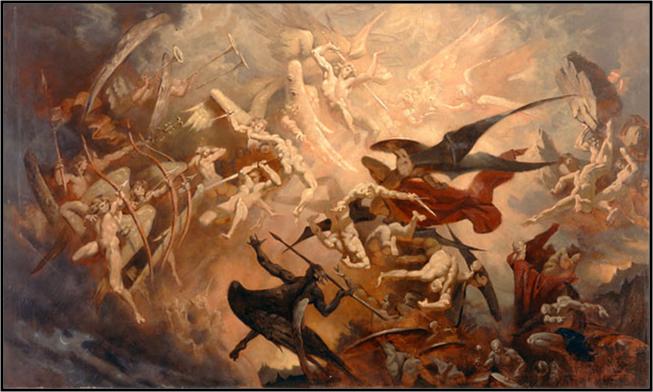
Now war arose in heaven, Michael and his angels fighting against the dragon. And the dragon and his angels fought back, but he was defeated, and there was no longer any place for them in Heaven. And the great dragon was thrown down, that ancient serpent, who is called the devil and Satan, the deceiver of the whole world—he was thrown down to the Earth, and his angels were thrown down with him.

Revelation 12:7-9 (ESV)

I believe this to be the ultimate “Good New – Bad News” message. The good news is that now those redeemed by Jesus don’t have to dwell in the bland comfort of Sheol. With Satan expelled, Heaven is in play, and it is our immediate destination at our death. Resurrection, Judgment Day, and the New Heaven and Earth are future and time does matter. (See this article about time: https://wordpress.com/post/afterdeathsite.com/2356

The bad news is that Satan is exiled to here. This I don’t understand or like. Human beings are enough of a mess with our sinful nature. The world is also complicated by the curse. How much additional suffering does the presence of Satan and his angels create?

Heaven is indicated as our destination in several New Testament passages. This is not a development of theology as much as it is more information after a critical execution of the plan. 2 Corinthians 5 states that we have “an eternal house in Heaven” (speaking about our heavenly body). The fact that it is “eternal” does not make Heaven and the New Earth the same thing. Read about one possible scenario here: https://wordpress.com/post/afterdeathsite.com/2356

There are many surprises that God still has in store for us. That makes it exciting. The most critical knowledge is already ours. We can only enter into eternal life with God as a gift through God connecting us to Jesus. Jesus fulfilled the requirements of God’s Law for us. We would never be able to do it ourselves.
Is It Perfect?

Many people resort to describing Heaven with one word, perfect.  Is it?  What does that word even mean?  Without a doubt the things that can make life here miserable will not be a part of Heaven by the time we get there.  But there is at least one section of the Bible that indicates that Heaven was at one time far less than perfect.

Revelation 12:7-10:

Now war arose in Heaven, Michael and his angels fighting against the dragon. And the dragon and his angels fought back, but he was defeated, and there was no longer any place for them in Heaven. And the great dragon was thrown down, that ancient serpent, who is called the devil and Satan, the deceiver of the whole world—he was thrown down to the earth, and his angels were thrown down with him. And I heard a loud voice in Heaven saying, “Now the salvation and power and the kingdom of our God and the authority of his Christ have come, for the accuser of our brothers has been thrown down.

This is a very different idea of Heaven then what most people think about. Heaven can’t have war, can it? But it seems that Heaven had rebellion problems just as the earth does. Satan, the source of all rebellion against God, is seen prowling around Heaven up until the time of Christ. Jesus speaks of seeing Satan fall from Heaven like lightening.   Jesus’ victory seems to be soon after a military type assault carried out by Gods’ angels against Satan and his cohort.

We can see Satan’s Old Testament access to God’s throne room in the picture of Heaven found in Job. The account gives no physical details of the place but speaks of the relationships between the “sons of God”, which includes Satan, and God himself. Satan is a tolerated and yet rebellious figure in this story, but his expulsion seems to be prevented at the time. The reasons for Satan’s continued presence in Heaven throughout the Old Testament are uncertain, but the reason probably rests in rules whose existence we can infer through biblical phrases like “it is written” and “this must happen”.

In a similar fashion we can see Satan’s antagonistic presence in Heaven in Zechariah 3. Here Satan is accusing the high priest, Joshua, of some wrongdoing. Satan is strongly rebuked by God and Joshua’s sins are forgiven.

Another Heavenly squabble is told of in Jude. This time it is the archangel Michael disputing with Satan over Moses body. No details of this dispute are found in Scripture, but a story about this event is found in the apocryphal book, the Assumption of Moses. Jesus’ words in John 3:13 would preclude anyone being “assumed into Heaven”, but apparently there is some truth in this reported dispute.

What do the stories in Job, Zechariah, Jude, and Revelation teach us about Heaven? For one, it was not as peaceful and perfect as we assume. That may no longer true, but the rebellion against God didn’t get its start on earth—it started in Heaven. Perhaps this may explain why God is intent on a new heaven and earth, as opposed to forever in Heaven.

Is It Perfect?

Many people resort to describing Heaven with one word, perfect.  Is it?  What does that word even mean?  Without a doubt the things that can make life here miserable will not be a part of Heaven by the time we get there.  But there is at least one section of the Bible that indicates that Heaven was at one time far less than perfect.

Revelation 12:7-10:

Now war arose in Heaven, Michael and his angels fighting against the dragon. And the dragon and his angels fought back, but he was defeated, and there was no longer any place for them in Heaven. And the great dragon was thrown down, that ancient serpent, who is called the devil and Satan, the deceiver of the whole world—he was thrown down to the earth, and his angels were thrown down with him. And I heard a loud voice in Heaven saying, “Now the salvation and power and the kingdom of our God and the authority of his Christ have come, for the accuser of our brothers has been thrown down.

This is a very different idea of Heaven then what most people think about. Heaven can’t have war, can it? But it seems that Heaven had rebellion problems just as the earth does. Satan, the source of all rebellion against God, is seen prowling around Heaven up until the time of Christ. Jesus speaks of seeing Satan fall from Heaven like lightening.   Jesus’ victory seems to be soon after a military type assault carried out by Gods’ angels against Satan and his cohort.

We can see Satan’s Old Testament access to God’s throne room in the picture of Heaven found in Job. The account gives no physical details of the place but speaks of the relationships between the “sons of God”, which includes Satan, and God himself. Satan is a tolerated and yet rebellious figure in this story, but his expulsion seems to be prevented at the time. The reasons for Satan’s continued presence in Heaven throughout the Old Testament are uncertain, but the reason probably rests in rules whose existence we can infer through biblical phrases like “it is written” and “this must happen”.

In a similar fashion we can see Satan’s antagonistic presence in Heaven in Zechariah 3. Here Satan is accusing the high priest, Joshua, of some wrongdoing. Satan is strongly rebuked by God and Joshua’s sins are forgiven.

Another Heavenly squabble is told of in Jude. This time it is the archangel Michael disputing with Satan over Moses body. No details of this dispute are found in Scripture, but a story about this event is found in the apocryphal book, the Assumption of Moses. Jesus’ words in John 3:13 would preclude anyone being “assumed into Heaven”, but apparently there is some truth in this reported dispute.

What do the stories in Job, Zechariah, Jude, and Revelation teach us about Heaven? For one, it was not as peaceful and perfect as we assume. That may no longer true, but the rebellion against God didn’t get its start on earth—it started in Heaven. Perhaps this may explain why God is intent on a new heaven and earth, as opposed to forever in Heaven.