
Is There Such a Thing as Purgatory?

This article examine the origin of the doctrine of Purgatory, which is unique to the Roman Catholic Church. It looks at Scriptural, Apocryphal, and human reason and understanding. It also examines the question of where sin resides in our being.

Yes. But we call it “seminary”. That is just a joke. The doctrine of purgatory, which is unique to the Roman Catholic Church is no joke. I think it is somewhat dangerous. But let’s look at the origin, andthe proof, which is very thin.

The idea is that there is a place and a period in your existence where you have been saved by the grace of Christ but to reach your Heavenly state of perfection you have to go through some suffering in purgatory. How long this will take varies from person to person. It is also something that might be shortened based on the actions of others on your behalf. It is not punishment, per se, it is more polishing.

The doctrine of purgatory does not arrive on the scene until the 12th century. It doesn’t get endorsement until the 13th at the Council of Lyon (1274AD). That is long ago, but awfully late. Could the Holy Spirit wait to reveal a truth until nearly 1300 years after Christ. Sure. Is that what happened? I personally doubt it.

The source of this teaching comes from two things that are owned by the Roman Catholic Church, a likely third thing, and I expect a dangerous fourth.

First, this:

11 For no one can lay a foundation other than that which is laid, which is Jesus Christ. 12 Now if anyone builds on the foundation with gold, silver, precious stones, wood, hay, straw— 13 each one’s work will become manifest, for the Day will disclose it, because it will be revealed by fire, and the fire will test what sort of work each one has done. 14 If the work that anyone has built on the foundation survives, he will receive a reward. 15 If anyone’s work is burned up, he will suffer loss, though he himself will be saved, but only as through fire.

1 Corinthians 3:11-15 (ESV)

I love quoting this verse. They see this event as something that happens immediately upon death. I would argue that this is our Judgment Day experience. Judgment Day is described in a couple of places as a judgment of our works, and here you have detail. The fire is a way of revealing our acts and motives. It is not a means of purging our sinful acts and motives. Consider the end of this one:

10 But the day of the Lord will come like a thief, and then the heavens will pass away with a roar, and the heavenly bodies will be burned up and dissolved, and the earth and the works that are done on it will be exposed.

2 Peter 3:10 (ESV)

This is clearly of Judgment Day description with the “works that are done on it” being exposed. That is what 1 Corinthians 3:13 is describing. The person whose works are “burned up” is still saved. Why? Because we are saved by Jesus, not our works. We are rewarded for our works.

One other thing gets dragged into the reasoning for the teaching of Purgatory, and it is from a source that wasn’t even considered Scripture in the 13th century.

43 And making a gathering, he sent twelve thousand drachms of silver to Jerusalem for sacrifice to be offered for the sins of the dead, thinking well and religiously concerning the resurrection,44 (For if he had not hoped that they that were slain should rise again, it would have seemed superfluous and vain to pray for the dead,)45 And because he considered that they who had fallen asleep with godliness, had great grace laid up for them.

46 It is therefore a holy and wholesome thought to pray for the dead, that they may be loosed from sins.

2 Maccabees 12:43-46 (Douay-Rheims 1899 American Edition)

2 Maccabees is a part of the Apocrypha which isn’t included in the Roman Catholic canon of Scripture until the Council of Trent (1563). The reasoning is that someone is praying for the dead in hopes that they might “rise again”. This story’s context is that some of the Jews who lived in the 2nd century BC prayed for some of their men killed in battle. Would these people be in Purgatory? No. This brings me to the third likely source of the doctrine of Purgatory. Purgatory is a misunderstanding of Sheol. https://afterdeathsite.com/2025/07/22/sheol-as-a-waiting-room/. (There is more about Sheol/Hades on this website. Use the search box to look it up or click “Sheol” in the topic section and scroll down)

Sheol is not a place of purging. For the Old Testament righteous, it is a reasonably nice place to wait for the atonement of sins which will happen with Jesus. They are in the “good neighborhood” of Sheol. The Roman Catholic Church has this. They call it “The Limbo of the Fathers”. Some church bodies just use the term from the story of Lazarus and the Rich Man and call it “the bosom of Abraham”. For the damned, Sheol was and is a place of suffering waiting for Judgment Day.

Why pray for the dead? First, I don’t recognize 1 Maccabees as Scripture. Then, I think you have to be careful about how you interpret a narrative, even in Scripture. Just because they did it, doesn’t make it right. That said people in the Limbo of the Fathers really wouldn’t need prayer nor sacrifice. They just needed Jesus to arrive and do what he did.

Is it wrong or pointless to pray for the dead? A person in Heaven doesn’t need it. What about the bad neighborhood of Sheol? Are they judged and damned and beyond hope? That all comes down to the meaning of 1 Peter 4:6.

For this is why the gospel was preached even to those who are dead, that though judged in the flesh the way people are, they might live in the spirit the way God does.

1 Peter 4:6 (ESV)

The context of this passage is Jesus’ decent into “Hell” (which should be “Sheol”)https://afterdeathsite.com/2017/03/14/christs-descent-into-hell-part-1/. (There are five parts to this). Does this say that the currently damned in Sheol might still be redeemed by Christ? It would explain why Jesus preached to people from Noah’s day (1 Peter 3:18-20). This is not nullified by Hebrews 9:27, which seems to be the one proof text for those who want to say otherwise.

27 And just as it is appointed for man to die once, and after that comes judgment,

Hebrews 9:27 (ESV)

The context of this verse does not suggest that final judgment comes immediately on death. It is simply talking about Jesus only needing to die once.

The idea of needing to be purged raises the question of where sinfulness actually resides. Is it in the earthly body, our spirit, or both? “Sinful nature” seems to suggest the body; even specifically our DNA which is the source of our nature. Paul blames the body in Romans 7. Jesus’ virgin birth also points to the need for a body without the starting contamination of sin. What about our “will”? Using the definition of what we are as body, soul, and spirit. The soul seems to be the interface of spirit and body. That is where I would surmise the “will” resides. Its connection to the body is why we don’t have a perfectly free will.

The body is the problem. We purge the body by dying. There is no need for something further.

A final reason, and a dangerous one, for the teaching of Purgatory I fear is a misunderstanding of grace. It is tough to accept salvation as a gift. It feels like we need to add something or experience something to complete it. This idea gets close to the error of the Galatians. The Galatians believed in salvation through Christ but requiring circumcision. That was enough to invalidate the Gospel.

Look: I, Paul, say to you that if you accept circumcision, Christ will be of no advantage to you. I testify again to every man who accepts circumcision that he is obligated to keep the whole law.You are severed from Christ, you who would be justified by the law; you have fallen away from grace.

Galatians 5:2-4 (ESV)

This is why the teaching of Purgatory, even holding to it as tradition, seems dangerous on top of erroneous to me. It does not pass the scrutiny of Scripture and falls into a category where people come up with it via bad logic. The Judaizers appealed to tradition to argue for circumcision being added to grace. Their understanding of the value of tradition was fatal.

The Praise We Owe Jesus

Who is the most positively influential person in the history of mankind? There is no contest–Jesus. What makes Jesus so important isn’t how he influenced views on politics, the sexes, or the poor; it is what He finished during the week we are celebrating this week, Holy Week.

It is easy to be impressed with Jesus’ teaching. It is influential to this day and it should be. It is easy to be impressed with His miracles, but His purpose wasn’t to end disease, feed people, or temporarily raise the dead. His purpose was much, much bigger.

God’s Law created a big problem for humankind. You could state His foundational Law like this: Anything that is a part or product of rebellion against me cannot be in my direct presence or a part of my re-created universes. We definitely fail this test. Sinful human nature, a genetic condition is inherited by all. The best of us fail to remain sinless in thought, word, and deed. We lack faith. We lack love. We lack positive actions. The judgment is this: We will all physically die and then be forsaken by God (in Hell). That’s the bad news. Very bad news.

The good news is that God also considered this His problem. He is not a being to just suspend or exempt from the Law. It still stands. The Good News is that He had a plan and that plan was Jesus. Jesus is the Son of God made human (incarnate). He is born irregularly via virgin birth. The outcome of that is no genetic sinful nature. He lives 35 years (I think 2 B.C. to 33 A.D.) God has a thing about the number 3 1/2. He never sins despite serious external temptation. It is sufficiently accomplished during Holy Week.

Then comes the harder part. Jesus needs to physically die and be forsaken. The second part being the critical part for us. This is not easy and Jesus didn’t relish the thought:

27 “Now is my soul troubled. And what shall I say? ‘Father, save me from this hour’? But for this purpose I have come to this hour.

John 12:27 (ESV)

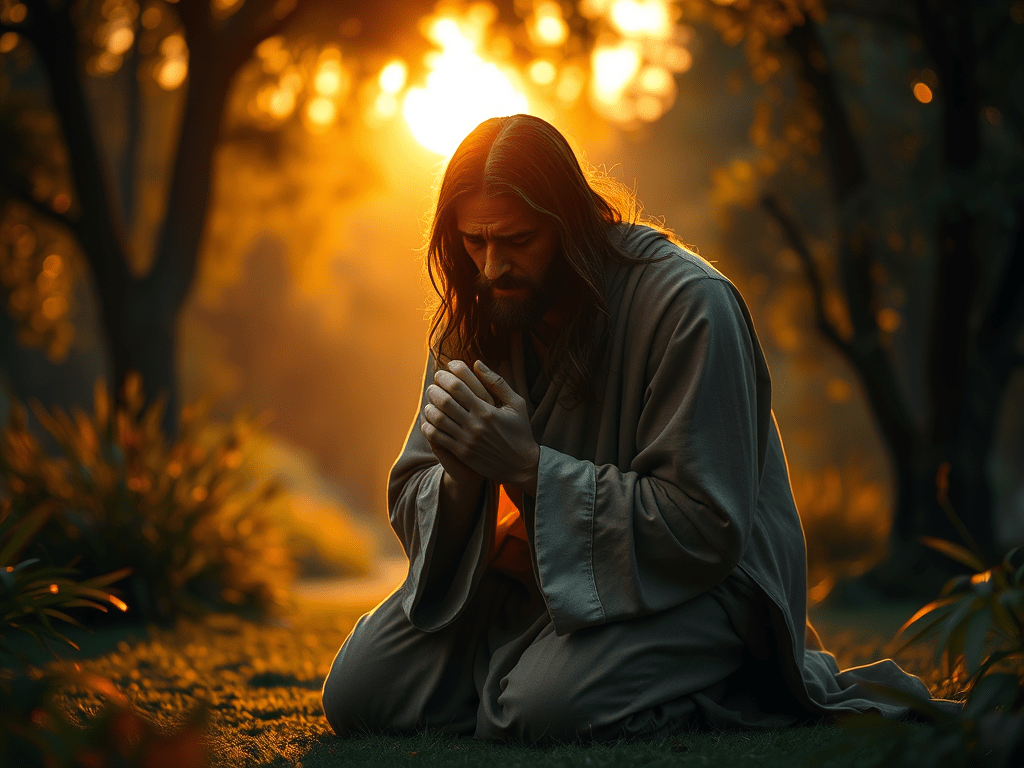
38 Then he said to them, “My soul is very sorrowful, even to death; remain here, and watch with me.” 39 And going a little farther he fell on his face and prayed, saying, “My Father, if it be possible, let this cup pass from me; nevertheless, not as I will, but as you will.”

Matthew 26:38-39 (ESV)

Jesus is rightfully scared because being forsaken is the removal of all good things and we cannot even comprehend what that meant for the Trinitarian aspect of God. Still, Jesus does it because that is what the Father wants to do. The Father continues on because He loves people. He loves you.

Jesus experiences forsakeness. It is so emptying that He doesn’t seem to remember why it is happening:

46 And about the ninth hour Jesus cried out with a loud voice, saying, “Eli, Eli, lema sabachthani?” that is, “My God, my God, why have you forsaken me?”

Matthew 27:46 (ESV)

How long does this last? It doesn’t say. But a good guess would be during the supernatural darkness. It says this starts about the third hour. Again, going with 3 1/2 being significant, I would guess 3 1/2 hours. That is compared with eternally if we have to bear it ourselves.

The final aspect of God’s plan is that in order to have the obedience of Jesus apply to us we have to be joined to Him. This isn’t just a matter of God’s bookkeeping, though there is a Book of Life. This is a unity that God creates between Jesus and us that is somehow similar to the unity of the persons of the Trinity.

20 “I do not ask for these only, but also for those who will believe in me through their word, 21 that they may all be one, just as you, Father, are in me, and I in you, that they also may be in us, so that the world may believe that you have sent me. 22 The glory that you have given me I have given to them, that they may be one even as we are one, 23 I in them and you in me, that they may become perfectly one, so that the world may know that you sent me and loved them even as you loved me.

John 17:20-23 (ESV)

This is the part that fails to include all people. God wants all to be saved, but there is something about the majority of people that God won’t get past to create a bond with them. I don’t think it is merely informational or intellectual though in manifests in that way. I don’t know what it is. But I owe Jesus my all because it does include me.

I pray it includes you.

Jesus: God in the Flesh

Without an amazing act of love that we celebrate at Christmas there would be no point in writing or thinking about eternal life, because all that would be waiting for us would be judgement. The miracle of Christmas is all about God becoming human. But what does that mean? The discussion below is largely theoretical based on the little information that we have.

Jesus is a unique being in several ways. First, He is a being that pre-existed His conception as a human. The rest of us started our existence at conception. We were not a soul waiting to jump into a body. Jesus is the Son of God — a being united with the Father in a way that none of us can understand. Still, the Son of God is known to have acted as a distinct person in the creation of the world, in interacting with Israel during Old Testament times, and probably in many other ways. This being was a spirit. What’s a “spirit”? It is an intelligent, powerful being that has no set physical or observable form. A spirit can take on a form and “manifest” itself, but it is not bound to that form. When Jesus “manifested” in the Old Testament, as when three visitors came to Abraham, we refer to Him as the “pre-incarnate” Christ. Incarnating is not the same as manifesting.

There is no biblical glossary that sets down the defining parameters of what it means to be a spirit or spiritual. Similarly, theological terms like incarnate, pre-incarnate, triune or manifest are subject to the understanding of the user. The definition of “spirit” above is my own as I struggle to understand God, Angels, Seraphim, and ultimately humans and myself. For now, I will stand with my definition of what God and the Son of God is.

I believe Angels and Seraphim are slightly different, even though the Bible speaks of angels as “ministering spirits”. In their formal space, that of Heaven, I expect that individual Angels and Seraphim have a set form. They also seem to have the ability to access our space, this Universe, and here they can “manifest” taking any form that they wish. This would be true of Satan (a Seraphim) and demons (Angels), only now they are excluded from Heaven.

For the time being, living human beings are stuck here with a set form. We have a body, and that body’s form cannot be shifted (not including surgery). When we die, we temporarily leave our “Earthly” body behind. If we are connected to Christ, we go to Heaven and assume a Heavenly body, which again has a set form (superior to what we left behind). We cannot return to this time-space, until we return with Jesus at Judgement Day.

Christmas is the story of the Son of God volunteering to doing something that is very restricting to Him yet is a marvelous act of sacrificial love. He takes on a set human form. By incarnating rather than manifesting the Son of God is stuck with this union. He becomes Jesus.

The Angels are said to have marveled at this. They likely marveled not so much at the fact that God could do this, but rather that He would. It is akin to our choosing to be a rat. The reasoning for it is clear and beautiful. God became human so that humans could have a chance at eternal life with Him.

God is a being of laws. He had the sovereign power to ignore His laws and save sinful humans simply because He wanted to. That is not God’s idea of justice. The Law had to be fulfilled and a sinless human being would do it. Because of the process of how our sinful human nature is spread (by heredity), there was no and would be no sinless human being; so the Son of God became one. A virgin birth avoided the inheritance of a sinful nature. The incarnation put the Son of God under the Law.

The fact that Jesus is the incarnate Son of God also made possible that human beings like us could be united with Jesus in a way similar to how the Son of God is united to the Father and the Holy Spirit. This allows us to have the righteousness of Jesus and for Jesus’ forsakeness on the cross to apply to us.

20 “I do not ask for these only, but also for those who will believe in me through their word, 21 that they may all be one, just as you, Father, are in me, and I in you, that they also may be in us, so that the world may believe that you have sent me.

John 17:20-21 (ESV)

Many people think this prayer of Jesus is unfulfilled, because the Christian church is divided structurally and doctrinally. That is incorrect. We are all united in some supernatural way to Jesus and therefore to each other. This saves us.

At Judgement Day we will take the final step of our salvation. We will acquire a resurrected, spiritual body. (1 Corinthians 15:44f) What does that mean? I don’t think it means that we will be like God without form, but rather a form for this Universe and a form for Heaven with the ability to move between both. Could that be a misread? Absolutely. Whatever having a spiritual body means, it will be great; and it will be because the Son of God chose transformation of Himself.

Does Jesus remain human? I think so. What will that look like? We will find out.

Grief and Christmas

As a pastor I can tell you that deaths do not happen evenly over the course of a year. Death seems to be concentrated into the colder months. At my congregation we would typically have 8 to 12 funerals a year. This year, since mid-October we have already had 9 deaths with no doubt more to come before Spring. Covid only partially explains the rise.

This reality means that many deaths happen around the holidays, leaving grief perpetually connected with a day that is supposed to be happy. The same type of association can happen with hymns. We often play a person’s favorite hymn at their funeral, which often ruins it for us. “How Great Thou Art” is a hymn that many people can’t listen to for that reason.

Having a painful association points to having an incomplete and ineffective grieving process. Remembering shouldn’t hurt after a while. If we are still hurting, then we are dwelling on what we have lost versus focusing on the promise of eternal life and a future reunion. This, of course, hinges on having eternal life through Jesus.

The Christmas season will be the source of many cherished family memories. It should be. But the Christmas season is misspent if it is focused primarily on family and not focused on Christ. Celebrating the birth of Christ is celebrating God coming into the world to give a most precious gift.

The Son of God became a human to place himself under the jurisdiction of God’s Law. He came as the child of a virgin so that he would not be born with a sinful nature like the rest of us. Instead, he could remain sinless for life. He then could do something for us that is an incredible act of sacrificial love. When dying on the cross, Jesus was forsaken by his Father as a substitute for his Father forsaking us. To be forsaken, utterly abandoned by God, is the punishment required for sin. If you are connected to Jesus through baptism, your eternal punishment is done.

If your loved one died as a believer in Jesus as their Savior, they are alive with Jesus. Do not look back, look forward. If you also are in Christ, then there are more good times, even better than the best ahead. Let the celebration of the birth of a Savior take you there, at least for awhile. Be sure to also make the most of those who are still alive and with you.

I would say the same for “How Great Thou Art”, or any hymn for that matter. It sure not remind you of loss but rather of gain. Train your brain to do this. Catch yourself when you think about the loss, remind yourself of God’s promise and then imagine what you still cannot see. Do not wallow in loss. It is not forgetting your loved one, it is remembering them properly.

Are You Ready?

We all know that we are going to die someday.  Still, that often seems distant and surreal.  Occasionally, an event may make death, including your death, a little more real.  A pandemic can fill that role.

Most people won’t catch the coronavirus, I think.  Most who do catch it won’t be that sick or even show symptoms at all.  But some will face death and plenty will experience it.  How ready are you?  It is fair question to ask yourself at any age or in any form of health.

Your answer will be very much influenced by your worldview.  If you believe in some form of reincarnation, death may scare you, but the results are not final.  If you believe that you must stand before an almighty, but somewhat unpredictable, Allah; then death is very intimidating. If you are convinced that there is nothing beyond the grave, then death is depressing but unavoidable and not a big deal.  If you believe in some generic form of Heaven for being good enough, then death is again frightening and uncertain.  How convinced are you that any of these worldviews are accurate?

I am personally quite convinced that these worldviews are all inaccurate and that one’s worldview does not shape what happens after death. What comes next comes regardless of what you have believed.   I am also convinced that in the history of mankind only one person gives authoritative insight into what happens next and also provides a good outcome.  That person is Jesus because:

  • He has many credible witnesses that testify that He did miraculous things, including raising people from the dead
  • He has many credible witnesses, including former doubters, that He rose from the dead
  • He fulfilled prophetic writings that were clearly written long before His birth.
  • His teachings fit with our experience of self and the world.
  • Archeology affirms many of the details that surround Him
  • Out of body experiences seem to confirm the existence of both Heaven and Sheol.

Jesus himself states, “I am the way and the truth and the life, no one comes to the Father except through me.”   Jesus and the New Testament authors explain why this would be so.  God requires sinlessness, and none of us meet that standard.  Someone had to be a sinless human being in order to fulfill God’s Law and take the consequences of sin on themselves.  To be sinless, you would have to be born sinless and continue to the end.  The Bible explains that we are all sinful from conception onward.  Jesus’ unusual birth (a virgin birth) allowed him to be born without a sinful nature (genetically distorted to naturally be alienated from God).  Jesus is unique in this way.  Also, if any other process could give us eternal life with God, then Jesus would never have been asked to do what He did.  He not only died on the cross, He was forsaken by the Father as our surrogate.

Connection to Jesus to receive the benefits of His life and the promise of eternal life is both simple and impossible.  In our natural condition we would never believe Jesus’ story or His promises.  That’s what sinful nature does.  It is a good thing that God is working to supersede sinful nature or it would be impossible.  God creates faith.  Some highly unlikely people have come to have faith:  hardcore atheists, very evil people, strong adherents of other worldviews.  God wants to save people.  He wants us to be ready.  We and our children can be connected to Jesus and eternal life through baptism.  That much is simple.

Being Heaven-bound (saved) doesn’t necessarily mean that you won’t have questions or doubts.  When God does get a hold of you there are signs:  growing confidence in Jesus, growing confidence in your own salvation, a love for God, a hunger to learn, etc.  Our circumstances and the remaining flaws of our sinful nature may diminish some of the signs; but we may still be ready, especially if we have been baptized.

It is a great feeling to know that you are ready.  In fact, more than ready–looking forward to it.  As this blog explains, there is much to avoid (Sheol, Hell) and much to look forward to (Heaven, Resurrection and the New Earth).  The greater your confidence is in Christ, the less a pandemic seems like a reason to panic.