Sheol As a Waiting Room

Sheol is a Hebrew term for the waiting place of the dead, distinct from Hell, and appears in the Old Testament. Both the righteous and unrighteous go there. The understanding of Sheol is often obscured by translations. Some believe it offers a second chance for salvation post-Judgment Day, but interpretations vary widely.

Many people are not aware of what Sheol is, so first let me give you a quick primer. Sheol is a Hebrew term used 65 times in the Old Testament. Its Greek equivalent “Hades” shows up another 10. It is not a reference to “Hell” as most people think of Hell. It is more the waiting room for Hell. It is not “purgatory” either. Though I would bet that an ancient misunderstanding of Sheol led to the development of the idea of purgatory.

Sheol has escaped many people’s understanding thanks to some lousy translating. Many versions of the English Bible cover over the word by translating it as “the grave” or “the pit”. This is garbage. Sheol is a place and a proper noun. Leave it as is.

In the Old Testament everyone expected to go to Sheol whether they were considered righteous or unrighteous. It was the place of the dead. Jesus’ account of the rich man and Lazarus (Luke 16:19f) gives us the best glimpse into Sheol as it was.

22 “The time came when the beggar died and the angels carried him to Abraham’s side. The rich man also died and was buried.23 In Hades, where he was in torment, he looked up and saw Abraham far away, with Lazarus by his side.

Luke 16:22-23 (ESV)

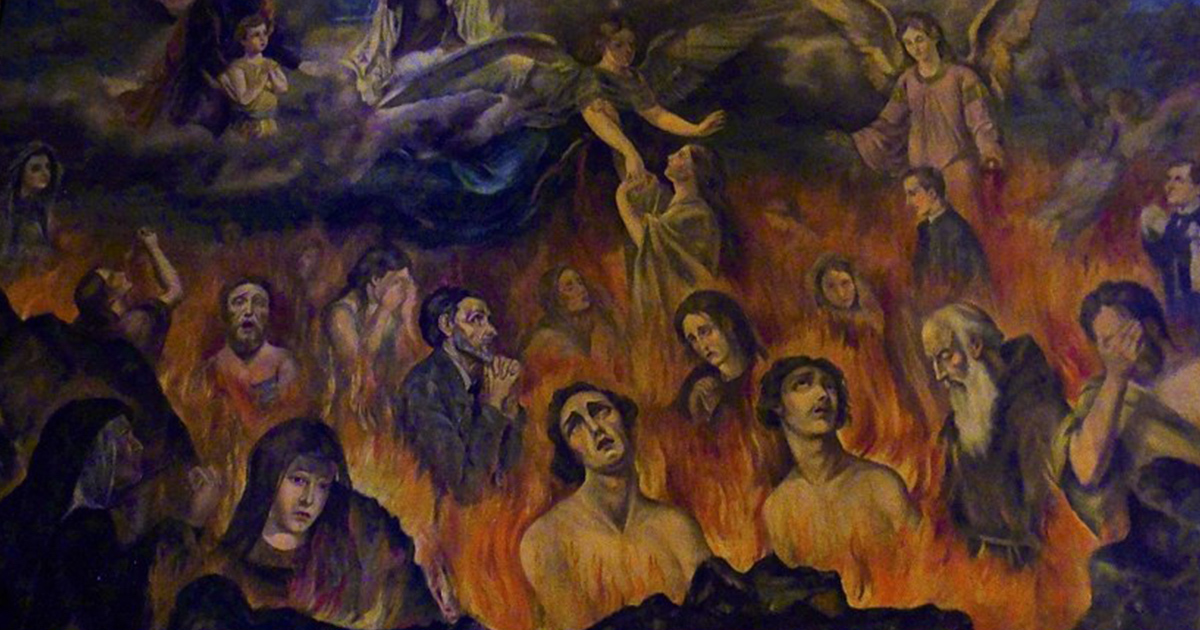
Notice that both the rich man and Lazarus are in Hades (Sheol) but in significantly different conditions. Lazarus is in “the bosom” of Abraham, and the rich man is in torment. He explains the torment as being because of fire. Thus the confusion with the post-Judgement Day “lake of fire”, which we think of as Hell.

Lazarus, Abraham, and the rest of the Old Testament righteous are waiting. For what? For Jesus to complete atonement for their sins on the cross and for Jesus to complete the Law in a way that they did not with His life. Timing actually matters. You didn’t suffer in this part of Sheol. The Roman Catholic Church refers to this place as “The Limbo of the Fathers”. Others prefer “Abraham’s bosom”. I like “the good neighborhood of Sheol. It reminds you where it is. What did they do there (some for millennia)? Don’t know.

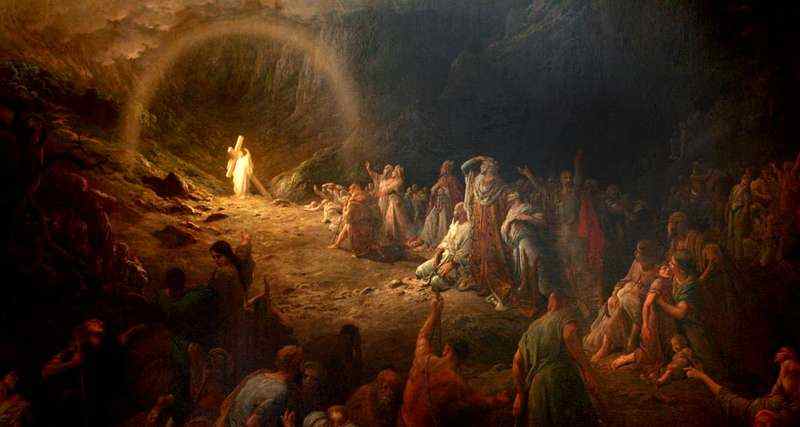
When Jesus had completed His work, He set them free.

As for you, because of the blood of my covenant with you,
    I will free your prisoners from the waterless pit.
12 Return to your fortress, you prisoners of hope;
    even now I announce that I will restore twice as much to you.

Zechariah 9:11-12 (ESV)

You can see that they were rewarded for their patience and faith. Want to read more about Jesus’ descent into Sheol read here: https://afterdeathsite.com/2017/04/04/christs-descent-into-hell-part-4/

People like the rich man were/are waiting too. Without the forgiveness of Christ you are stuck in the bad neighborhood of Sheol until Judgment Day. Could actual Hell be any worse? Read this: https://afterdeathsite.com/2023/11/14/how-is-sheol-different-than-hell/

Those who now die connected to Jesus will never go to the “waiting room”. Eternal life in Heaven begins immediately.

Is there any hope once you find yourself in the bad neighborhood of Sheol. Many people and denominations say “no”. To be honest there is not a lot of Scriptural information on the topic. Those who say no are depending on one verse, which I think they misapply. It is Hebrews 9:27:

27 Just as people are destined to die once, and after that to face judgment, 28 so Christ was sacrificed once to take away the sins of many; and he will appear a second time, not to bear sin, but to bring salvation to those who are waiting for him.

Hebrews 9:27-28 (ESV)

You can see that the context is about how many times Christ is sacrificed. The answer is one. Similarly, how many lives do we live before judgment–one. It does not say the final judgment is immediate. There is the waiting room. The one Bible passage that suggests some measure of hope is 1 Peter 4:6:

For this is the reason the gospel was preached even to those who are now dead, so that they might be judged according to human standards in regard to the body, but live according to God in regard to the spirit.

1 Peter 4:6 (ESV)

“The gospel was preached to those now dead” is not a great translation. It is more like “for indeed the dead ones were evangelized (declared the good message)”. The context of “the dead ones” is found in 1 Peter 3:20. They are the disobedient people killed by Noah’s flood. They waited in the bad neighborhood of Sheol until Jesus declared the promise of salvation to them. Then some, if not all, were made alive to God.

How far does this second chance go? I don’t know. I hope far. It is clear that many make it through the waiting room all the way to their appointment at Judgment Day. Hell won’t be empty, and that is regrettable since what Christ did was big enough for all.


Satan and the Afterlife

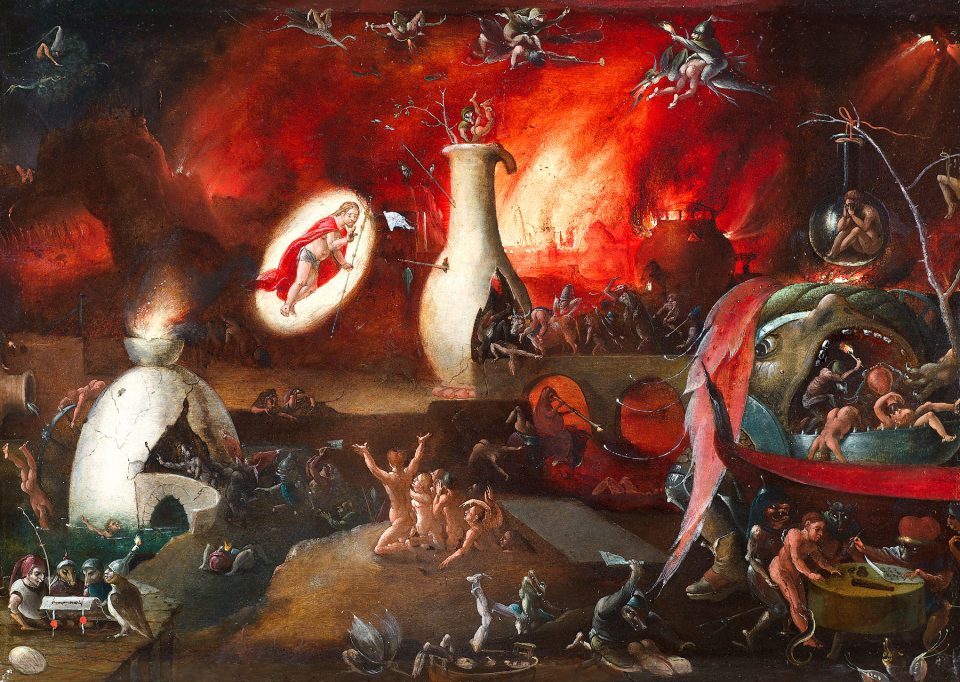
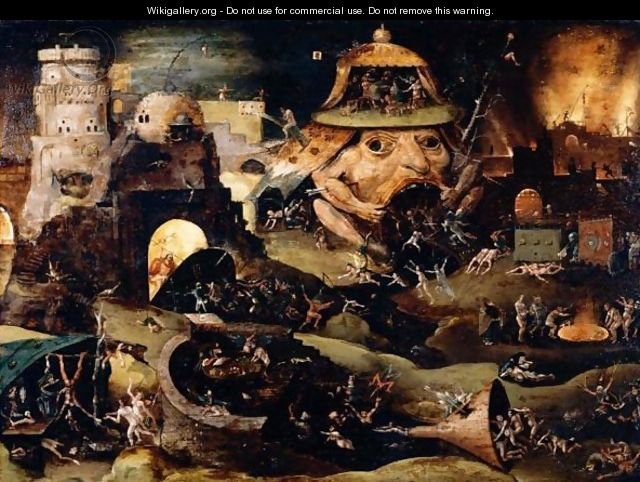
In the classic 14th century poem, Dante’s Inferno, “Hell” is pictured as nine descending rings of torment. At the very bottom, Satan is seen frozen in ice and chewing on the worst traitors in history. So, I guess there is a “cold day in Hell”. Ancient poetry and renaissance paintings have influenced our ideas of Hell and Satan in eternity. Understandably, since the Bible was not available to most people, there is something lacking in the details.

The first thing I would like to re-emphasize is that there is a difference between Sheol/Hades, which is before Judgment Day, and “The Lake of Fire”/Gehenna which is the final destination of the damned. Their similarities (i.e. fire, suffering) lead many to conflate the two. But they are clearly distinct. Which should we call “Hell”. Honestly, it your pick. But I tend to think of the post-Judgment Day, lake of fire, as Hell. See more here: https://afterdeathsite.com/?s=Sheol

So where is Satan in all of this? Well, if we refer to The Far Side for our theological truth, he is ruling in Hell with all his junior Satans. The Bible would not support this view. Prior to Jesus’ victory on the cross, Satan and his angelic/demonic following seem to be able to either be in Heaven or on Earth. Following the loss of leverage that Satan had legally, he and his minions are cast out of Heaven. Revelation 12 shares that he is now on Earth.

Now war arose in heaven, Michael and his angels fighting against the dragon. And the dragon and his angels fought back, but he was defeated, and there was no longer any place for them in heaven. And the great dragon was thrown down, that ancient serpent, who is called the devil and Satan, the deceiver of the whole world—he was thrown down to the earth, and his angels were thrown down with him…Therefore, rejoice, O heavens and you who dwell in them! But woe to you, O earth and sea, for the devil has come down to you in great wrath, because he knows that his time is short!”

Revelation 12:7-9,12 (ESV)

Trustworthy details are scant. But it appears that not all of Satan’s followers make it to exile on the Earth.

And the angels who did not stay within their own position of authority, but left their proper dwelling, he has kept in eternal chains under gloomy darkness until the judgment of the great day

Jude 6(ESV)

It doesn’t say where this “gloomy darkness” is. I would not conclude that it is the same place as the souls of the disobedient who Jesus preaches to after His crucifixion. (1 Peter 3:19) Look at that topic starting here: https://afterdeathsite.com/2017/03/14/christs-descent-into-hell-part-1/

I think the angels’ prison is part of what the Bible calls “the abyss”. Still, where is Satan? That depends on the meaning of the first paragraph of Revelation 20. It is also in Revelation 20 where we find the eternal destination of the one who kicked off this whole corruption of God’s creation. There are interpretations of Revelation 20:1-3 that understand Satan to be currently bound. If so, I would conclude bound in the Abyss. There are also interpretations that make this a future event. I lean toward the former. But there is little ambiguity of where he ends up.

and the devil who had deceived them was thrown into the lake of fire and sulfur where the beast and the false prophet were, and they will be tormented day and night forever and ever.

Revelation 20:10 (ESV)

This is formally “Hell” in my lexicon. It is post-Judgment Day and it is the ultimate destination of both corrupted angels and unredeemed people. The people have been in Sheol/Hades to this point.

14 Then Death and Hades were thrown into the lake of fire. This is the second death, the lake of fire. 15 And if anyone’s name was not found written in the book of life, he was thrown into the lake of fire.

Revelation 20:14-15 (ESV)

Satan is not there to reign or torment. He is there is suffer like everybody else. As bad as fire and sulfur sound, the phrase “second death” takes us to the ultimate penalty of sin which is to be forsaken by God. Hell is place. Forsaken is a condition. Jesus was forsaken on the cross, so that those who are connected to Jesus don’t need to suffer this themselves.

Satan does not seem to be connected to Sheol/Hades. He is either here on Earth, in the Abyss, or ultimately in the lake of fire/Gehenna/Hell. Neither he nor his demons seem to have the recourse that people have. Though we are sinful and rebellious as well, God’s love has created a way of forgiveness through Jesus. That is the way that I want and have. I am perfectly satisfied reading about Satan. I don’t need to meet him.

How Is Sheol Different than Hell?

Many, if not most people, have a simplistic view of what the Bible tells us about life after death. Simply put they believe in Heaven and Hell. One of the goals of this blog is to help people realize that two events change this model: the death and resurrection of Jesus and Judgment Day.

Prior to Jesus, the Old Testament people knew of two things regarding their existence after death. The knew that there would eventually be a bodily resurrection of dead followed by either everlasting life in a New Earth or everlasting contempt somewhere. (Dan. 12:2, Isaiah 65) This information can be traced as early as Job, which is likely the oldest book in the Bible.

For I know that my Redeemer lives,
    and at the last he will stand upon the earth.
26 And after my skin has been thus destroyed,
    yet in my flesh I shall see God,
27 whom I shall see for myself,
    and my eyes shall behold, and not another.
    My heart faints within me!

Job 19:25-27 (ESV)

The Old Testament people are aware that Heaven exists, but it is never promised as a destination for them after death. Instead, the Old Testament people had an expectation of going to Sheol (the place of the dead). This is not the same as the grave. Some translations of the Bible botch this and then note that the Hebrew word is “Sheol” in the footnotes. Sheol is a distinct place of conscious existence.

Sheol seems to be a two-part place. One section is comforting, but not necessarily better than life. The other section is a place of suffering. The New Testament and the Greek translation of the Old Testament (the Septuagint) switch from the word “Sheol” to the Greek “Hades”. These are synonyms. Jesus uses another word “Gehenna”, which is not a synonym. Gehenna refers to the final destination of the damned, the post-Judgment Day lake of fire. This would be my candidate for the English word, Hell.

Getting Hades/Sheol and Gehenna confused is pretty easy to do. They do share certain properties. Darkness, suffering, and fire seem to be a part of both. One description of Hades includes “where the worm does not die”. I don’t think this is talking about the decay of our corpse in the grave. This seems to be part of the suffering of Sheol.

Finding differences is harder. I can come up with only three within the scant information we are given.

  1. It appears that it is possible, but not acceptable, to communicate with the dead in Sheol. In the story of the Witch of Endor (1 Samual 28), Saul summons the prophet Samuel from the dead through the forbidden skills of the Witch of Endor. Samuel would have been in the comforting section of Sheol. He doesn’t seem too pleased about it either. This practice must have been a part of pagan Canaanite culture and possible also others. The Jews are strictly forbidden from doing this (Deut. 18:9-13). I would infer from this that those in the suffering section might also have been reachable. Once you are in Gehenna you are unreachable and no one will try. (More on that in a bit.)
  2. A second difference connects to what Jesus did right after his death.

For Christ also suffered once for sins, the righteous for the unrighteous, that he might bring us to God, being put to death in the flesh but made alive in the spirit, 19 in which he went and proclaimed to the spirits in prison, 20 because they formerly did not obey, when God’s patience waited in the days of Noah, while the ark was being prepared,

1 Peter 3:18-20a (ESV)

This is where we get Jesus’ “descent into Hell” from the Apostles’ Creed. Here “Hell” is a misleading term. It should be descent into “Sheol” or something to that effect. Originally it was.

What was Jesus trying to do? 1 Peter 4:6 explains it:

For this is why the gospel was preached even to those who are dead, that though judged in the flesh the way people are, they might live in the spirit the way God does.

1 Peter 4:6 (ESV)

It certainly sounds like these people, long dead, condemned, held in the prison of Sheol are getting a second chance through the preaching of Christ. Did this ever happen again? Don’t know. Is there another reference to this in Scripture? Nope. Outside of Scripture? Yes, a bunch. It was a favorite theme of the ancient Eastern church.

This leads to the final and most critical difference between Gehenna (Hell) and Sheol.

In Revelation 20:14, Hades/Sheol is thrown in “the lake of fire”/Gehenna/Hell. At that point, post-Judgment Day, they become one thing. It appears to me that the worst part of being damned doesn’t happen until then. At that point God forsakes you.

You are utterly separated from God and all of God’s redeemed forget you. Jesus experienced this for us on the cross. He was forsaken, and even though He knew it was coming, it crushes Him.

45 Now from the sixth hour there was darkness over all the land until the ninth hour. 46 And about the ninth hour Jesus cried out with a loud voice, saying, “Eli, Eli, lema sabachthani?” that is, “My God, my God, why have you forsaken me?”

Matthew 27:45-46 (ESV)

This whole topic can remain an academic discussion because Jesus took the suffering for us. If we are baptized in Christ’s name then we are baptized into His death–specifically, this part of His death.

I don’t need to get any closer to Sheol/Hades/Gehenna/the Lake of Fire/ Hell than this.

Does Purgatory Exist?

The idea of Purgatory is something that most people associate with the Roman Catholic Church. It might surprise you that there are people outside of Catholicism that support the idea. The concept of Purgatory comes in two flavors: a purgatory where you work off your sins and a purgatory where you are purified to reach your final perfected state. From where do these ideas come? Let’s start with the first one.

The idea that you have to do something additional to what Jesus did for you on the cross is a particularly dangerous idea. It changes the way we are saved from being grace (a gift) to being something you at least partially do yourself. In the book of Galatians, the people of the Galatian church became convinced that they had to obey the law of circumcision in addition to their connection to Jesus’ death. This seemingly small error modifies grace and elevates human action to what Jesus did for us. Paul reacts strongly:

 Look: I, Paul, say to you that if you accept circumcision, Christ will be of no advantage to you. I testify again to every man who accepts circumcision that he is obligated to keep the whole law. You are severed from Christ, you who would be justified by the law; you have fallen away from grace.

Galatians 5:2-4

There is no such thing as hybrid grace. Believing that you add to Jesus in any way nullifies the promise of forgiveness through Christ. This would be likely true for anything–including Purgatory.

Such a doctrine is easily believed because people doubt the Gospel. It seems too good to be true. It also puts all sinners on the same level, which surprises and offends some people. Belief in a purgatory that earns you salvation is clearly the product of someone who is not connected to Christ and could be the cause of someone falling away from grace.

How about the other type? The doctrine of purgatory does not get formulated within the Catholic Church until the 11th century. That seems like a long time ago, but it was already a millennium into the history of the Church. The idea of being purged of sin by some process or place existed long before this in Greek religion. An attraction to Greek thinking and a misunderstanding of a couple passages in Scripture could easily produce this thinking.

One passage that could be misconstrued is what I call the “Three Little Pigs” passage after the children’s story:

 According to the grace of God given to me, like a skilled master builder I laid a foundation, and someone else is building upon it. Let each one take care how he builds upon it. 11 For no one can lay a foundation other than that which is laid, which is Jesus Christ. 12 Now if anyone builds on the foundation with gold, silver, precious stones, wood, hay, straw— 13 each one’s work will become manifest, for the Day will disclose it, because it will be revealed by fire, and the fire will test what sort of work each one has done. 14 If the work that anyone has built on the foundation survives, he will receive a reward. 15 If anyone’s work is burned up, he will suffer loss, though he himself will be saved, but only as through fire.

1 Corinthians 3:10-15 (ESV)

The purifying Purgatory is seen as a place where fire purifies you of your evil over time. This passage has fire but it is evaluating your deeds in life for the purpose of reward. This happens rapidly at Judgment Day. Verses 10 and 15 show that a person is still saved by grace. This is not a reference to a purgatory.

Another passage that could be misconstrued is Mark 9:47-49:

And if your eye causes you to sin, tear it out. It is better for you to enter the kingdom of God with one eye than with two eyes to be thrown into hell, 48 ‘where their worm does not die and the fire is not quenched.’ 49 For everyone will be salted with fire.

Mark 9:47-49 (ESV)

The word translated properly as “Hell” (though it should be capitalized as a proper noun) is the word “Gehenna” which Jesus uses to describe the final post-Judgment Day place of punishment. It is a place of fire. Verse 49 is referring to the passage and process we just read about in 1 Corinthians 3. Again, it is a Judgment Day experience and not a purgatory. This is also what John the Baptist is referring to in Matthew 3:11, “(Jesus) will baptize you with fire.”

The final place of confusion is the nature of Sheol (Hebrew)/Hades (Greek). In the story of the Rich Man and Lazarus, we get a peek inside Sheol:

2The poor man died and was carried by the angels to Abraham’s side. The rich man also died and was buried, 23 and in Hades, being in torment, he lifted up his eyes and saw Abraham far off and Lazarus at his side. 24 And he called out, ‘Father Abraham, have mercy on me, and send Lazarus to dip the end of his finger in water and cool my tongue, for I am in anguish in this flame.’ 

Luke 16:22-24 (ESV)

Hades/Sheol is also a place of fire. No one is being purified or saved by it. In fact, the rich man is being punished. It is a place of waiting. Lazarus (not to be confused with the Lazarus Jesus raised from the dead) and all of the Old Testament period righteous are waiting for Jesus to accomplish the atonement for their sins. The rich man and all who are damned are awaiting Judgment Day.

The Bible may hold out some vague hope that the Gospel can reach and save those who are damned and in Sheol.

For this is why the gospel was preached even to those who are dead, that though judged in the flesh the way people are, they might live in the spirit the way God does.

1 Peter 4:6 (ESV)

This passage stands alone in Scripture. It is in the context of Jesus’ “descent into hell” (For more on this topic, Sheol, or other after death topics; use the search box in the right column to find other articles.) Do the fires of Sheol somehow purge a person so that they can receive the Gospel posthumously? There is not enough information to conclusively know this. The one passage often cited against this, Hebrews 9:27, really is misapplied in this case. These passages do not support Purgatory as a place.

While there is plenty of fire fulfilling various purposes in Bible, there is no Purgatory.

The Immediate Judgment

When we sin, God knows.  You can’t slip things by Him.  Because we don’t see God, we sort of forget that He sees.  It is similar to what happens to us in a hotel.  We get into an empty hallway and we feel all alone even though possibly every room is full.  So we talk loudly as if no one is there to hear.  But everyone hears us.

God knows our sin, but for those who are connected to Jesus through faith and baptism God sees Jesus, and we live as forgiven for as long as faith remains.  In a way, we have been judged as righteous from the moment God connected us to Jesus

For as long as we live, forgiveness through Jesus is possible for anyone whom God can bring to faith.  Their fate has not been sealed.  You can’t plan on it, but even on a death bed it is possible for somebody to be saved and avoid the permanent judgment of God.

Is death the line in the sand, the point of no return?  Or is Judgment Day when eternal fates are sealed?

The Bible clearly indicates that some kind of judgment accompanies death.  With our death, we either enter Heaven because we are forgiven and therefore righteous or we enter Sheol (see my other blog entries about Sheol), because we are sinners without a Savior. Is that the final judgment?

Hebrews 9:27-28 is often evoked on this topic:

Just as man is destined to die once, and after that to face judgment, so Christ was sacrificed once to take away the sins of many people; and He will appear a second time, not to bear sin, but to bring salvation to those who are waiting for Him.

The understanding of most is that the judgment accompanying death is immediate and final, but what is the function of Judgment Day in that scenario?  Is it merely a technicality?  The passage is making the point that Jesus doesn’t die multiple times for sin.  To bolster the point, the writer appeals to the fact that we don’t reincarnate.  Hebrews 9 doesn’t technically answer our question.  1 Peter 4:6 may speak to our question better.  I’m quoting New King James here because NIV is a lousy translation of this passage.

For this reason the gospel was preached also to those who are dead, that they might be judged according to men in the flesh, but live according to God in the spirit.

The uncomfortable yet literal understanding of this passage is that the Gospel was preached to dead people with the end goal of having them live or, in other words, be saved.  The context of this passage is Jesus’ descent into Hell (Sheol) mentioned in 1 Peter 3:19.  If we are to understand this passage as the Gospel was preached to living people who have subsequently died, then the second half of the sentence doesn’t make much sense and you are not literally translating the original text.  You are adding (now) dead, which is what the NIV does.

Could it be that Judgment Day is the line in the sand, the point of no return?  We are given marching orders to spread the Gospel to the living.  It is of urgent importance that people hear about Jesus’ death and resurrection and the promise of salvation through that event while they live.  I cannot go to Sheol to preach to the dead.  But did Christ do that?   Does He still do that?  The ancient church, particularly in the East believed that He did.  I hope so, too.

Christ’s Descent into Hell (final)

In this final installment, I want to share with you a few more probable references to Christ’s descent in Scripture and then tie up a few loose ends on the topic.

There are a series of passages in Isaiah that can be understood to refer to the liberation of the Old Testament redeemed. The clearest is Isaiah 49:6 where the Father speaks to Jesus and says,

It is too little of the thing that you should be my servant to raise up the tribes of Jacob and bring back the preserved of Israel…

Typically this passage is understood in a very metaphorical way, which dismisses what it is really saying. The “preserved” in Israel are clearly not already in Heaven according to this language. They need to be “raised up” and “brought back”. This isn’t just speaking of people alive at the time of Jesus or part of the exile at the time of Isaiah. It makes perfect sense that this is speaking of people who already are deceased or will become deceased before the time of Jesus. These people need to be raised from Sheol.

The same understanding informs the meaning of Isaiah 42:7b,c, “I give you …to bring out the prisoners from the dungeon, from the prison those who sit in darkness.” Jesus did not lead any jailbreak during his earthly ministry. To understand this solely as freeing people from their dungeon of sin, doesn’t quite follow the pattern of the passage. The things spoken of in Isaiah do have a broader spiritual application, but Jesus also actually did these things for some during His earthly ministry (like healing the blind). So for these passages to be understood as a literal liberation from the prison of Sheol makes perfect sense.

Captives are also mentioned in Psalm 68:18, which is quoted in Ephesians and Isaiah 61:1, which is quoted in Luke 4:18.

With this many passages either directly speaking about or alluding to the liberation of the Old Testament redeemed, there is little doubt the Christ’s descent into Sheol accomplished at least this much.

This doesn’t keep modern theologians from being a little embarrassed about the topic of Christ’s descent, also called “the harrowing of hell”.  The mythology that grew up in the Eastern Church about this topic leads some to want to dismiss the whole topic as a myth.

Modern people are sensitive about confusing a myth with a historical truth. There are many religious myths in the world including some that hang around Christianity in non-canonical literature.   Depending on your view of scripture, you may even consider some biblical stories as fictional. So is this one of them?

Without a doubt, some segments of Christianity have approached the story of Christ’s descent with a degree of embarrassment, preferring to see it as an intentional metaphor of some sort. Also the presence of similar ideas of life after death in other religions makes people wary of the even the idea of Sheol. Adding to the pressure to paint this as a myth is the desire for there to be no Sheol, Hell or final judgment at all.

Still there is a clear testimony in the Old Testament of the expectation of Sheol after death for both the righteous and the unrighteous. There is a reasonable explanation as to why other cultures expected basically the same thing. There is also a future hope that this would be changed. Christ’s descent to Sheol is very reasonably the thing that changed the fate of the Old Testament righteous.

Christ’s descent into Sheol is therefore foreshadowed in the Old Testament, spoke of in the New Testament albeit somewhat obscurely, and clearly testified to in the earliest Christian literature. Together they make a coherent whole.

A cosmology that includes only a heaven, the current universe and a hell has no more proof or disproof from our scientific understanding of reality than does a cosmology that contains a Sheol and an Abyss. We don’t know with certainty where any of these places are but we know enough to doubt that reality is only three-dimensional space.

So is Sheol just a metaphor for death and Christ’s descent just a metaphor for his suffering or burial? You won’t get me to buy into that explanation, and that is saying something. As I embarked on this study I honestly did not know the teachings of either the Orthodox nor the Roman church on this topic. In fact, I would have to admit that I am biased against these church bodies if anything. But, when you start with trying to understand what Sheol is without confusing it with hell or the grave, the testimony of scripture points to a real descent of Christ to Sheol to liberate the Old Testament redeemed and even to attempt to save some of the Old Testament damned. That was a real paradigm shift for me, and a very hopeful one.


Christ’s Descent into Hell (Part 5)

One of the reasons that most people have learned very little about Christ’s descent into “hell”, is a reaction to an overreaction about this part of the story in the early Eastern Church.  “Christ’s descent” became the ancient equivalent of a superhero story.  There are stories about Jesus being swallowed by Sheol and in Jonah-like fashion, Sheol vomited out Jesus and everybody else.  You can still get a very popular story of the time on Amazon, The Gospel of Nicodemus.  I read it on Ibooks.  Stupid book, but it was free.  It is about Jesus saving the Old Testament people from Sheol, but all the characters could only say lines that they had said in the Bible.  Anyway, the fiction around this story became so thick that people couldn’t discern fact from fiction.  Augustine expressed this complaint, and that seems to have carried down to the Reformers.

One idea that arose in the Eastern Church and remains to this day is that Christ’s descent was not only to free the Old Testament righteous, but also to bring a saving Gospel to the unrighteous.  This bothers a lot of people.  Some church bodies have expressed doctrines that your destiny is sealed at your death.  Others basically have that same assumption without enshrining it as a doctrine.

Is there anything biblical to say or even suggest this?  One comes shortly after the passage in 1 Peter mentioned earlier in 1 Peter 4:6:

For this is why the gospel was preached even to those who were dead, that though judged in the flesh the way people are, they might live in the spirit the way God does.

The chapter and verse number system was introduced to the Bible during the Reformation period. It is invaluable in helping us find stuff. But sometimes it gets in the way and makes us break up the context of the Bible in our minds. In this case, if you ignore the big number four and let Peter continue his thought, it seems pretty clear that the preaching to the dead referred to in this passage is the same dead Peter spoke of in 3:19. A more literal translation might be: “For this reason, the dead were evangelized”. The verb rendered here as “were evangelized” is what is called an indicative aorist verb. In Greek, this indicates past continuing action. One common interpretation of this verse is that it refers to the evangelization of people while they were living who are now dead, but that doesn’t quite fit the sentence. What is past is the evangelizing, not the people’s lives. What this sentence seems to propose is shocking. It says the dead were evangelized, and almost all of us assume that once you die the opportunity for evangelism is over.

This makes it sound like the preaching was a second chance for people who had disobeyed God during life and had not had an opportunity to hear the promise of salvation. Peter is acknowledging that the disobedience of these people resulted in their judgment—namely death in the flood and thousands of years in the agony of Sheol. But the purpose of this visit from Christ is that they might live in the spirit.

Obviously, this makes us nervous on one hand and relieved on the other. It has always seemed unfair that some would go to Sheol without the benefit of hearing the Gospel in some form, even though they are sinners and knew right and wrong inherently. All humanity deserves the judgment and cannot earn salvation, but cannot God be gracious to whom He chooses when He chooses? Can we say for certain that physical death marks the end of your opportunity to believe and be saved? Judgment Day could be the end of opportunity.

The main biblical objection to this interpretation is found in Hebrews 9:27:

And just as it is appointed for man to die once and after that comes judgment, so Christ having been offered once to bear the sins of many will appear a second time, not to deal with sin but to save those who are eagerly waiting for him.

This passage is not primarily about whether there is any chance of being saved after physical death, but it does make a statement about dying once with judgment assumed to immediately follow. This passage is essentially saying, “Just like we live and face judgment only once, Christ lived and died once, not over and over again. This would rule out a reincarnation scenario, but can we really say it precludes Jesus reaching out to someone in Sheol. As noted in an earlier blog about Psalm 139, Sheol is not quite yet forsakenness. The timing of the judgment in relation to physical death is not specified in the Hebrews passage. We just assume it to be immediate and final.

In one sense, judgment upon our death is immediate. The dead found themselves in Sheol and not Heaven. That is a judgment. Their residence in Sheol could be for thousands of years. But is it final? If it is final, then is Judgment Day simply perfunctory?  I will say here that I do not know God to be simply perfunctory about anything. Everything has its purpose. Some treat baptism as perfunctory, for example. It isn’t. Baptism has a definite function.

Establishing that Jesus can, did or even does reach out to the lost in Sheol is a radical enough of a suggestion that one needs more than these somewhat obscure passages in 1 Peter. Another possible reference to Jesus liberating even some of the damned in Sheol is Psalm 107.   Once again these words:

He brought them out of darkness and the shadow of death, and burst their bonds apart. Let them thank the Lord for His steadfast love for His wondrous works to the children of man! For He shatters the doors of bronze and cuts in two the bars of iron.

The phrase “doors of bronze” gets frequent use in non-canonical literature as a reference to Sheol. So if this passage applies, and I think it does, it is speaking about the “disobedient” rather than the righteous. Still other passages, namely Isaiah 42:7b and Luke 1:79, speak of “captives”. These passages are inconclusive, however, because they do not specifically say to whom they are referring.

For some early Eastern Church fathers and for the Orthodox Church, the teaching that Jesus preached the Gospel to perhaps save some of the lost or even all of the lost in Sheol is a big piece of their doctrine and liturgical life. They consider it to be simply logical that this process continues to this day. I will say I hope this is right.

Does this teaching do violence to any other understanding or practice within the Church? It certainly seems in line with the mercy and passion of God. It doesn’t necessarily suggest that everyone is saved in the end. We will see in a later entry that people are eternally damned and in great number. Some argue that a loving God couldn’t and wouldn’t damn someone eternally. They don’t understand the unchangeable nature of God’s Law. God clearly does damn people because of the requirements of the Law, but a loving God could pursue someone up until the last possible moment and that last moment may be Judgment Day rather than death.

If Christ did preach the Gospel in order to save in Sheol, wouldn’t everybody there repent and believe? I mean what sort of idiot would decline such an offer after experiencing such suffering? The rich man in Jesus’ story of Lazarus seems open to a change. Still, we might be surprised. Saving faith is not the result of even overwhelming proof. Faith is the gift of God to people who are able to receive it.

Whether Christ was giving the disobedient in Sheol a chance to hear the Gospel and believe is hard to concretely determine. At best, we can say that it is possible. This shouldn’t rob us of any motivation to share the Gospel among the living. People suffer in Sheol. If we care, we would want them to avoid this. If people become disciples while still living they can carry out their God-given purpose and even realize reward for it. We are rewarded for our faithfulness in this regard. Beyond this both love and Christ’s command compels us.

Christ’s Descent into Hell (part 4)

Another likely function of Christ’s descent has to do with the Old Testament people whom God regarded as His elect.  These people were not in Heaven at the time of Jesus’ death.  John 3:13 precludes such an understanding.  Their expectation as expressed in the Old Testament was that they would be in Sheol.  Not necessarily in a position of suffering, but definitely isolated from the visible presence of God.  That is isolated until Jesus did His work.

The case for Christ’s descent for the purpose of releasing the Old Testament righteous who are captives in Sheol is more clear in scripture than any other interpretation. One verse that supports it is Ephesians 4:7-10:

But grace was given to each of us according to the measure of Christ’s gift. Therefore it says, “When he ascended on high, he lead a host of captives, and he gave gifts to men.” In saying, “He ascended”, what does it mean but that he had also descended into the lower regions of the earth? He who ascended far above all the heavens, that he might fill all things.

Once again, Sheol is referred to as the lowest or lower region.  This passage connects Christ’s descent to eventually leading a “host of captives” on an ascent.  One cannot help but wonder if Jesus is hinting at His descent to Sheol in Matthew 12:29:

Or how can someone enter a strong man’s house and plunder his goods, unless he first binds the strong man? Then indeed he may plunder his house.

The context of this passage is a discussion of how Jesus can liberate people from demon possession. Jesus plunders Satan’s kingdom by binding the demons and setting the person free. Is Satan bound as Jesus fulfills the Law on the cross? Is Jesus’ descent into Sheol a big-time plundering of Satan’s house?

As mentioned in our discussion about Sheol in the Old Testament, the liberation of the Old Testament redeemed is prophesied in a couple of passages. First Zechariah 9:11-12:

As for you also, because of the blood of my covenant with you, I will set your prisoners free from the waterless pit. Return to your stronghold, O prisoners of hope; today I declare that I will restore to you double.

The context of this passage is established in verse 9:

Behold your king is coming to you; righteous and having salvation is he, humble and mounted on a donkey, on a colt, the foal of a donkey.

Clearly this whole section is about Jesus and prisoners released during his time. These released captives are the righteous people of the Old Testament. David put himself in that group in Psalm 16:10:

For you will not abandon my soul to Sheol, or let your holy one see corruption.

The ascension of Christ with the captives of Sheol is the most likely explanation for a strange, temporary resurrection of the righteous recorded in Matthew 27:52-53:

The tombs also were opened. And many bodies of the saints who had fallen asleep were raised, and coming out of the tombs after his resurrection they went into the holy city and appeared to many.

Without the connection to the release from Sheol, this passage is obscure and meaningless.

Christ’s Descent into “Hell” (Part 3)

What does the Bible say about Jesus’ so called descent? More than most people realize. The descent never is the main topic of any book of the Bible or even clearly the subject of so much as a paragraph. Oddly, in the clearest reference to it, the descent of Jesus isn’t even the topic of the sentence. It is only a clause. Surely, it can’t be very important then, you may think. Well, it was very important to the Old Testament redeemed. That is for sure. It is part of Jesus’ work of salvation. Plus, it pulls together and clarifies what seem to be several disjointed and obscure passages of scripture, and even gives an additional ray of hope to some peoples’ situations.

Let’s take a look at the passages that can be connected to Jesus’ descent, and see how they fit with the remaining theories of our list. The main one is 1 Peter 3:18-19:

For Christ also suffered for sins, the righteous for the unrighteous, that he might bring us to God, being put to death in the flesh, but made alive in the spirit, in which he went and proclaimed to the spirits in prison, because they formerly did not obey, when God’s patience waited in the days of Noah, while the ark was being prepared, in which a few, that is eight persons, were brought safely through water.

Peter makes this wild run-on sentence as a bridge between the topic of Christ’s death and baptism.   In doing so, he drops a rather distracting piece of information in our laps. He tells us that Christ went in spirit to preach to people from Noah’s day. Then he leaves the topic, temporarily. These people are in prison not comfort, and Jesus speaks to them in the spirit (which only suggests that His physical body was still in the tomb). They are there because they disobeyed rather than believed. The prison must be the bad neighborhood of Sheol. To be formally in Hell would mean being forsaken. That wouldn’t include a visit from Jesus for any reason. What did Jesus say to them? Theories abound on this. Information does not.

The standard answer, at least among Lutherans, is that Christ is proclaiming His victory. In other words, this theory makes it something like a touchdown dance for Jesus, but there is no proof of such an interpretation. The Bible does say that Jesus made “a public spectacle” of the spiritual forces of evil, but that seems to be accomplished by his resurrection.

Sometimes exegetes make this a proclamation to Satan. Something like the taunt, “nyah, nyah, nyah, nyah-nyah.” First, that doesn’t sound much like Jesus. Second, there is nothing connecting fallen angels with Sheol–nothing biblical anyway. There are plenty of cartoons. Fallen angels are described as going to the Abyss. The confusion again is caused by using the word, “Hell”. In the final lake of fire (Hell), the contents of Hades are deposited along with the devil and his angels. That is a judgment day event (Rev. 20:10,14).

Another common interpretation is that Jesus didn’t descend anywhere, and that this passage refers to Jesus preaching through Noah during Noah’s lifetime. This answer is popular in the reformed tradition. It is also surprisingly the interpretation of Augustine, who accepts the reality of Christ’s descent, but doesn’t believe this passage refers to it. Either way, this is hardly a satisfying answer. Peter is doing a little word association, but to have him bounce to an event from a completely different time for no particular reason seems a little strange. In this interpretation, what is the prison? It also ignores all the other passages that will follow.

Why speak to people from Noah’s time? They are the specific recipients mentioned. God’s ways are not our ways, so it is not beyond possibility that Jesus specifically wanted to speak to this group. It seems more likely to me, that Peter chooses this group as representative of all the disobedient in Sheol, because of how they perished by water. Peter is making a point about baptism and speaks of their water experience as a parallel. Paul does a similar thing in speaking of Israel passing through the sea in 1 Corinthians 10.

Perhaps the content of the speech is only to tell them what they had missed.  That would seem strange.  The Eastern church has always thought that this visit was for more than that.  As we will see, there is a passage to possibly support this theory.  There is also another function of Christ’s descent that had support in both the East and the West but has little support in Protestantism.  More about this is future posts.

Christ’s Descent (Part 2)

Last blog, I mentioned that many think “Christ’s descent” merely refers to his death and burial.  This explanation may appeal to modern reason, but it ignores Scripture.

The next theory has at least some plausibility. John Calvin, the father of the Reformed movement, Joseph Cardinal Ratzinger, the recently retired pope, and other esteemed theologians have stated that “descendit ad inferos” refers, at least in part, to what Jesus experienced on the cross rather than where He went after death. Let’s consider this possibility next.

In Matthew 27:45-46 we find this,

Now from the sixth hour there was darkness over all the land until the ninth hour. And about the ninth hour Jesus cried out in a loud voice, saying, “Eli, Eli, lama sabachthani?”, that is “My God, my God, why have you forsaken me?”

Without a doubt, this was a pivotal moment in the history of our salvation. Jesus isn’t just feeling the depth of despair. He is experiencing exactly what He said. He was being forsaken by the Father. What it means for one person of the Trinity to forsake another is beyond our comprehension and appreciation, but this is huge. Jesus, as the representative of all of creation, is experiencing the true penalty for sin and thus is fulfilling the requirements of the Law. “The wages of sin is death”, declares Romans 6:23. “Death” in this context doesn’t just mean the cessation of heartbeat and brainwaves. It means having the presence, help and even thoughts of God completely taken away from you. Eventually, this is what all the damned experience.

Some think of spiritual death as referring to descending to the dead, or in other words, going to Sheol. Therefore, Jesus had to first physically die on the cross and then descend to the dead in Sheol. The book of Revelation is rather explicit in describing what “death” fully entails. It speaks of a “first death”, which is physical, and a “second death”. In Revelation 20, the post-judgment day lake of fire (Hell) is the second or spiritual death, not Sheol.

We often think of Hell as being horrible because of fire and maggots and demons. These things are child’s play in comparison to being forsaken by God. Forsakenness is the termination of all joy and hope. Forsakeness is what makes the final judgment the worst thing of all. The ill effect of being forsaken can been seen in Jesus. Jesus is the Son of God. Jesus is fully aware of the plan. Still, when forsakenness comes upon Jesus, He is wild-eyed desperate and cannot even remember why this is happening to Him. Forsakeness is spiritual death. Often we think of spiritual death as following our physical death. Just about everything else concerning Jesus was unusual, why not also this? Jesus experienced the second death first.   He was forsaken and then He physically died.

Jesus experiences forsakenness so that we never have to experience it directly. Through baptism we die with Christ. We experience our “second death” first by being baptized and later physically dying.

What Jesus experienced on the cross was hellish, the worst thing anyone can experience, but “descendit ad inferos” speaks of going to a place with a purpose not experiencing hellish conditions, as we will see. It sounds bad, but really it is the beginning of good for Jesus. When Jesus descends to the lowest place, He is going there in triumph. The lowest point in His experience is on the cross when He is forsaken, but inferos is low for other reasons.

Lumping Jesus’ forsakenness with His descent into Sheol creates more confusion than clarity. The only reason to group them is misguided use of the word, “Hell”. Our English word “hell” can trace its roots through several languages to the Greek word “Hades”, but in current usage it does not mean the same thing. Jesus is going through “hell” as an adjective, but He doesn’t exactly go to “Hell” the noun. He does eventually go to Sheol. Sheol was the place of both the unrighteous and the redeemed at that point. It is a place of comfort and torment, depending on what side the chasm you are on.  Sheol is referred to as the lowest place in the Old Testament.